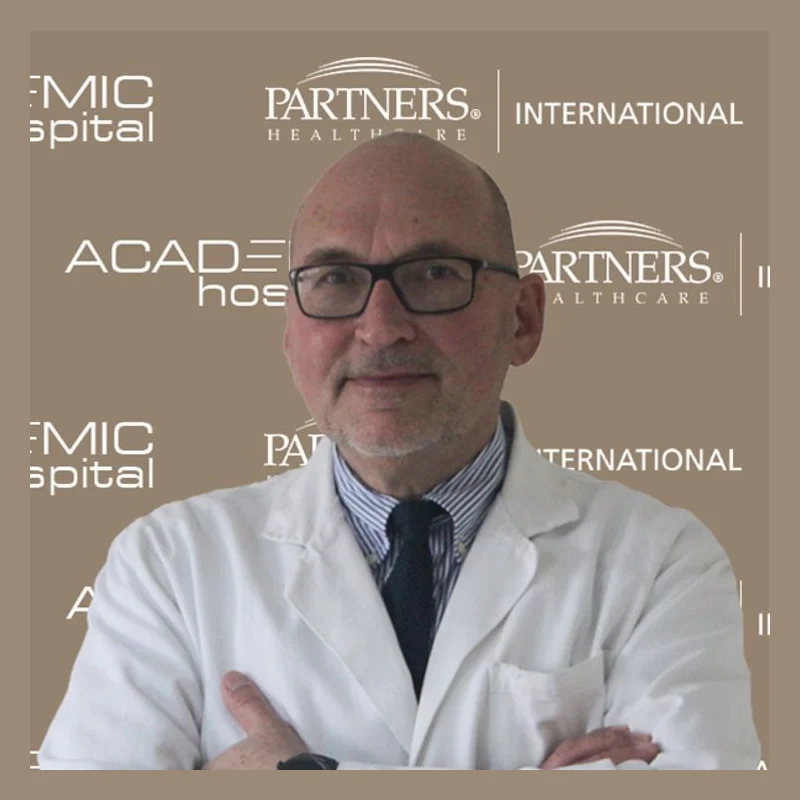
Prof. Dr. Turgay Çelikel
OncologyVerified
- 47+years exp.
English · Turkish
FromPrice on request
Free quote
60 seconds · no obligationView Profile
Tonsil cancer is an abnormal cellular growth developing within the tissues of the tonsils, situated in the throat. People commonly consult a doctor after experiencing a persistent sore throat, difficulty swallowing, ear discomfort, or an unexplained neck swelling. Appropriate treatment options depend on a comprehensive specialist assessment, which considers tumour stage, overall health, and diagnostic findings. Compare hospitals in Turkey that treat Tonsil Cancer and get a free review of your medical records.

1 doctor Compare doctors, ratings and prices — ask any of them for a free quote.
OncologyVerified
English · Turkish
60 seconds · no obligationView Profile
Tonsil cancer is an abnormal cellular growth developing within the tissues of the tonsils, situated in the throat. People commonly consult a doctor after experiencing a persistent sore throat, difficulty swallowing, ear discomfort, or an unexplained neck swelling. Appropriate treatment options depend on a comprehensive specialist assessment, which considers tumour stage, overall health, and diagnostic findings.
Specialty: Oncology
The cost of treating Tonsil Cancer depends on the diagnosis and the treatment chosen. Doctors first review your medical records — free of charge — and you then receive an itemised quote.
Tonsil Cancer is treated by Oncology specialists. 2 clinics in Turkey on our platform offer this treatment.
Tonsil cancer is a form of head and neck malignancy that originates in the palatine tonsils, located at the back of the throat. Most tonsil cancers are squamous cell carcinomas. Historically linked primarily to long-term tobacco and alcohol consumption, a significant proportion of cases today are associated with High-Risk Human Papillomavirus (HPV) infection, particularly HPV-16. HPV-positive tonsil cancers often affect younger demographics and generally carry a more favourable prognosis than non-HPV-related cases.
In its early stages, tonsil cancer may present with vague or mild symptoms, which are sometimes mistaken for persistent throat infections. As the primary lesion grows, individuals frequently report:
Because early identification significantly improves management options, any unilateral throat symptom or neck swelling lasting longer than three weeks requires urgent evaluation by a specialist in ENT (Ear, Nose & Throat) or Oncology.
When seeking care in Turkey, your medical journey begins with a comprehensive diagnostic review. Turkish hospitals equipped for advanced cancer care perform precise clinical staging to determine the extent of the primary tumour and whether it has spread to local lymph nodes or distant sites. Diagnostic assessments typically include:
Before travelling, patients should compile their complete medical history, including previous pathology slides or paraffin blocks, recent imaging DICOM files, reports, and a list of current medications to streamline the intake process.
Treatment plans are tailored by a multidisciplinary tumour board based on tumour stage, HPV status, anatomical accessibility, and the patient's general health. Interventions may combine surgery, radiotherapy, and systemic therapies.
| Option | Typically Used When | Things to Know |
|---|---|---|
| Transoral Robotic Surgery (TORS) | Early-stage tumours (T1-T2) with favourable surgical access. | Minimally invasive approach through the mouth; avoids external neck incisions and preserves swallowing function. |
| Intensity-Modulated Radiotherapy (IMRT) | Definitive treatment for early/locally advanced stages, or post-surgery. | Precise radiation delivery targets the tumour while sparing healthy tissues like salivary glands. |
| Chemoradiotherapy | Locally advanced tumours or high-risk features after surgery. | Combines radiation with concurrent chemotherapy to enhance treatment response, requiring careful side-effect management. |
| Open Surgical Resection | Advanced, recurrent, or extensive tumours unsuitable for minimally invasive techniques. | May require complex tissue reconstruction. May involve input from Plastic & Aesthetic Surgery specialists. |
Depending on the clinical scenario, additional supportive care from Gastroenterology (for temporary feeding tube placement) or Pulmonology & Thoracic Surgery may be integrated into the care pathway.
Travelling abroad for complex oncological treatment requires structured planning. The process begins with a remote records review, where treating doctors evaluate existing scan reports and biopsy findings to outline a preliminary care strategy. However, final treatment decisions are established only after in-person consultations and repeat diagnostic evaluations in Turkey.
Patients should plan to stay in Turkey for 2 to 7 weeks, depending on the recommended modality. Surgical interventions typically require 1 to 2 weeks for inpatient recovery and local monitoring, whereas a full course of daily radiotherapy spans 6 to 7 weeks. Before returning home, your clinical team will provide a detailed discharge summary, operative notes, and treatment delivery logs to hand over to your local doctor for ongoing monitoring and Rehabilitation support.
Air travel poses clinical risks under certain circumstances. Patients who have recently undergone extensive head and neck surgery, neck dissection, or airway interventions (such as a tracheostomy) must obtain direct medical clearance before flying, due to risks related to cabin pressure changes, bleeding, and airway compromise.
You should delay travel and seek immediate emergency care locally if you experience:
HPV-positive tonsil cancer is linked to human papillomavirus infection and tends to respond more favourably to radiation and systemic treatments compared to HPV-negative cancer, which is more commonly associated with tobacco and alcohol exposure. Your medical team will perform specific staining tests on the tissue biopsy to determine your HPV status.
The duration of stay depends entirely on your tailored plan. Surgical procedures usually require a stay of 1 to 2 weeks for recovery and initial follow-up. If your protocol includes definitive intensity-modulated radiotherapy or combined chemoradiotherapy, you will need to plan for a stay of 6 to 7 weeks to complete daily outpatient treatments.
Swallowing and speech can be temporarily or permanently affected depending on the tumour size and treatment method. Minimally invasive surgeries like TORS aim to preserve local tissue function, while radiation can cause temporary dryness and sore throat. Dedicated swallowing therapy and rehabilitation support are often recommended during and after recovery.
You should bring all original pathology reports, biopsy tissue blocks or glass slides for re-evaluation, recent imaging studies saved on a CD or USB drive (DICOM format), comprehensive medical history notes, and a list of all current prescription medications. Clear diagnostic records allow the multidisciplinary team to evaluate your case efficiently.
Most patients can travel after completing radiation, provided they are maintaining adequate oral nutrition and hydration and have no acute complications. However, fatigue and mucositis (mouth inflammation) peak near the end of treatment. Your treating oncologist will evaluate your physical readiness and clear you for travel before you depart.
Your request is in!
Your coordinator will contact you — usually within 2 hours, 24/7.
Want a faster, more accurate assessment?
Add photos & medical detailsLeave your number — a coordinator calls you in your language, usually within 15 minutes during office hours.
Thank you!
A coordinator will contact you at the time you chose.

