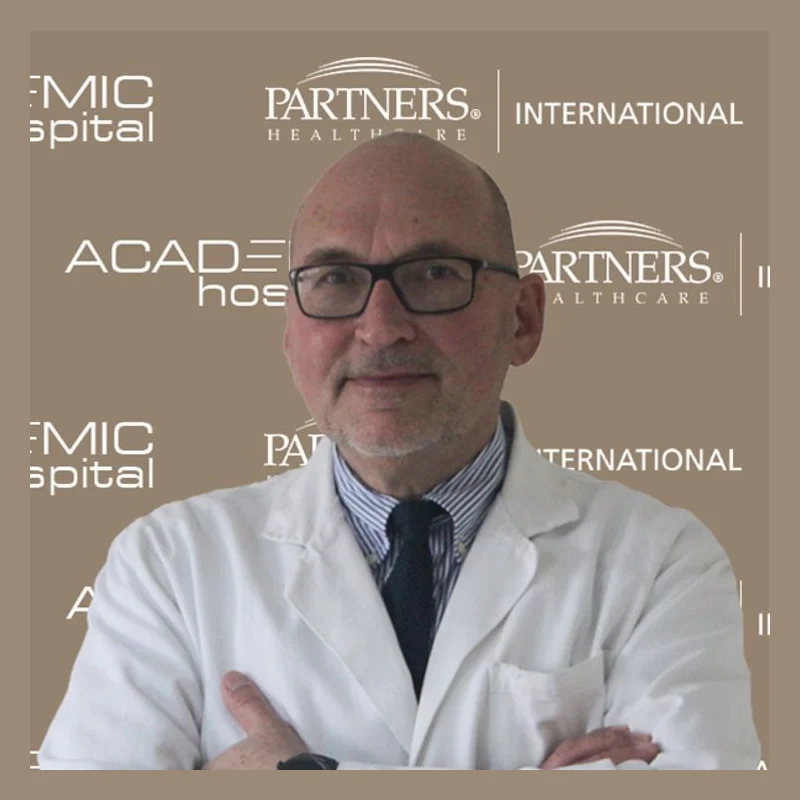
Prof. Dr. Turgay Çelikel
OncologyVerified
- 47+years exp.
English · Turkish
FromPrice on request
Free quote
60 seconds · no obligationView Profile
Glioblastoma is an aggressive primary brain tumour that arises from glial cells in the central nervous system. It typically affects adults, who present with persistent headaches, seizures, cognitive changes, or neurological deficits. Multimodal management commonly includes neurosurgery, radiotherapy, and systemic medications, and exact treatment options depend on tumour characteristics and a comprehensive specialist assessment. Compare hospitals in Turkey that treat Glioblastoma and get a free review of your medical records.

1 doctor Compare doctors, ratings and prices — ask any of them for a free quote.
OncologyVerified
English · Turkish
60 seconds · no obligationView Profile
Glioblastoma is an aggressive primary brain tumour that arises from glial cells in the central nervous system. It typically affects adults, who present with persistent headaches, seizures, cognitive changes, or neurological deficits. Multimodal management commonly includes neurosurgery, radiotherapy, and systemic medications, and exact treatment options depend on tumour characteristics and a comprehensive specialist assessment.
Specialty: Oncology
Depending on the stage and your medical history, doctors may recommend:
The cost of treating Glioblastoma depends on the diagnosis and the treatment chosen. Doctors first review your medical records — free of charge — and you then receive an itemised quote.
Options may include Resection of Glioblastoma. Your doctor chooses the approach after reviewing your tests and scans.
Glioblastoma is treated by Oncology specialists. 2 clinics in Turkey on our platform offer this treatment.
Glioblastoma is an aggressive primary brain tumour originating from glial cells within the central nervous system. Because these tumours grow quickly and infiltrate surrounding brain tissue, symptoms often develop rapidly over a few days or weeks. International patients presenting for oncology evaluation frequently report persistent morning headaches, new-onset seizures, progressive weakness or numbness on one side of the body, speech difficulties, and cognitive or personality changes. The specific symptoms depend heavily on the location of the mass within the brain's lobes.
Accurate diagnosis requires advanced imaging and tissue confirmation. When arriving at a Turkish hospital, patients undergo a thorough neurological examination alongside high-resolution diagnostic imaging. Neurologists and neuro-oncologists rely primarily on contrast-enhanced Magnetic Resonance Imaging (MRI), including functional MRI and magnetic resonance spectroscopy, to map the tumour's exact boundaries and proximity to vital brain structure.
Patients travelling for treatment should bring complete medical records to facilitate rapid evaluation. Critical documents include:
Management of glioblastoma requires a coordinated multidisciplinary team, usually involving specialists in neurosurgery, radiation oncology, and medical oncology. The primary goal is maximum safe surgical resection—removing as much visible tumour as possible without causing severe neurological deficits. Surgical guidance tools like intraoperative MRI, fluorescence-guided surgery (5-ALA), and neuronavigation are routinely utilised during these complex operations.
Following surgery, or when surgery is not feasible, multimodal therapy is standard practice. The treating medical team determines the exact protocol based on tissue histology, molecular markers (such as MGMT promoter methylation status), age, and overall functional status.
| Option | Typically used when | Things to know |
|---|---|---|
| Surgical Resection | Tumour is accessible without high risk of vital tissue damage | Aims for maximal debulking; tissue is sent for molecular profiling |
| Radiotherapy | Post-surgery or for unresectable tumours | Delivered over several weeks; targets the tumour bed and surrounding tissue |
| Systemic Chemotherapy | Concurrently with radiation and as adjuvant maintenance | Oral alkylating agents are commonly prescribed based on MGMT status |
| Targeted & Supportive Therapy | Recurrent disease or symptom control | Focuses on reducing brain swelling (edema) and controlling seizures |
Before traveling, a preliminary remote record review is conducted by multidisciplinary teams. This remote assessment determines whether traveling to Turkey is clinically appropriate and allows doctors to draft an initial plan. Patients should plan to stay in the country for an extended period, as initial surgical recovery and subsequent radiotherapy or chemotherapy protocols can span several weeks.
Ongoing coordination with local healthcare providers at home is essential. Before returning, patients receive comprehensive discharge summaries, updated imaging, and detailed instructions for local oncologists who will monitor their ongoing recovery, blood counts, and follow-up MRI scans.
International travel poses significant medical risks for certain patients with brain tumours. Travel is generally contraindicated for individuals with severe, uncontrolled intracranial pressure, recent unmanaged status epilepticus, or significant neurological instability. Flying can exacerbate cerebral edema due to cabin pressure fluctuations.
Patients must seek immediate emergency medical care locally if they experience any of the following warning signs:
Complementary assessments, including full medical check-ups and diagnostics, help determine systemic fitness before any aggressive neuro-oncological intervention is undertaken.
You should provide recent brain MRI DICOM files, existing pathology reports, prior operative notes, and a complete summary of current medications, particularly steroids and anti-seizure therapies. Turkish specialists review these records to evaluate treatment feasibility prior to your travel.
The duration of stay depends on the recommended intervention. Surgical recovery typically requires 10 to 14 days in Turkey. If undergoing combined postoperative radiotherapy and chemotherapy, patients may need to remain in the country for 6 to 7 weeks.
Air travel can increase risks if severe brain swelling or uncontrolled intracranial pressure is present. Fitness to fly must be evaluated by a neurosurgeon or neuro-oncologist, who may prescribe prophylactic corticosteroids or anti-seizure medications prior to your flight.
Your clinical team in Turkey will issue comprehensive medical reports, surgical documentation, and digital imaging files. These enable your home oncologist to manage ongoing maintenance chemotherapy, routine blood monitoring, and scheduled follow-up MRI surveillance scans safely.
Pathology testing on tumour tissue analyses specific molecular markers, such as MGMT promoter methylation and IDH mutation status. These biological indicators help the multidisciplinary oncology team select the most effective chemotherapy drugs and predict response to standard treatment protocols.
Your request is in!
Your coordinator will contact you — usually within 2 hours, 24/7.
Want a faster, more accurate assessment?
Add photos & medical detailsLeave your number — a coordinator calls you in your language, usually within 15 minutes during office hours.
Thank you!
A coordinator will contact you at the time you chose.

