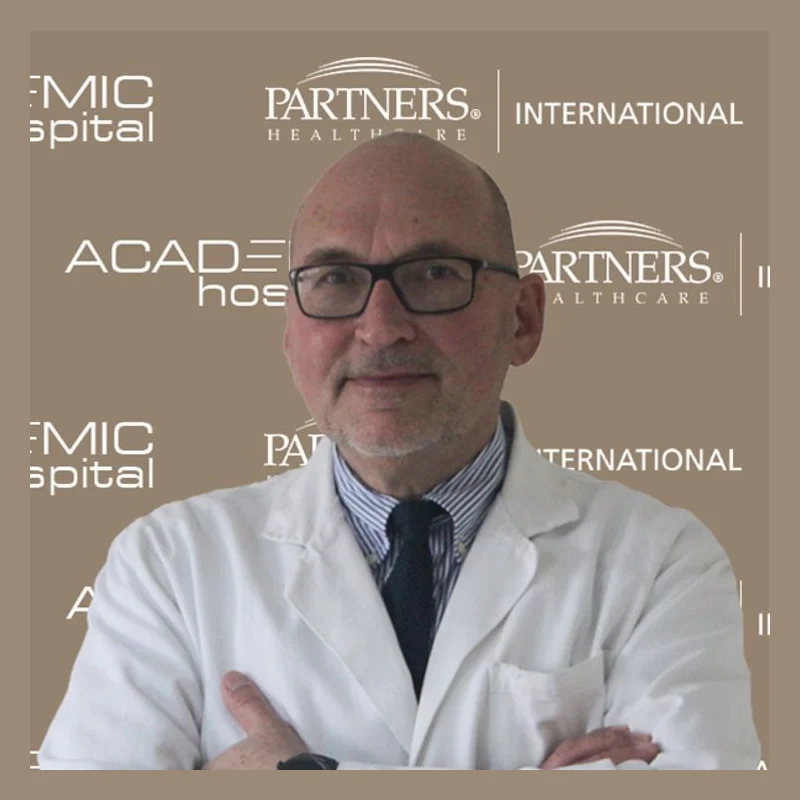
Prof. Dr. Turgay Çelikel
OncologyVerified
- 47+years exp.
English · Turkish
FromPrice on request
Free quote
60 seconds · no obligationView Profile
Desmoid tumours, also known as aggressive fibromatosis, are rare growths arising from connective tissues. Individuals commonly consult a doctor after noticing a firm mass, persistent swelling, or discomfort when neighbouring muscles or nerves are compressed. Available management and treatment options depend on a careful specialist assessment to evaluate tumour location, behaviour, and each patient's individual clinical situation. Compare hospitals in Turkey that treat Desmoid Tumor and get a free review of your medical records.

1 doctor Compare doctors, ratings and prices — ask any of them for a free quote.
OncologyVerified
English · Turkish
60 seconds · no obligationView Profile
Desmoid tumours, also known as aggressive fibromatosis, are rare growths arising from connective tissues. Individuals commonly consult a doctor after noticing a firm mass, persistent swelling, or discomfort when neighbouring muscles or nerves are compressed. Available management and treatment options depend on a careful specialist assessment to evaluate tumour location, behaviour, and each patient's individual clinical situation.
Specialty: Oncology
The cost of treating Desmoid Tumor depends on the diagnosis and the treatment chosen. Doctors first review your medical records — free of charge — and you then receive an itemised quote.
Desmoid Tumor is treated by Oncology specialists. 2 clinics in Turkey on our platform offer this treatment.
A desmoid tumor, also referred to as aggressive fibromatosis, is a rare type of growth that develops in the body's connective tissues. These tumors originate from fibroblasts, which are the cells responsible for providing structural support in muscles, tendons, and ligaments. Although classified under Oncology services, desmoid tumors do not metastasize or spread to distant organs like conventional malignant cancers. However, they are locally aggressive, meaning they can grow into surrounding tissues, nerves, and blood vessels.
The symptoms of a desmoid tumor vary depending on its location, which commonly includes the abdominal wall, inside the abdomen (mesenteric), or in the limbs and shoulders. Patients often notice:
Accurate diagnosis is critical because desmoid tumors can mimic other soft tissue sarcomas. Hospitals in Turkey utilize advanced imaging and histopathology to evaluate these growths. If you are travelling for evaluation, bringing your prior medical records, previous scan images (on CD or digital format), and existing pathology slides significantly aids the diagnostic process.
Diagnostic workups typically involve:
Management strategies have evolved rapidly. Immediate surgery is no longer the automatic first step because desmoid tumors have high recurrence rates, and some tumors remain stable or shrink spontaneously. A multidisciplinary tumor board determines the appropriate path based on tumor location, growth rate, and symptom severity.
| Option | Typically Used When | Things to Know |
|---|---|---|
| Active Surveillance | Asymptomatic or mildly symptomatic tumors in non-critical areas. | Involves regular MRI scans every 3 to 6 months to monitor for growth before intervening. |
| Medical Therapy | Progressive, painful, or unresectable tumors. | Options include non-steroidal anti-inflammatory drugs (NSAIDs), anti-estrogen therapies, targeted systemic therapies, or low-dose chemotherapy managed under Oncology care. |
| Surgical Resection | Rapidly growing tumors causing severe pain or tissue compromise. | Executed by specialists in General Surgery or Orthopedics, aiming for clear margins while preserving limb or organ function. |
| Local Interventions | Recurrent or localized symptomatic tumors. | Techniques like cryoablation or radiation therapy may be considered to control tumor growth without major surgery. |
Seeking evaluation or treatment for a desmoid tumor abroad requires structured planning. Because management often starts with non-surgical approaches, your care plan relies heavily on detailed initial consultations.
Before travelling, your diagnostic files are submitted for a pre-travel review by a specialist team. Once in Turkey, an initial consultation and any required baseline scans usually take 3 to 5 business days. If active surgery or an invasive procedure is recommended by your treating doctor, plan to stay in the country for 2 to 3 weeks to complete post-operative monitoring and early wound recovery. If systemic medical therapy is advised, international teams coordinate with your home oncologists or primary doctors to supervise ongoing medication delivery and periodic imaging scans in your home country.
Travel is not advisable if you have an intra-abdominal desmoid tumor causing active bowel obstruction, severe gastrointestinal bleeding, or acute severe pain. Deep intra-abdominal tumors may require close monitoring in a local emergency setting rather than long-distance travel.
Seek immediate emergency medical care locally if you experience:
Desmoid tumors are locally aggressive connective tissue growths. They do not metastasize to distant organs like malignant cancers do, but they are categorized under oncology care because they can grow into surrounding muscles, nerves, and organs if unmonitored.
Many desmoid tumors grow slowly, remain stable for years, or occasionally shrink on their own. Surgery carries a risk of tumor recurrence and surgical complications, so doctors often monitor the tumor with regular MRI scans before deciding if intervention is necessary.
An initial diagnostic evaluation and consultation typically require 3 to 5 business days. If your treating physician recommends surgical treatment or local interventional therapy, you should plan to stay in Turkey for 2 to 3 weeks for recovery.
You should bring your complete medical history, high-resolution DICOM files of previous MRI or CT scans on CD/USB, previous radiology reports, and pathology slides or tissue blocks if a biopsy has already been performed in your home country.
Your clinical team in Turkey provides a comprehensive treatment summary and imaging reports. For non-surgical therapies or routine MRI monitoring, your local doctor or oncologist coordinates ongoing care using the detailed recommendations provided by the treating specialists.
Your request is in!
Your coordinator will contact you — usually within 2 hours, 24/7.
Want a faster, more accurate assessment?
Add photos & medical detailsLeave your number — a coordinator calls you in your language, usually within 15 minutes during office hours.
Thank you!
A coordinator will contact you at the time you chose.

