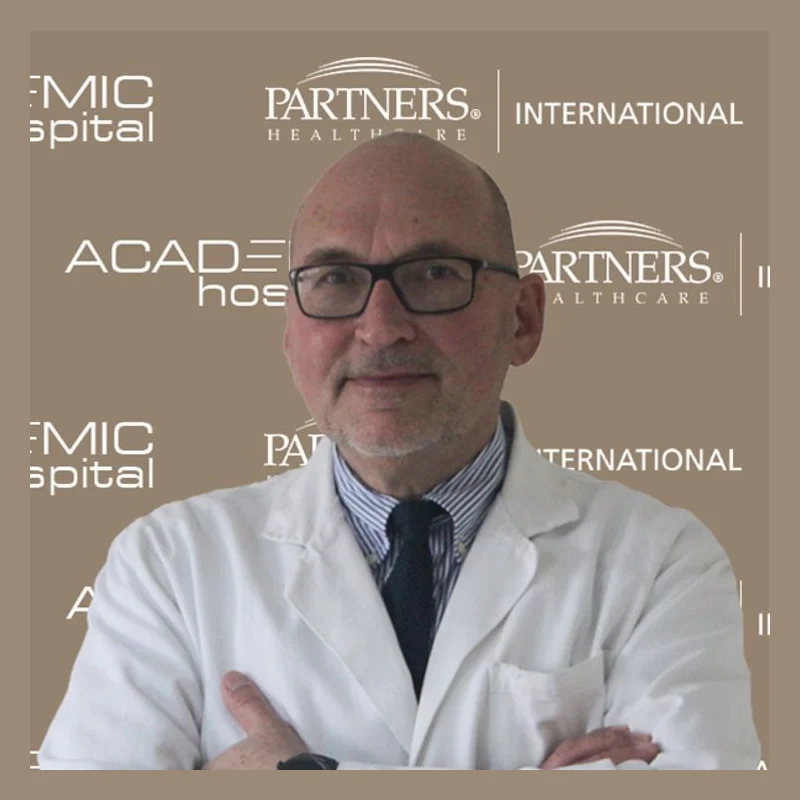
Prof. Dr. Turgay Çelikel
OncologyVerified
- 47+years exp.
English · Turkish
FromPrice on request
Free quote
60 seconds · no obligationView Profile
Hepatoblastoma is an uncommon primary liver cancer that originates from immature liver precursor cells. It predominantly affects infants and very young children, causing symptoms such as an enlarged abdomen, an abdominal mass, weight loss, or reduced appetite that lead parents to seek medical help. Feasible oncological and surgical treatment options depend on a detailed specialist assessment. Compare hospitals in Turkey that treat Hepatoblastoma and get a free review of your medical records.

1 doctor Compare doctors, ratings and prices — ask any of them for a free quote.
OncologyVerified
English · Turkish
60 seconds · no obligationView Profile
Hepatoblastoma is an uncommon primary liver cancer that originates from immature liver precursor cells. It predominantly affects infants and very young children, causing symptoms such as an enlarged abdomen, an abdominal mass, weight loss, or reduced appetite that lead parents to seek medical help. Feasible oncological and surgical treatment options depend on a detailed specialist assessment.
Specialty: Oncology
The cost of treating Hepatoblastoma depends on the diagnosis and the treatment chosen. Doctors first review your medical records — free of charge — and you then receive an itemised quote.
Hepatoblastoma is treated by Oncology specialists. 2 clinics in Turkey on our platform offer this treatment.
Hepatoblastoma is a rare primary liver cancer that originates from immature liver cells (hepatoblasts). It most frequently affects infants and children under three years of age. Because the liver can expand within the abdominal cavity without causing immediate pain, the disease is often discovered at a later stage when an enlarged abdomen or a firm lump becomes noticeable.
Parents often seek medical advice after noticing specific physical changes. Common clinical features include:
Early clinical evaluation within specialized oncology departments is critical to determine the extent of the lesion and prevent local or distant spread.
Evaluating paediatric liver tumours requires a multidisciplinary medical team, including paediatric oncologists, radiogenetic specialists, and liver surgeons. When traveling for care, families usually undergo thorough diagnostic confirmation at the treating medical centre.
Diagnostic protocols typically include:
Families traveling to Turkey should bring all previous diagnostic records, including original DICOM imaging files on CD/USB, histological slides or tissue blocks (if a biopsy was already performed), serum marker laboratory reports, and complete clinical summaries from their home paediatrician.
Management of hepatoblastoma depends heavily on the tumour's PRETEXT staging, whether the lesion can be safely removed surgically at diagnosis, and the presence of metastatic disease. Treatment decisions are individualized by the multidisciplinary team following a comprehensive review of all tests.
| Option | Typically Used When | Things to Know |
|---|---|---|
| Neoadjuvant Chemotherapy | Tumours are initially unresectable or require shrinkage before surgery | Administered to shrink the primary liver mass, reduce surgical risks, and target microscopic disease. |
| Surgical Resection | Tumours are confined to specific liver segments (resectable) | Performed by specialists in general surgery or paediatric hepatobiliary surgery to remove the mass completely while preserving healthy liver tissue. |
| Adjuvant Chemotherapy | Following complete or partial surgical removal | Helps eliminate any remaining malignant cells and lowers the risk of local or distant recurrence. |
| Liver Transplantation Evaluation | Unresectable tumours involving all four liver sectors or key blood vessels | Requires extensive clinical evaluation; considered when standard surgical resection cannot achieve clear margins safely. |
Surgical intervention is the primary curative modality, but combination therapy incorporating systemic treatments provides the highest likelihood of disease control. In complex cases, additional specialized interventions managed under paediatrics and intensive care services may be required.
Organising medical travel for a child with hepatoblastoma requires careful coordination between the international patient department, the clinical oncology team, and the family's local medical providers.
The planning process generally follows these steps:
International travel is not suitable for every child with hepatoblastoma. Severe clinical instability, acute liver failure, uncontrolled active infection, or severe low blood counts (neutropenia) make long-distance transit unsafe.
Immediate local medical evaluation is required if any of the following warning signs occur:
If these emergency signs appear before travel, families must seek immediate local emergency care rather than attempting to board an international flight.
Hepatoblastoma is a rare cancer of the liver that primarily affects infants and children under three years old. It develops from immature liver precursor cells and usually presents as an abdominal mass or swelling.
Treatment plans are determined by treating oncologists after reviewing imaging and lab tests. Standard care usually involves chemotherapy to shrink the tumour, followed by surgical resection of the liver mass, and additional post-operative chemotherapy.
You should bring all recent blood test results (especially serum AFP levels), tissue biopsy slides or blocks if available, full clinical history summaries, and original diagnostic imaging files (CT or MRI scans on CD/USB).
The duration of stay depends on the treatment phase. Diagnostic evaluation and initial chemotherapy cycles or surgery often require three to six weeks in-country. The treating team provides a specific timeline based on the child's response.
Air travel is only safe once the surgical team confirms adequate healing, stable blood counts, and normal liver function. Children must be cleared by their attending physician before booking return travel.
Your request is in!
Your coordinator will contact you — usually within 2 hours, 24/7.
Want a faster, more accurate assessment?
Add photos & medical detailsLeave your number — a coordinator calls you in your language, usually within 15 minutes during office hours.
Thank you!
A coordinator will contact you at the time you chose.

