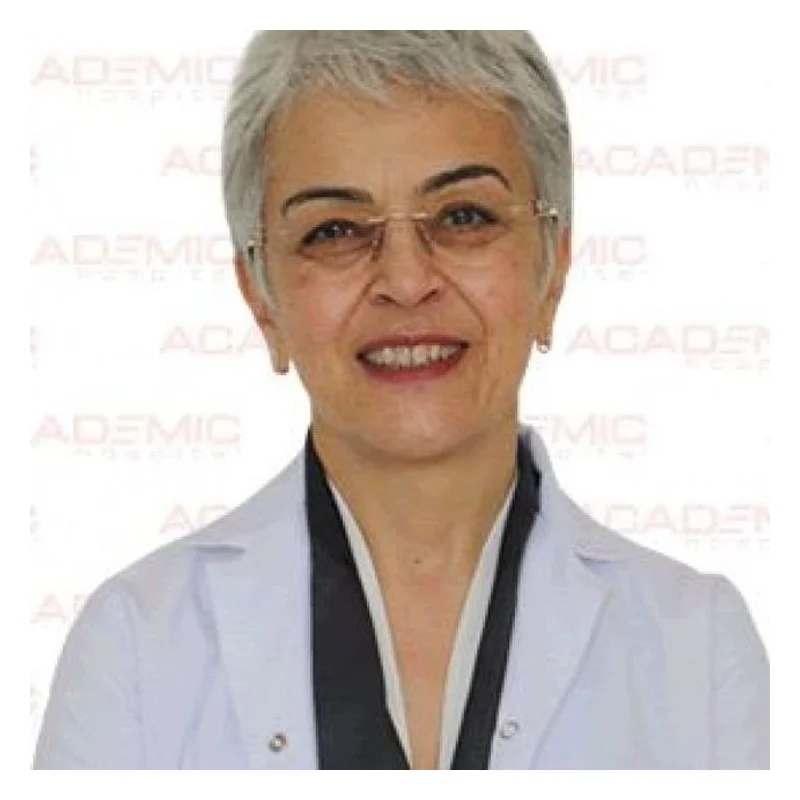
Prof. Dr. Emel Akoğlu
UrologyVerified
- 57+years exp.
English · Turkish
FromPrice on request
Free quote
60 seconds · no obligationView Profile
A guide to urology in Turkey: what adult circumcision, prostate, kidney stone and men's health treatments cost compared with the UK, US and Germany, what packages include, how hospitals are regulated, how to choose a hospital and urologist, how long to stay and aftercare at home.
A written plan with the surgeon's name and the full price — usually within 24 hours.

2 doctors Compare doctors, ratings and prices — ask any of them for a free quote.
UrologyVerified
English · Turkish
60 seconds · no obligationView Profile
UrologyVerified
English · Turkish
60 seconds · no obligationView Profile
Urology covers the kidneys, ureters, bladder, prostate and urethra in both sexes, and the male reproductive organs. International patients travel to Turkey mainly for adult circumcision, treatment of an enlarged prostate, kidney and ureteric stones, diagnostics such as prostate biopsy, and men's health procedures such as penile prosthesis or treatment of Peyronie's disease. Large private hospitals in Turkey have urology departments with laser and endoscopic equipment, and several also perform robotic surgery and kidney transplantation.
The main reasons patients come are shorter waiting times and lower private prices than in the UK, Western Europe or the US. Urology in Turkey is a regulated specialty: urologists complete a five-year specialist training after medical school and are registered with the Ministry of Health. Circumcision has a special place, because almost all Turkish boys are circumcised — so the procedure itself is very familiar to Turkish urologists and paediatric surgeons.
This guide explains costs, what a package includes, the treatments patients travel for, how to check a hospital, how long to stay and how aftercare works at home. The live price list, the hospitals and real patient reviews are shown on this page; a quote is free and you decide only after a urologist has reviewed your reports.
Browse every Urology treatment available at our partner hospitals in Turkey, grouped by category.
The price list above shows the starting prices of every urological treatment the hospitals on our site list. The table compares some common procedures with typical private prices elsewhere. Prices outside Turkey are approximate totals in private clinics and vary widely; the final price in Turkey depends on your diagnosis and the technique.
| Procedure | Turkey | United Kingdom | United States | Germany |
|---|---|---|---|---|
| Adult circumcision | from €680 | about £1,500–£3,000 | about $2,000–$5,000 | about €800–€2,000 |
| Penile filler (hyaluronic acid) | from €1,300 | about £2,000–£4,000 | about $3,000–$8,000 | about €2,000–€4,500 |
| TURP (prostate) | on request | about £6,000–£10,000 | about $10,000–$20,000 | about €5,000–€9,000 |
| Ureteroscopy with laser (stones) | on request | about £5,000–£8,000 | about $8,000–$15,000 | about €4,000–€7,000 |
| Penile prosthesis | on request | about £15,000–£25,000 | about $20,000–$35,000 | about €12,000–€20,000 |
What changes the price: the technique (for example a laser or stapler device instead of a conventional operation), general or local anaesthesia, the number of nights in hospital, implants and devices, and whether tests such as imaging or a biopsy are needed first. For treatments marked "on request", the hospital needs your reports before it can give a fixed price.
A package for international patients usually includes the urologist's and anaesthesiologist's fees, the operating theatre, the hospital stay, tests before the procedure, medication for the first days, check-ups during your stay, transfers and an interpreter or coordinator; some include hotel nights. Flights, extra nights, a companion's costs, additional tests the urologist orders after examining you, and treatment of problems after you fly home are usually not included. Ask for the package contents in writing, with the name of the hospital and the urologist.
Adult circumcision in Turkey is done for medical reasons — a tight foreskin (phimosis), repeated inflammation, scarring after infection — or for religious and personal reasons. Several techniques are used:
Circumcision surgery in Turkey for adults is usually a day procedure under local or general anaesthesia. Before you choose a circumcision clinic in Turkey, check that the procedure is done in a licensed hospital or surgical centre by a urologist or paediatric surgeon, not by an unlicensed practitioner. The circumcision ceremony in Turkey (sünnet) is a family celebration for boys; for a child travelling from abroad, the procedure itself should still be done by a paediatric surgeon or urologist in a hospital. The circumcision in Turkey price on the price list is the hospital's starting price; ask what the package includes.
Penis enlargement in Turkey is offered as hyaluronic acid filler, which adds girth for a limited time and is gradually absorbed, or as surgery. The evidence for surgical enlargement in men of normal size is limited, results are modest and complications can affect sexual function. A responsible urologist examines you first, explains realistic results and may recommend counselling. Avoid permanent fillers such as silicone or paraffin.
Every hospital in Turkey needs a Ministry of Health licence, and hospitals that treat international patients need an additional health tourism authorisation. Many large private hospitals are also accredited by Joint Commission International (JCI). For anything beyond a minor procedure, choose a hospital with an anaesthesiologist, an intensive-care unit and a laboratory on site. The risks of urological procedures — bleeding, infection, urinary retention, narrowing of the urethra, or effects on continence and erections after prostate surgery — are the same in every country; your urologist should explain those specific to your treatment in writing.
Red flags: a price far below every other quote, no named urologist or hospital, procedures in a non-licensed practice, pressure to add treatments, promises of guaranteed results (especially for enlargement) and no plan for problems after you return. Read our checklist on how to choose a safe surgeon in Turkey and compare the hospitals on our site.
| Procedure | Time in Turkey | Back to desk work |
|---|---|---|
| Adult circumcision | 3–4 days | 2–4 days |
| Penile filler | 2–3 days | 1–2 days |
| Ureteroscopy with laser | 4–5 days | About 1 week |
| TURP or laser prostate surgery | 7–10 days | 2–3 weeks |
| Penile prosthesis | 7–10 days | About 2 weeks |
| Prostatectomy | 10–14 days | 3–4 weeks |
These are typical times; your urologist decides when you are fit to fly, for example after a catheter has been removed. Read our advice on flying after surgery abroad.
Take home your operation report, discharge summary, pathology results if a biopsy or tissue was examined, and a medication list, and give copies to your GP. After circumcision, sexual activity is usually avoided for about four to six weeks; after prostate surgery, blood in the urine and urgency can last several weeks, and heavy lifting should wait. Ask before you book how follow-up works — most international departments use photos and video calls — and who to contact if you develop a fever, cannot pass urine or bleed heavily. In these cases, seek urgent care where you are. Ordinary travel insurance does not cover planned treatment; specialist medical-travel insurance can cover complications and a longer stay.
At the hospitals on our site, adult circumcision starts from about €680, usually with the procedure, anaesthesia and check-ups included. Stapler or seamless techniques and general anaesthesia can raise the price. Private adult circumcision in the UK typically costs about £1,500–£3,000.
Yes, when it is done in a licensed hospital or surgical centre by a urologist. Complications such as bleeding, infection or a poor cosmetic result are uncommon and are usually treated easily when recognised early.
About 3–4 days for circumcision, 4–5 days for laser stone treatment, 7–10 days for prostate surgery or a penile prosthesis and 10–14 days after prostatectomy. Your urologist confirms when you are fit to fly.
Most adults can. General anaesthesia or sedation is an option for anxious patients or more complex cases, and is used for children.
It depends on why you want it. Hyaluronic acid filler adds girth temporarily and from about €1,300 at the hospitals on our site; surgery gives modest results and carries risks. A urologist should examine you first and explain realistic results; avoid permanent fillers such as silicone.
Hyaluronic acid filler is gradually absorbed by the body, usually over one to two years, after which the treatment can be repeated. Lumps, uneven results and infection are possible side effects.
Yes. Hospitals offer TURP, laser prostate surgery, GreenLight vaporisation, Rezum and laparoscopic or robotic prostatectomy. Send your PSA, ultrasound or MRI and urine tests so the urologist can recommend a treatment.
Your symptoms, age, recent PSA and urine results, imaging reports (ultrasound, CT or MRI), previous operations and a list of your medicines, especially blood thinners.
Many do, and hospitals with international patient departments provide coordinators and interpreters for English, German, French, Arabic, Russian and other languages.
Many nationalities can enter Turkey visa-free or with an e-Visa for short stays. Check the current rules for your passport; the hospital can provide an invitation letter if needed.
Sünnet is a traditional family celebration held when a boy is circumcised, often with a special costume and a party. The medical procedure should still be done in a hospital by a paediatric surgeon or urologist.
Your request is in!
Your coordinator will contact you — usually within 2 hours, 24/7.
Want a faster, more accurate assessment?
Add photos & medical detailsLeave your number — a coordinator calls you in your language, usually within 15 minutes during office hours.
Thank you!
A coordinator will contact you at the time you chose.