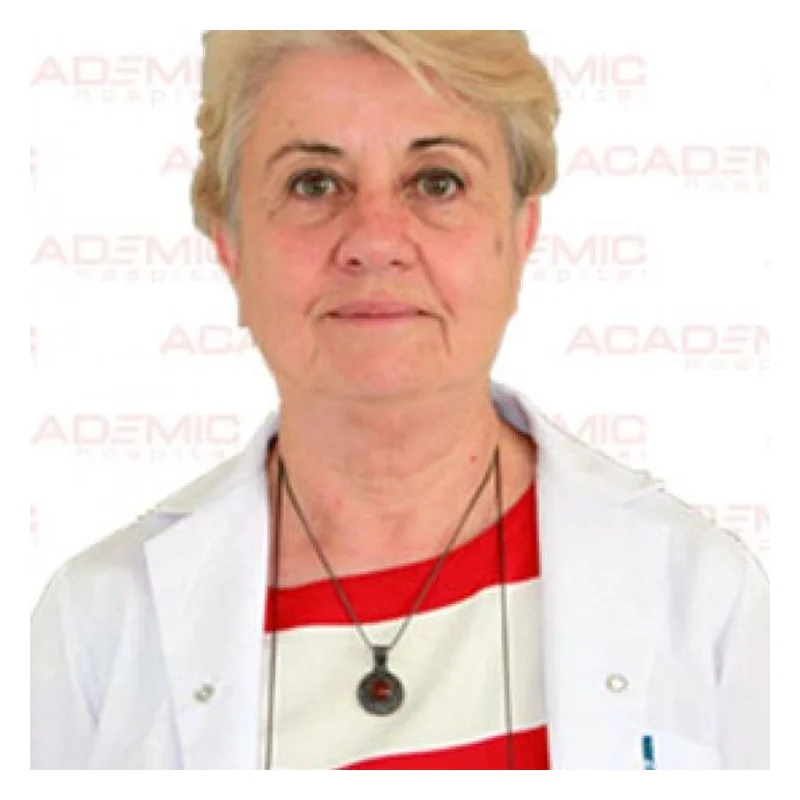
Prof. Dr. Emel Akoğlu
UrologyVerified
- 57+years exp.
English · Turkish
FromPrice on request
Free quote
60 seconds · no obligationView Profile
What Rezum water vapour therapy is, how steam injected into the prostate shrinks obstructing tissue, what trials show about symptom relief and the preservation of ejaculation, who suits it and who does not, how it compares with TURP and laser, approximate costs in Turkey against the UK, US and Germany, recovery and how to check a hospital.
A written plan with the surgeon's name and the full price — usually within 24 hours.

2 doctors Compare doctors, ratings and prices — ask any of them for a free quote.
UrologyVerified
English · Turkish
60 seconds · no obligationView Profile
UrologyVerified
English · Turkish
60 seconds · no obligationView Profile
Rezum water vapour therapy is a minimally invasive treatment for urinary symptoms caused by an enlarged prostate (benign prostatic hyperplasia, BPH). A thin delivery device is passed through the urethra to the prostate and a needle at its tip injects short bursts of sterile steam into the overgrown tissue. The steam releases stored heat as it condenses, which destroys the targeted cells. Over the following weeks the body absorbs the dead tissue, the gland shrinks and pressure on the urethra falls. Nothing is cut away, and no incision is made.
This is why the procedure is attractive to men who want relief without a conventional operation, and who care about keeping ejaculation. The technique is also known in some catalogues as transurethral water vapour ablation. This guide explains how Rezum works, what trials show, who it suits, what it costs in Turkey compared with the UK, US and Germany, and what to ask a hospital.
An enlarged prostate narrows the urethra that runs through its centre, particularly through the two side lobes and sometimes a middle lobe. During Rezum the urologist views the prostate through a small camera built into the device, positions the needle in the tissue and delivers about nine seconds of steam per injection. Several injections are placed, usually between four and ten for an average gland, depending on its size and the length of the prostate channel. The urethra itself is largely spared because the needle goes into the tissue next to it, and the steam is confined to the injected area.
The effect is not instant. Swelling after treatment actually tightens the channel in the first days, which is why a catheter is normally needed for a short time. The benefit builds as the treated tissue is reabsorbed over several weeks.
Rezum is supported by controlled trials, including a randomised study that compared it with a sham procedure, and by medium-term follow-up data. These show a meaningful drop in urinary symptom scores, an improvement in flow rate and a lower need for prostate tablets, and the benefit lasted for several years in most men followed up. The NICE guidance in the UK recommends the method for suitable men, and the European Association of Urology lists water vapour therapy among minimally invasive options for BPH.
What is less certain is how it compares with large operations over many years. Some men need further treatment later, and the effect is generally smaller on very large glands or when a prominent middle lobe is present. Rezum treats the symptoms of BPH; it is not a cancer treatment and it will not help symptoms caused by a weak bladder muscle or a urethral stricture, so assessment before surgery is essential.
Good candidates are men with bothersome flow problems from BPH who have not been helped enough by tablets, or who cannot tolerate them, and who have a prostate that is typically 30 to 80 millilitres in size. It is a sensible option for men who wish to preserve ejaculation and erections, though preservation is a goal and not a promise. It may suit men who cannot stop blood-thinning medication more easily than conventional surgery does.
It is less suitable for a very large prostate, a prominent middle lobe that is hard to treat with steam, an active urinary infection, an artificial urinary sphincter or penile implant in place, or a bladder that no longer contracts well. Raised PSA or an abnormal examination must be checked first; see our guide to prostate biopsy.
These are approximate ranges for the procedure, not hospital quotes. The price depends on the size of the gland, the number of steam injections, the type of anaesthesia, whether you stay overnight and what the pre-operative tests include.
| Country | Approximate cost range |
|---|---|
| Turkey | €2,500 – €6,000 |
| United Kingdom | €5,500 – €10,500 |
| United States | €6,000 – €16,000 |
| Germany | €4,500 – €9,000 |
The treatment device is a single-use item, which keeps the price above that of a basic TURP in some hospitals. A package normally covers the tests, the procedure, anaesthesia, a short stay, catheter care and medication. Ask for an itemised written quote.
Rezum sits between tablets and conventional surgery. TURP, covered in our guide to TURP in Turkey, removes tissue with an electric loop and has the longest track record. Laser techniques vaporise or remove tissue, as described in our GreenLight laser prostate vaporisation page.
| Option | Best suited to | Typical limits |
|---|---|---|
| Rezum | Small to medium glands; men who wish to keep ejaculation | Gradual improvement; catheter for several days; weaker for large glands |
| TURP | Medium glands with a clear blockage | Retrograde ejaculation is common |
| Laser vaporisation | Men on blood thinners; wide size range depending on method | Needs an experienced laser surgeon; some ejaculation change |
A trustworthy team will measure the gland and explain why one option is recommended over the others.
For the first one to three weeks most men have burning on passing urine, urgency, frequency and blood-stained urine, sometimes with a more awkward stream than before treatment because of swelling. These effects usually settle by about two to four weeks. Symptom relief becomes noticeable from around two to four weeks and continues to improve up to about three months. Many men return to desk work within a few days, but heavy lifting, cycling and straining are avoided for about two weeks. Sex can often resume after a couple of weeks if there is no discomfort; some men notice less semen or a change in volume for a while.
Plan five to seven days in Turkey if a catheter will be in place, so it can be removed and a trial without it can be done before you fly. The catheter may make travelling with it uncomfortable, and removal at home needs prior arrangement with a local nurse or urologist.
Common effects are temporary urinary symptoms, blood in the urine, urinary infection and the need for a catheter. A short-term inability to pass urine after the catheter is removed happens in a minority and may need the catheter to be put back for a few days. Retrograde ejaculation is less frequent than after TURP, but it is not impossible. Rarely, a urethral narrowing or persisting urgency can follow, and some men need a second treatment later. NICE and the European Association of Urology describe the procedure as having a good safety profile for suitable men, but also note that long-term evidence is still growing compared with TURP.
Check that the urologist treats prostates regularly and measures your gland size and flow before accepting you, that the hospital offers more than one BPH option and can explain why Rezum is chosen, and that you receive a written plan. Red flags are promises that the effect is immediate or permanent, a quote without tests and pressure to book at once. Read how our process works and browse our urology treatments in Turkey.
Send your PSA result, flow test and ultrasound through the free quote page for a written plan.
It is a minimally invasive treatment for an enlarged prostate in which short bursts of steam are injected into the prostate tissue through the urethra. The treated tissue is absorbed over weeks, relieving pressure on the urethra.
Trials, including a sham-controlled study, show a clear improvement in symptoms and flow that lasted for several years in most men followed up. It works less well on very large glands or with a prominent middle lobe.
Approximate ranges are €2,500 to €6,000 in Turkey, against about €5,500 to €10,500 in the UK. The price depends on gland size, anaesthesia and stay. Each hospital confirms its price in writing.
It is designed to preserve ejaculation and erections, and retrograde ejaculation is less frequent than after TURP, though some men do notice changes. It is a goal and cannot be promised.
Most men have burning and urgency for one to three weeks, and relief builds over two to four weeks up to about three months. Heavy lifting is usually avoided for about two weeks.
A catheter is usually needed for about three to seven days because the prostate swells after treatment. It is removed once you can pass urine, and some men need it re-inserted briefly.
It is done with local anaesthetic and sedation, or a spinal or short general anaesthetic, so you should not feel the steam. Afterwards there is burning and a catheter discomfort that eases within days.
Neither is right for everyone. Rezum is gentler and may preserve ejaculation but improves more slowly; TURP has a longer track record and suits a wider range of gland sizes.
Some men need a second treatment years later if the prostate tissue regrows or symptoms return. Your urologist will reassess your gland size and flow before deciding what is suitable.
Plan about five to seven days if a catheter is placed, so it can be removed and a trial without it completed before you fly. Your surgeon decides when it is safe to travel.
Your request is in!
Your coordinator will contact you — usually within 2 hours, 24/7.
Want a faster, more accurate assessment?
Add photos & medical detailsLeave your number — a coordinator calls you in your language, usually within 15 minutes during office hours.
Thank you!
A coordinator will contact you at the time you chose.