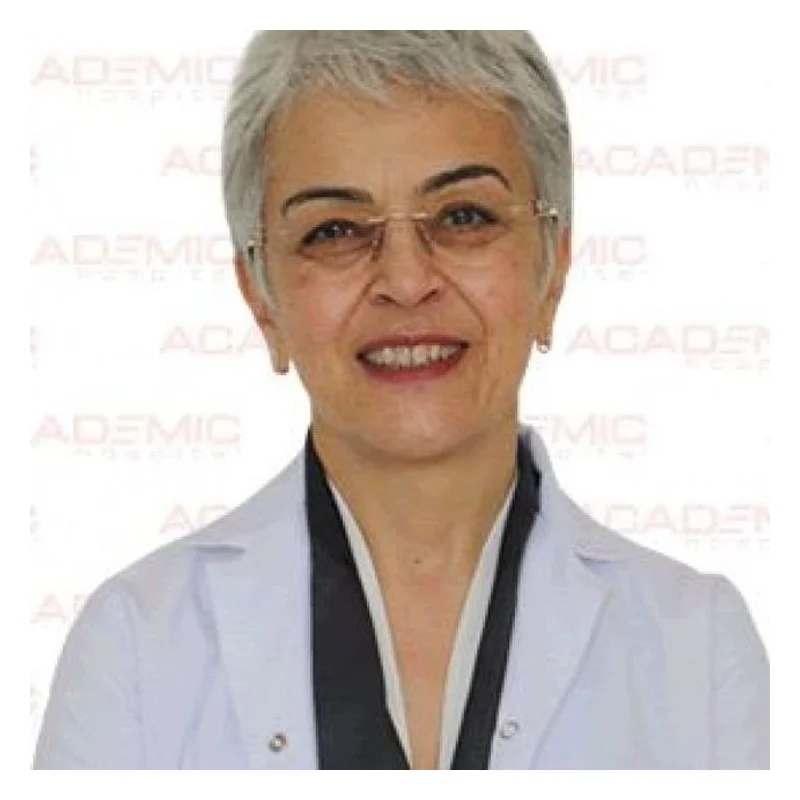
Prof. Dr. Emel Akoğlu
UrologyVerified
- 57+years exp.
English · Turkish
FromPrice on request
Free quote
60 seconds · no obligationView Profile
A guide to prostate treatment in Turkey: laser surgery (HoLEP and GreenLight), TURP, TUIP, Rezum, TUMT, TUNA, open, laparoscopic and robotic prostatectomy. It explains how the options differ, who they suit, what the trip and recovery involve, what affects the price and how to check a hospital and surgeon.
A written plan with the surgeon's name and the full price — usually within 24 hours.

2 doctors Compare doctors, ratings and prices — ask any of them for a free quote.
UrologyVerified
English · Turkish
60 seconds · no obligationView Profile
UrologyVerified
English · Turkish
60 seconds · no obligationView Profile
Prostate surgery in Turkey covers two quite different groups of treatment. The first treats a benign enlarged prostate that makes passing urine slow, frequent or incomplete: laser surgery such as HoLEP and GreenLight vaporisation, TURP, TUIP, Rezum water vapour therapy, TUMT, TUNA and the robotic da Vinci prostatic adenomectomy. The second removes the prostate, usually for cancer: open, laparoscopic or robotic prostatectomy. Our overview of Urology treatments in Turkey shows where these sit among other urological procedures.
The enlargement procedures differ in how they remove or shrink tissue. HoLEP removes the inner part of the gland with a laser. GreenLight vaporises it. TURP shaves it away with an electrical loop. TUIP makes small cuts in the bladder neck without removing tissue. Rezum, TUMT and TUNA use steam, microwaves or radio waves to shrink tissue and are less invasive.
Treatment of benign enlargement is usually considered when tablets have not helped or are not tolerated, or when there are complications such as repeated infections, bladder stones or retention of urine. The urologist will look at prostate size, flow tests, ultrasound, your general health, blood-thinning medicines and whether you want to protect ejaculation.
Benign enlargement and cancer can occur together, so a PSA test, examination and sometimes an MRI or biopsy usually come first.
Treatments for enlargement are done through the urethra, with no external cut, under spinal or general anaesthesia. A catheter stays in for one to several days, and many patients go home after a night or two. Blood in the urine, urgency and burning are common for a few weeks, and heavy lifting is avoided for about a month. Retrograde ejaculation, where semen passes into the bladder, is a recognised effect of several of these operations, so discuss it first if fertility matters.
Prostatectomy is a larger operation with a longer stay of several days, a catheter for about one to two weeks, and a recovery of some weeks. Urinary control and erections can be affected and recover over months. Plan to stay in Turkey until the catheter is out and the surgeon says it is safe to fly.
The price depends on the procedure, the equipment and the length of stay. Laser and robotic techniques use costly equipment and disposable parts, whereas TURP is more widely available. Prostate size, hospital room type, anaesthesia, pre-operative tests, pathology and follow-up all play a part. For prostatectomy, lymph node removal, nerve-sparing technique and pathology reports can change the plan. Ask for a written quote that lists what is included, such as hospital nights, tests, medicines, transfers and check-ups, so that offers can be compared fairly.
Choose a hospital licensed by the Turkish Ministry of Health and authorised for health tourism. Ask which urologist will operate, how often they perform the exact procedure you are being offered, and what happens if you have bleeding or cannot pass urine after you travel home. Ask for the reasons behind the proposed technique rather than accepting the most expensive one. A reliable plan explains benefits, alternatives and risks such as infection, incontinence, narrowing of the urethra, the need for repeat treatment and sexual side effects. For cancer, ask who will discuss the pathology result and who will follow your PSA afterwards.
Use the free quote form to send your age, symptoms, PSA results, ultrasound or MRI reports and the medicines you take. A urologist at a licensed hospital reviews them and prepares a written plan with the proposed treatment, the surgeon, the stay and the full price. It is free and carries no obligation, and you pay the hospital directly. A coordinator then helps with appointments, transfers and questions. You can compare the plan with advice from your own urologist, and browse other options under Urology treatments in Turkey.
HoLEP is holmium laser enucleation of the prostate. The laser removes the inner part of the gland through the urethra. It is often discussed for larger prostates, for men on blood thinners and when a lasting result is wanted.
TURP removes tissue with an electrical loop, while laser methods such as HoLEP and GreenLight cut or vaporise it with light. Laser techniques are often linked with less bleeding and shorter catheter time, but the right choice depends on prostate size and surgeon experience.
Rezum is a minimally invasive treatment that injects steam into the enlarged tissue, which then shrinks over weeks. It is usually done without a long hospital stay and is discussed for men who want to lower the risk of sexual side effects.
After operations for enlargement it is usually one to several days. After prostatectomy it is commonly one to two weeks. Your surgeon decides when it can come out.
It can. Several enlargement operations cause retrograde ejaculation, where semen goes into the bladder, and prostatectomy can affect erections and fertility. Ask the urologist about these effects before choosing a technique.
After a procedure through the urethra, often three to seven days. After prostatectomy, usually longer, until the catheter is out and the surgeon agrees you can fly. Your plan should state this.
Usually yes. A PSA test, examination and sometimes MRI or biopsy help rule out cancer before treatment of enlargement, because the two conditions can occur together. Send recent results with your enquiry.
Your request is in!
Your coordinator will contact you — usually within 2 hours, 24/7.
Want a faster, more accurate assessment?
Add photos & medical detailsLeave your number — a coordinator calls you in your language, usually within 15 minutes during office hours.
Thank you!
A coordinator will contact you at the time you chose.