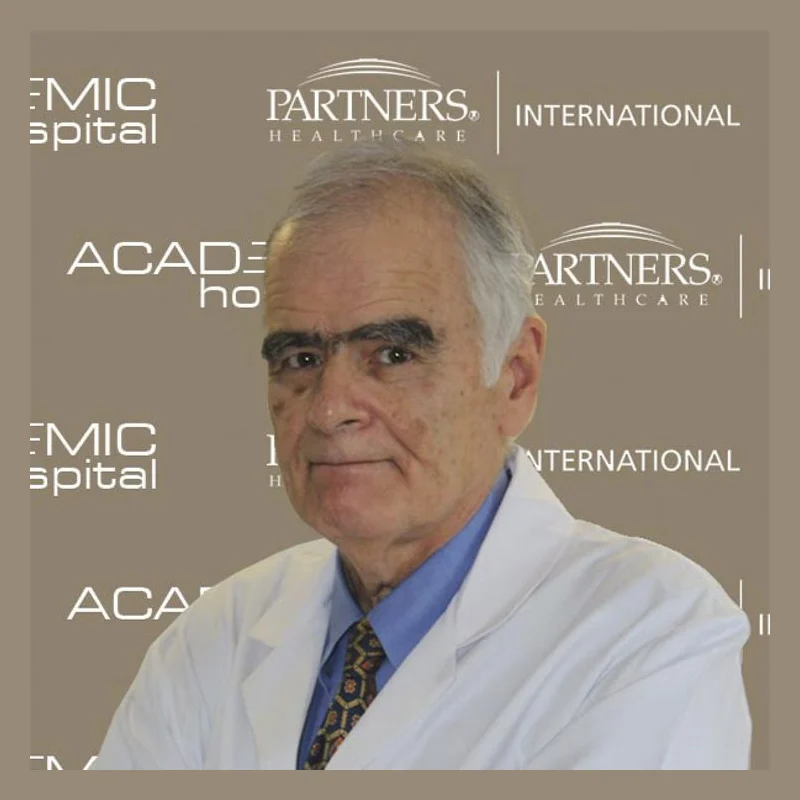
Prof. Dr. Hasan Yazıcı
RheumatologyVerified
- 52+years exp.
English · Turkish
FromPrice on request
Free quote
60 seconds · no obligationView Profile
A short guide to rheumatology in Turkey: what a visit can do for lupus and other autoimmune diseases, when an autologous stem cell transplant for scleroderma is considered and why it is only for selected patients, approximate costs compared with the UK, US and Germany, safety and regulation, how to choose a hospital, how long to stay and why long-term care stays with your rheumatologist at home.
A written plan with the surgeon's name and the full price — usually within 24 hours.

1 doctor Compare doctors, ratings and prices — ask any of them for a free quote.
RheumatologyVerified
English · Turkish
60 seconds · no obligationView Profile
Rheumatology deals with inflammatory and autoimmune diseases of the joints, muscles, blood vessels and connective tissue — rheumatoid arthritis, systemic lupus erythematosus, systemic sclerosis (scleroderma), vasculitis, ankylosing spondylitis, gout and others. These are long-term diseases. Most international patients who look for rheumatology in Turkey want a clear diagnosis when the picture at home is uncertain, a second opinion on a treatment plan that is not working, or — for a small group with severe scleroderma — a specialised procedure such as an autologous stem cell transplant.
Private hospitals in Istanbul have rheumatology departments that work with immunology laboratories, radiology, nephrology, cardiology, pulmonology and, for transplants, haematology. A rheumatologist in Turkey first trains in internal medicine and then completes a further specialist training in rheumatology, and is registered with the Ministry of Health.
A trip can give you a thorough assessment, a written plan or a single specialised treatment. It cannot replace regular care: the medicines, blood tests and dose changes of the following months and years stay with your rheumatologist at home. This guide explains what is realistic, what it costs, how to check a hospital and how to plan your stay. The hospitals on our site and real patient reviews are shown on this page; a written plan is free.
Browse every Rheumatology treatment available at our partner hospitals in Turkey, grouped by category.
The hospitals on our site do not yet publish fixed prices for rheumatology, because the cost depends on your diagnosis, your earlier tests and the medicines needed. The table gives approximate ranges for orientation only; the Turkish figures are confirmed in a written quote after a doctor has seen your reports. Prices outside Turkey are typical private (self-pay) prices and vary widely.
| Treatment | Turkey (approximate, confirmed in a written quote) | United Kingdom | United States | Germany |
|---|---|---|---|---|
| Rheumatology assessment with immunology blood tests | about €250–€700 | about £600–£1,500 | about $800–$2,500 | about €400–€1,000 |
| Medication therapy for lupus (assessment and treatment plan; biologic medicines extra) | on request | about £800–£2,000 plus medicines | about $1,000–$3,000 plus medicines | about €500–€1,500 plus medicines |
| Autologous stem cell transplant for scleroderma | on request | mainly within the NHS; rarely offered privately | often above $100,000 | often above €60,000 |
What changes the price: the number of antibody and imaging tests, a kidney or skin biopsy, heart and lung tests, a hospital stay and, above all, biologic medicines, which can cost more than the rest of the visit together. For a transplant, the price depends on the conditioning regimen, the time in hospital and the treatment of complications — ask exactly what is covered.
A diagnostic package usually includes the consultations with a rheumatologist, the agreed blood and antibody tests, imaging such as ultrasound, X-rays or a lung CT, a written report in English, a final consultation and often transfers and an interpreter. Biopsies, extra tests decided after the first results, medicines, infusions, hotel nights and flights are often extra. Ask for a written list before you book, and send your previous results in advance so that tests you already have are not repeated.
Systemic lupus erythematosus can affect the skin, joints, kidneys, blood, heart, lungs and brain, and its treatment is tailored to the organs involved. The usual basis is hydroxychloroquine, with the lowest effective dose of steroids, immunosuppressants such as mycophenolate, azathioprine or methotrexate, and, when needed, biologic medicines such as belimumab or anifrolumab. Lupus nephritis is treated together with a kidney specialist and often needs a kidney biopsy.
Lupus treatment in Turkey makes most sense as a careful assessment and medication plan: reviewing the diagnosis, the organs involved and the current medicines, and agreeing a plan that your doctor at home can continue. Infusions every few weeks and regular monitoring of blood counts, kidneys and eyes cannot be done from abroad. If you take immunosuppressants, protect yourself from infections while travelling, and avoid strong sun — UV light can trigger lupus flares.
For a small group of people with severe, rapidly progressing diffuse cutaneous systemic sclerosis, an autologous haematopoietic stem cell transplant (HSCT) is a recognised treatment. Your own blood stem cells are collected, high-dose chemotherapy suppresses the immune system, and the stem cells are returned to rebuild it. In randomised trials, HSCT for scleroderma improved long-term survival and skin and lung outcomes in carefully selected patients compared with standard treatment.
It is, however, a high-risk treatment. Serious infections, heart complications and treatment-related deaths occurred in the trials, mostly in the first year. It is considered only for patients early in the disease, with progression despite standard treatment and without advanced heart, lung or kidney damage, and only after a thorough heart and lung work-up. It should be done in a centre with transplant experience and a team of rheumatologists, haematologists and cardiologists, ideally following the European (EBMT) recommendations. It is not a cure for every form of scleroderma, it is not suitable for limited or long-standing disease, and offers of "stem cell injections" outside a transplant programme are not the same treatment.
Hospitals in Turkey need a Ministry of Health licence, and hospitals that treat international patients need an additional health tourism authorisation. Many large private hospitals are also accredited by Joint Commission International (JCI). For a stem cell transplant, ask whether the transplant unit is licensed by the Ministry for transplantation and accredited by JACIE, the European standard for stem cell transplant programmes.
Red flags: promises of a cure for lupus or scleroderma, unproven stem cell or "immune" therapies, advice to stop medicines your doctor prescribed, and no plan for follow-up at home.
| Treatment | Time in Turkey | Note |
|---|---|---|
| Rheumatology assessment and second opinion | 2–4 days | Some antibody results take several days |
| Lupus assessment with treatment plan | 3–5 days | Longer if a kidney biopsy is needed |
| Stem cell transplant for scleroderma | about 6–8 weeks or more | Collection, conditioning, recovery of blood counts; fit-to-fly check |
After a transplant, the immune system needs months to recover; long flights, crowds and infections need extra care. Read our advice on flying after treatment abroad.
Rheumatic diseases need years of follow-up, and that care belongs with your rheumatologist at home. Take every report, scan and the medicine plan in English, and share it before your first appointment back home. After HSCT, follow-up includes blood counts, heart, lung and kidney checks and repeat vaccinations — agree in advance who will do this. Bring enough of your prescription medicines for the whole trip with a doctor's letter. Planned treatment is not covered by ordinary travel insurance; check your own cover before you book.
Diagnosis and second opinions for rheumatoid arthritis, lupus, scleroderma, vasculitis and spondyloarthritis, medication plans including biologic medicines, and for selected patients with severe scleroderma an autologous stem cell transplant.
It can be for a thorough assessment and a medication plan, especially when the diagnosis or treatment is uncertain at home. Regular infusions and monitoring must continue with your doctor at home.
No. Lupus is a long-term disease, but with hydroxychloroquine, low-dose steroids, immunosuppressants and biologic medicines most people can control it. Be wary of anyone who promises a cure.
Mainly adults early in diffuse cutaneous systemic sclerosis whose disease is progressing despite standard treatment, and who have no advanced heart, lung or kidney damage. A full heart and lung work-up decides.
It is a high-risk treatment. Serious infections, heart complications and treatment-related deaths occurred in the clinical trials, mostly in the first year. For selected patients the long-term benefit can outweigh these risks; this must be weighed with your own rheumatologist.
No hospital on our site publishes a fixed price yet. The price of a transplant depends on the regimen, the hospital stay and complications, and is given in a written quote after your reports are reviewed.
Usually about 6–8 weeks or more, for stem cell collection, conditioning, recovery of blood counts and a fit-to-fly check.
Previous blood and antibody results, imaging reports, biopsy results, lung function and heart tests, a list of all medicines and doses, and letters from your rheumatologist.
Usually yes, for personal use in their original packaging with a doctor's letter or prescription. Check the rules for controlled medicines before you travel.
Your rheumatologist at home. Rheumatic diseases need years of monitoring, so agree before you travel who will continue the medicines, blood tests and, after a transplant, the vaccinations.
Your request is in!
Your coordinator will contact you — usually within 2 hours, 24/7.
Want a faster, more accurate assessment?
Add photos & medical detailsLeave your number — a coordinator calls you in your language, usually within 15 minutes during office hours.
Thank you!
A coordinator will contact you at the time you chose.
