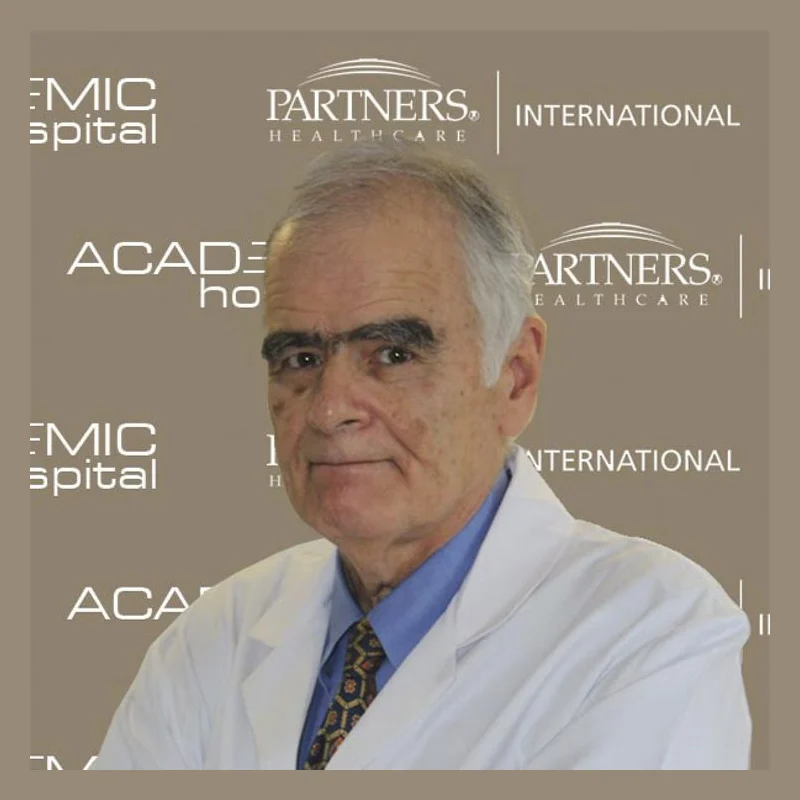
Prof. Dr. Hasan Yazıcı
RheumatologyVerified
- 52+years exp.
English · Turkish
FromPrice on request
Free quote
60 seconds · no obligationView Profile
Raynaud's disease is a vascular condition where small blood vessels in the extremities overreact to cold or emotional stress. It most commonly affects women and young adults, who visit a clinician for episodes of pale, blue, or numb fingers and toes accompanied by throbbing pain upon rewarming. Appropriate management and treatment options depend on a detailed specialist assessment to exclude underlying systemic conditions. Compare hospitals in Turkey that treat Raynaud's Disease and get a free review of your medical records.

1 doctor Compare doctors, ratings and prices — ask any of them for a free quote.
RheumatologyVerified
English · Turkish
60 seconds · no obligationView Profile
Raynaud's disease is a vascular condition where small blood vessels in the extremities overreact to cold or emotional stress. It most commonly affects women and young adults, who visit a clinician for episodes of pale, blue, or numb fingers and toes accompanied by throbbing pain upon rewarming. Appropriate management and treatment options depend on a detailed specialist assessment to exclude underlying systemic conditions.
Specialty: Rheumatology
The cost of treating Raynaud's Disease depends on the diagnosis and the treatment chosen. Doctors first review your medical records — free of charge — and you then receive an itemised quote.
Raynaud's Disease is treated by Rheumatology specialists. 1 clinic in Turkey on our platform offer this treatment.
Raynaud's disease is a vascular disorder characterised by an exaggerated reaction of the small blood vessels (arterioles) in the extremities to cold temperatures or emotional stress. During an episode, the blood vessels narrow sharply—a process known as vasospasm—restricting blood flow primarily to the fingers and toes. Less commonly, the ears, nose, lips, or nipples may be affected.
A typical episode presents as a distinct sequence of skin colour changes in the affected areas:
Raynaud's is classified into two forms: Primary Raynaud's (Raynaud's disease), which occurs independently without an underlying medical cause and is common in young women, and Secondary Raynaud's (Raynaud's phenomenon), which is linked to underlying autoimmune or connective tissue disorders such as systemic sclerosis, lupus, or rheumatoid arthritis. Differentiating between the two is crucial for long-term health management.
When evaluated at a hospital in Turkey, a specialist in rheumatology or vascular medicine will conduct a comprehensive clinical assessment to determine whether you have the primary or secondary form. You should bring all prior medical records, including previous blood test results and clinical notes from your home GP.
Diagnostic evaluations typically include:
Management focuses on reducing the frequency and severity of vasospastic attacks, preventing tissue damage, and treating any underlying cause. The treating physician tailors the regimen based on diagnostic findings.
| Option | Typically Used When | Things to Know |
|---|---|---|
| Lifestyle Modifications | Mild primary Raynaud's | Includes keeping warm, avoiding sudden temperature changes, quitting smoking, and managing stress. |
| Calcium Channel Blockers | Moderate to severe symptoms | Medications such as nifedipine relax and dilate small blood vessels to promote peripheral blood flow. |
| Vasodilator Therapies | Severe symptoms or digital ulcers | Prostaglandin infusions or phosphodiesterase inhibitors may be prescribed under medical supervision. |
| Sympathectomy | Severe, refractory cases with tissue risk | A surgical procedure to cut the sympathetic nerves controlling vessel constriction; considered a late-stage option. |
Depending on clinical needs, patients may also consult experts in dermatology for skin integrity or endocrinology if metabolic factors exacerbate symptoms.
If traveling to Turkey for medical evaluation or care, structured planning is essential to ensure a smooth healthcare journey:
Travel should be postponed if you have acute, severe complications. You must seek urgent medical care locally rather than traveling if you experience:
Primary Raynaud's occurs on its own without any associated medical condition and is generally mild. Secondary Raynaud's is caused by an underlying autoimmune or connective tissue disorder, such as scleroderma or lupus, and tends to be more severe, requiring close medical management.
Specialists perform a thorough clinical examination, nailfold capillaroscopy to inspect micro-blood vessels, and specific blood tests like ANA and ESR screens. These tests help determine whether the condition is primary or secondary and guide appropriate treatment.
There is currently no cure for Raynaud's disease. However, symptoms can be effectively managed and vasospastic episodes reduced through lifestyle adjustments, protective measures, and medications such as calcium channel blockers prescribed by a specialist.
A stay of 3 to 7 days is usually sufficient for initial consultations, specialized capillaroscopy imaging, routine laboratory diagnostics, and setting up a tailored medical management plan before you return home.
Sores or digital ulcers are a sign of severe tissue ischemia and require immediate medical attention. Do not undertake long-distance travel; consult a local physician or emergency service straight away to prevent serious tissue damage or infection.
Your request is in!
Your coordinator will contact you — usually within 2 hours, 24/7.
Want a faster, more accurate assessment?
Add photos & medical detailsLeave your number — a coordinator calls you in your language, usually within 15 minutes during office hours.
Thank you!
A coordinator will contact you at the time you chose.
