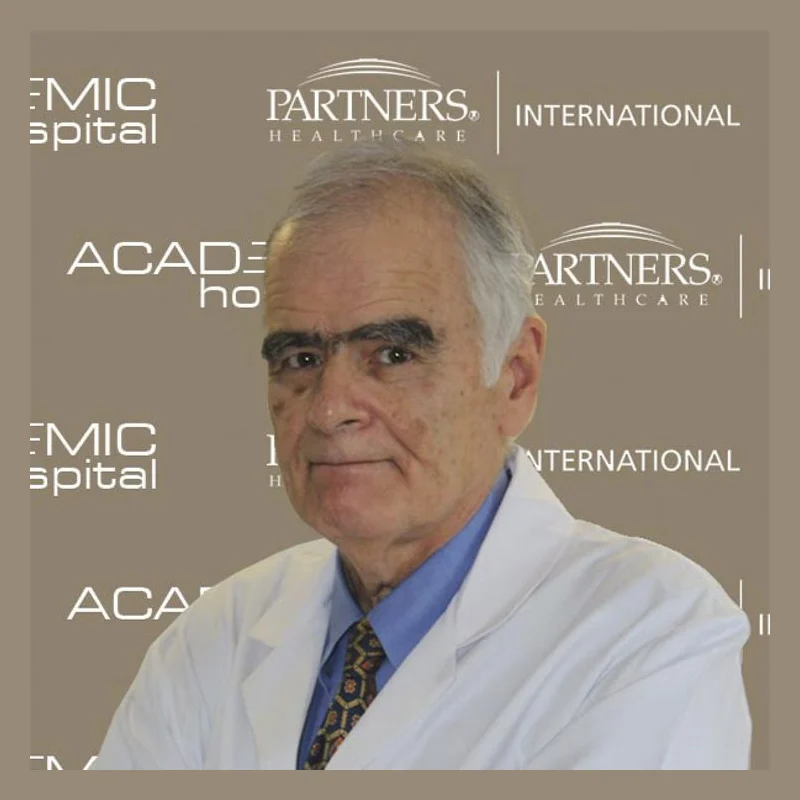
Prof. Dr. Hasan Yazıcı
RheumatologyVerified
- 52+years exp.
English · Turkish
FromPrice on request
Free quote
60 seconds · no obligationView Profile
Scleroderma is a rare autoimmune condition characterised by the thickening and hardening of the skin and connective tissues, sometimes involving internal organs. It predominantly affects adults, prompting medical consultation for joint stiffness, skin tightening, or circulatory issues such as Raynaud's phenomenon. Targeted therapeutic management options depend on a comprehensive specialist assessment to evaluate disease extent and organ involvement. Compare hospitals in Turkey that treat Scleroderma and get a free review of your medical records.

1 doctor Compare doctors, ratings and prices — ask any of them for a free quote.
RheumatologyVerified
English · Turkish
60 seconds · no obligationView Profile
Scleroderma is a rare autoimmune condition characterised by the thickening and hardening of the skin and connective tissues, sometimes involving internal organs. It predominantly affects adults, prompting medical consultation for joint stiffness, skin tightening, or circulatory issues such as Raynaud's phenomenon. Targeted therapeutic management options depend on a comprehensive specialist assessment to evaluate disease extent and organ involvement.
Specialty: Rheumatology
Depending on the stage and your medical history, doctors may recommend:
The cost of treating Scleroderma depends on the diagnosis and the treatment chosen. Doctors first review your medical records — free of charge — and you then receive an itemised quote.
Options may include Stem Cell Transplant for Scleroderma. Your doctor chooses the approach after reviewing your tests and scans.
Scleroderma is treated by Rheumatology specialists. 1 clinic in Turkey on our platform offer this treatment.
Scleroderma, also known as systemic sclerosis, is an autoimmune condition in which the body's immune system mistakenly attacks healthy connective tissue. This process causes an overproduction of collagen, leading to the thickening and hardening of the skin. While some forms remain localized to the skin, systemic scleroderma can affect internal structures, including blood vessels, the gastrointestinal tract, lungs, kidneys, and heart.
Patients seeking specialist care often experience a range of symptoms depending on the extent of organ involvement. Common initial signs include:
Accurate assessment requires a comprehensive multidisciplinary approach, usually coordinated within rheumatology departments. To determine whether the condition is localized or systemic, and to evaluate internal organ involvement, specialists in Turkey perform a combination of clinical examinations and diagnostic tests.
Standard diagnostic investigations typically include:
International patients must bring complete medical records, including previous blood test results, biopsy reports, imaging files (DICOM format), and a detailed history of prescribed medications. These documents allow the clinical team to evaluate disease progression without repeating unnecessary tests.
Because scleroderma cannot be cured, medical interventions focus on slowing disease progression, managing organ-specific complications, relieving pain, and improving daily function. The treating consultant determines all therapeutic strategies following a thorough review of diagnostic findings.
| Option | Typically used when | Things to know |
|---|---|---|
| Immunosuppressive Therapy | Active systemic disease affecting lungs, skin, or joints | Requires regular blood monitoring to track response and manage side effects. |
| Vascular Medications | Severe Raynaud's phenomenon or digital ulcers | Vasodilators help open blood vessels and improve peripheral blood flow. |
| Gastrointestinal Agents | Oesophageal reflux or altered motility | Managed alongside gastroenterology teams using acid suppressants and prokinetics. |
| Targeted Anti-fibrotic Drugs | Progressive interstitial lung disease | Aims to preserve lung function and slow the rate of tissue scarring. |
In addition to systemic pharmacotherapy, supportive care plays a key role. Patients with severe skin involvement or joint contractures may benefit from structured rehabilitation programs to maintain mobility. Advanced evaluations for organ-specific complications are coordinated through relevant departments, such as cardiac surgery or neurosurgery, should complex co-morbidities arise.
Travelling abroad for chronic autoimmune management requires careful organization. Patients should send their full medical file for a remote preliminary review before booking travel. This allows the medical team to plan the necessary consultations and diagnostic appointments in advance.
A typical trip for initial evaluation and treatment setup requires a stay of 7 to 10 days in Turkey. This window provides sufficient time for comprehensive diagnostic workups, multidisciplinary consultations, and initial medication adjustments. Before returning home, patients receive a clear long-term treatment plan. Ongoing care, including routine blood tests and organ monitoring, must be coordinated with a local rheumatologist in the patient's home country.
Travel is not advisable for patients experiencing acute, uncontrolled disease flare-ups, severe resting breathlessness, unstable cardiac conditions, or active renal crisis. Flying with advanced lung involvement requires pre-flight clearance from a specialist to ensure high-altitude air travel is safe.
Immediate emergency care locally—rather than international travel—is essential if you develop any of the following warning signs:
No, scleroderma is a chronic autoimmune condition without a known cure. Treatment aims to suppress immune system overactivity, manage organ-specific complications, relieve Raynaud's symptoms, and maintain physical joint mobility. Therapeutic plans focus on improving long-term quality of life and slowing disease progression based on individual clinical evaluation.
Most international patients should plan a stay of 7 to 10 days. This timeframe allows rheumatology specialists to perform capillaroscopy, comprehensive blood antibody panels, pulmonary imaging, and organ function tests, followed by the development of a tailored ongoing medical management plan.
You should bring your complete medical history, including recent autoantibody test results, pulmonary function test reports, echocardiograms, high-resolution CT scans of the chest on disc, current prescription lists, and any reports from prior skin or organ biopsies to help your physician assess disease activity.
Patients with mild or stable disease can usually fly safely. However, if you have significant pulmonary fibrosis, pulmonary hypertension, or severe vascular impairment, you must obtain medical clearance from your treating physician before flying, as oxygen saturation levels may drop during air travel.
Before your departure, your specialist in Turkey provides a detailed summary report and treatment recommendations. You will need to share these documents with your local rheumatologist and general practitioner, who will oversee your ongoing prescription refills, routine safety blood tests, and periodic organ monitoring.
Your request is in!
Your coordinator will contact you — usually within 2 hours, 24/7.
Want a faster, more accurate assessment?
Add photos & medical detailsLeave your number — a coordinator calls you in your language, usually within 15 minutes during office hours.
Thank you!
A coordinator will contact you at the time you chose.
