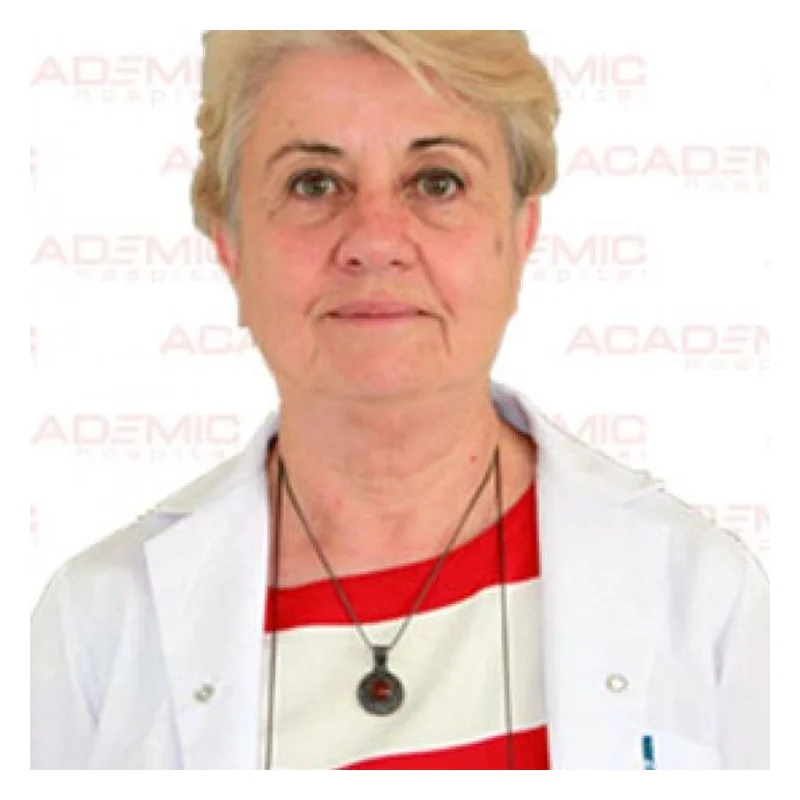
Prof. Dr. Emel Akoğlu
UrologyVerified
- 57+years exp.
English · Turkish
FromPrice on request
Free quote
60 seconds · no obligationView Profile
Peyronie's disease is a connective tissue condition characterised by the development of fibrous plaques inside the penis. It primarily affects adult men, causing penile curvature during erections, localised pain, indentation, or sexual dysfunction that leads individuals to seek urological assistance. Both non-invasive therapies and surgical treatment options depend on a detailed specialist assessment of disease stability, deformity angle, and vascular function. Compare hospitals in Turkey that treat Peyronie's Disease and get a free review of your medical records.

2 doctors Compare doctors, ratings and prices — ask any of them for a free quote.
UrologyVerified
English · Turkish
60 seconds · no obligationView Profile
UrologyVerified
English · Turkish
60 seconds · no obligationView Profile
Peyronie's disease is a connective tissue condition characterised by the development of fibrous plaques inside the penis. It primarily affects adult men, causing penile curvature during erections, localised pain, indentation, or sexual dysfunction that leads individuals to seek urological assistance. Both non-invasive therapies and surgical treatment options depend on a detailed specialist assessment of disease stability, deformity angle, and vascular function.
Specialty: Urology
Depending on the stage and your medical history, doctors may recommend:
The cost of treating Peyronie's Disease depends on the diagnosis and the treatment chosen. Doctors first review your medical records — free of charge — and you then receive an itemised quote.
Options may include Peyronie's Disease Surgery, PRP with HA for Peyronie's Disease. Your doctor chooses the approach after reviewing your tests and scans.
Peyronie's Disease is treated by Urology specialists. 2 clinics in Turkey on our platform offer this treatment.
Peyronie's disease is an acquired connective tissue disorder of the penis characterised by the formation of fibrous collagen plaques within the tunica albuginea. This scar tissue reduces elasticity in the affected area, causing the penis to bend, curve, or indent during an erection. The condition typically progresses through two distinct phases: an active (acute) inflammatory phase and a chronic (stable) phase.
During the active phase, which often lasts between six and eighteen months, patients frequently experience localized penile pain or discomfort, particularly when erect. As the fibrous plaque develops, progressive curvature, shortening, or an 'hourglass' deformation of the penile shaft may occur. In the chronic phase, inflammation subsides, the pain usually resolves, and the physical deformity stabilizes. Many men also report associated erectile dysfunction or difficulty with penetrative intercourse due to structural changes or altered vascular flow. International patients seeking specialized assistance often consult urology departments to evaluate both structural and functional impacts.
Evaluating Peyronie's disease requires a thorough clinical assessment to determine disease stability and select appropriate interventions. Specialist clinics in Turkey perform comprehensive diagnostic evaluations that typically include:
Before travelling, patients are advised to provide prior medical reports, previous ultrasound images, and, if possible, standardized photographs of the erection from multiple angles taken at home. These records assist medical teams in making preliminary evaluations before in-person testing.
Treatment strategy depends on whether the condition is in the active or stable phase, the severity of the curvature, and the presence of erectile dysfunction. Management ranges from non-invasive therapies to reconstructive surgery.
| Option | Typically used when | Things to know |
|---|---|---|
| Oral or Topical Medical Therapy | Active inflammatory phase with mild deformity or ongoing pain | Aims to reduce pain and inflammation; limited evidence for reversing established calcified plaques. |
| Intralesional Injections | Active or early stable phase with moderate curvature and preserved erectile function | Involves series of targeted plaque injections; requires structured stretching protocols and multiple clinic visits. |
| Plication Surgery | Stable phase, curvature under 60 degrees, adequate penile length, intact erectile function | Shortens the convex (unaffected) side to straighten the shaft; highly effective but may cause slight loss of penile length. |
| Plaque Incision/Excision and Grafting | Stable phase, severe curvature (>60 degrees), hourglass deformity, or short shaft | Lengthens the concave (affected) side using a tissue graft; carries a higher risk of post-operative erectile dysfunction. |
| Penile Prosthesis Implantation | Stable phase accompanied by moderate-to-severe erectile dysfunction resistant to medication | Combines deformity correction (manual modeling or grafting) with an inflatable or malleable implant to restore rigidity. |
Depending on overall physical health or concurrent medical conditions, patients may also be referred for baseline evaluation in check-ups & diagnostics or consult specialists in endocrinology if underlying metabolic factors influence healing.
Surgical or complex interventional management for Peyronie's disease requires careful timeline planning. Initial remote evaluations rely on medical records and diagnostic imaging. Once in Turkey, patients complete in-person diagnostic testing and consultations over one to two days before any planned procedure.
For surgical interventions (plication, grafting, or prosthesis placement), patients should plan to stay in the country for 7 to 14 days post-operatively. This timeframe allows for monitoring of wound healing, management of catheterization if required, and removal of surgical drains or sutures. Medical teams will provide explicit instructions regarding physical activity, wound hygiene, and a mandatory period of sexual abstinence (typically 6 to 8 weeks). Coordination with a local urologist in your home country is recommended to manage long-term recovery and routine follow-up.
Surgical treatment for Peyronie's disease should not be undertaken while the condition is still in the active, unstable phase, as ongoing inflammation can compromise surgical outcomes and lead to disease recurrence. Travel should be postponed if you have uncontrolled systemic conditions, active urinary tract infections, or unresolved cardiovascular risks that increase anesthesia hazards. If extensive surgical reconstruction is needed alongside other major corrective procedures, such as general surgery or plastic & aesthetic surgery, your clinical team must carefully evaluate safety and recovery stress.
Following any urological procedure, seek immediate local emergency medical care if you experience any of the following warning signs:
Peyronie's disease is primarily thought to result from micro-vascular trauma or repetitive minor injury to the penis during sexual activity or exercise. In genetically predisposed individuals, abnormal wound healing leads to excessive fibrous scar tissue accumulation in the tunica albuginea rather than normal tissue repair.
During the acute phase, spontaneous improvement occurs in a small percentage of men. Pain typically resolves as inflammation subsides into the chronic phase. However, established fibrous plaques and significant curvature rarely reverse completely without targeted medical or surgical intervention.
Surgical correction is recommended only after the disease has stabilized. This usually requires at least 12 months from initial symptom onset and at least 3 to 6 consecutive months without changes in curvature angle or ongoing penile pain.
Some degree of penile shortening is a known outcome of certain procedures, particularly plication techniques that shorten the unaffected side. Incision and grafting or penile implants aim to preserve length, but overall expectations should be thoroughly discussed with the operating urologist.
Patients are generally instructed to abstain from all sexual activity, masturbation, and vigorous physical exertion for 6 to 8 weeks following surgical correction to allow proper tissue healing, graft integration, or implant stabilization.
Your request is in!
Your coordinator will contact you — usually within 2 hours, 24/7.
Want a faster, more accurate assessment?
Add photos & medical detailsLeave your number — a coordinator calls you in your language, usually within 15 minutes during office hours.
Thank you!
A coordinator will contact you at the time you chose.