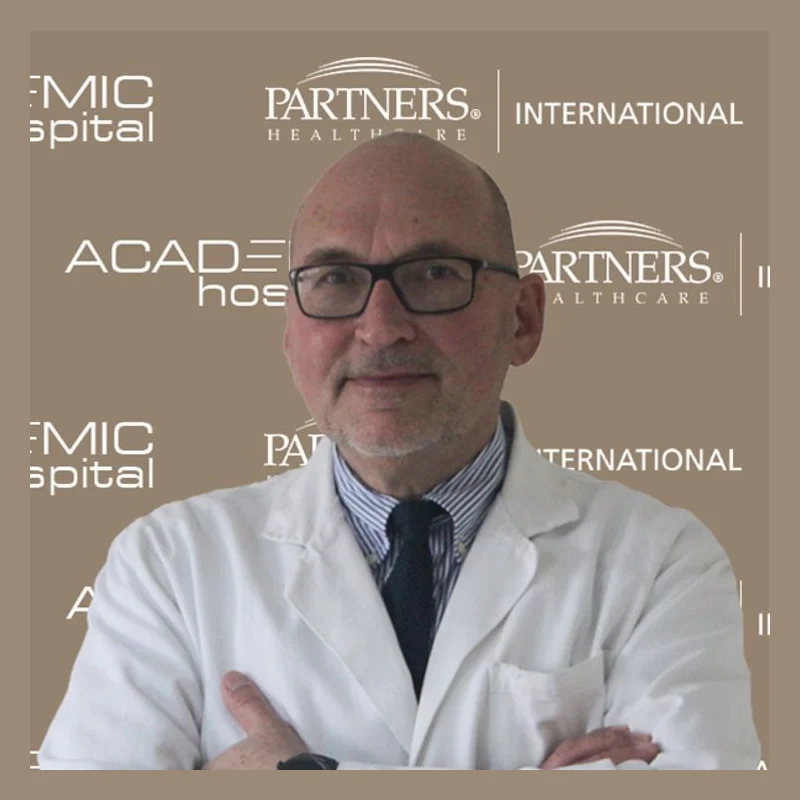
Prof. Dr. Turgay Çelikel
OncologyVerified
- 47+years exp.
English · Turkish
FromPrice on request
Free quote
60 seconds · no obligationView Profile
Esophageal cancer is a malignant condition affecting the tissues of the gullet or food pipe. Patients typically seek medical advice after noticing progressive difficulty swallowing, unexplained weight loss, persistent indigestion, or chest discomfort. Diagnostic staging is essential, and recommended treatment options depend on a specialist assessment of tumour stage and general health. Compare hospitals in Turkey that treat Esophageal Cancer and get a free review of your medical records.

1 doctor Compare doctors, ratings and prices — ask any of them for a free quote.
OncologyVerified
English · Turkish
60 seconds · no obligationView Profile
Esophageal cancer is a malignant condition affecting the tissues of the gullet or food pipe. Patients typically seek medical advice after noticing progressive difficulty swallowing, unexplained weight loss, persistent indigestion, or chest discomfort. Diagnostic staging is essential, and recommended treatment options depend on a specialist assessment of tumour stage and general health.
Specialty: Oncology
Depending on the stage and your medical history, doctors may recommend:
The cost of treating Esophageal Cancer depends on the diagnosis and the treatment chosen. Doctors first review your medical records — free of charge — and you then receive an itemised quote.
Options may include Complex Diagnostics of Esophageal Cancer. Your doctor chooses the approach after reviewing your tests and scans.
Esophageal Cancer is treated by Oncology specialists. 2 clinics in Turkey on our platform offer this treatment.
Esophageal cancer develops when malignant cells form in the tissues of the gullet, the muscular tube that connects the throat to the stomach. There are two primary histological types: squamous cell carcinoma, which often arises in the upper and middle sections, and adenocarcinoma, which typically develops near the junction of the esophagus and stomach, frequently linked to chronic acid reflux or Barrett's esophagus.
In the early stages, esophageal cancer may present with minimal or non-specific symptoms. As the tumour expands, it obstructs the passage of food and fluids. Patients frequently seek specialist medical evaluation after experiencing:
Accurate staging is critical for determining whether esophageal cancer can be treated with intent to cure or if palliative management is appropriate. Specialist multidisciplinary teams in Turkey rely on advanced imaging and tissue sampling to establish the precise extent of disease. Patients travelling for diagnostic clarity or secondary management should undergo an extensive assessment through oncology specialists.
Standard diagnostic investigations typically include:
Patients travelling from abroad should bring all existing medical records, including pathology slides or tissue blocks, formal radiology reports, DICOM format imaging CDs, recent blood panel results, and relevant history from gastroenterology specialists.
Management of esophageal cancer requires a tailored strategy decided by a multidisciplinary tumor board, which includes surgical oncologists, medical oncologists, radiation oncologists, and radiologists. Clinical decisions depend on the precise anatomical location, histological classification, stage of the cancer, and the patient's general fitness.
| Option | Typically used when | Things to know |
|---|---|---|
| Endoscopic Resection | Very early-stage (Tis or T1a) superficial mucosal lesions | Preserves the gullet; performed endoscopically without external incisions. |
| Surgical Resection (Esophagectomy) | Localized disease without distant spread, often after neoadjuvant therapy | Complex surgery to remove the affected section; involves reconstructive general surgery techniques. |
| Chemoradiotherapy | Locally advanced disease or non-surgical candidates | Combines targeted radiation with chemotherapy to shrink tumours before surgery or serve as definitive treatment. |
| Systemic Chemotherapy & Immunotherapy | Metastatic disease or recurrent esophageal cancer | Focuses on controlling systemic spread, alleviating dysphagia, and preserving quality of life. |
In cases where complete swallowing blockage occurs, palliative interventions such as esophageal stenting or placement of enteral feeding tubes may be coordinated alongside thoracic surgery teams to maintain nutrition.
International travel for complex cancer management requires meticulous planning. Before setting off, patients should participate in a preliminary remote records review with the treating team in Turkey to confirm whether further travel is clinically appropriate. Once arriving, diagnostic verification and staging usually require 5 to 7 days.
If surgery or combined chemoradiotherapy is indicated, patients must plan for an extended stay. Major operations require 10 to 14 days of inpatient hospitalization, followed by several weeks of local recovery to monitor for early complications, such as anastomotic leaks or wound infection. Total stay durations often range from 3 to 6 weeks. Before returning home, clear protocols must be established with your local healthcare provider for ongoing surveillance, nutritional management, and routine blood tests.
Long-distance air travel is not advisable for individuals experiencing severe, untreated anemia, active internal bleeding, profound malnutrition, or unmanaged respiratory failure. Flying presents risks if you are recovering from recent major thoracic or abdominal operations without clear medical discharge.
Seek immediate local emergency medical evaluation if you experience any of the following warning signs:
The medical team requires your original histopathology report and, ideally, the formalin-fixed paraffin-embedded tissue blocks or glass slides. Turkish pathologists review these specimens to confirm the exact histological subtype and conduct necessary biomarker testing before finalizing your treatment plan.
Patients undergoing an esophagectomy typically stay in Turkey for 4 to 6 weeks. This timeframe includes pre-operative preparation, 10 to 14 days of inpatient hospital care, and 2 to 3 weeks of outpatient post-operative monitoring to manage nutrition and detect potential complications before long-distance travel.
No treatment begins immediately. The multidisciplinary team must first review existing scans, perform diagnostic confirmation, run current blood panels, and assess organ function. This preliminary evaluation usually takes 3 to 5 working days before chemotherapy or radiation protocols safely commence.
If a tumour prevents swallowing fluids or food, gastroenterologists or thoracic specialists may place a temporary self-expanding metal stent to hold the esophageal lumen open. Alternatively, a feeding tube may be inserted into the stomach or small intestine to ensure adequate nutrition during oncology treatments.
Before discharge, your treating oncologist provides a detailed medical summary, histopathology results, and imaging reports in English. You must share these documents with your home physician or oncologist, who will manage routine follow-up, blood monitoring, and long-term surveillance imaging as outlined in your discharge plan.
Your request is in!
Your coordinator will contact you — usually within 2 hours, 24/7.
Want a faster, more accurate assessment?
Add photos & medical detailsLeave your number — a coordinator calls you in your language, usually within 15 minutes during office hours.
Thank you!
A coordinator will contact you at the time you chose.

