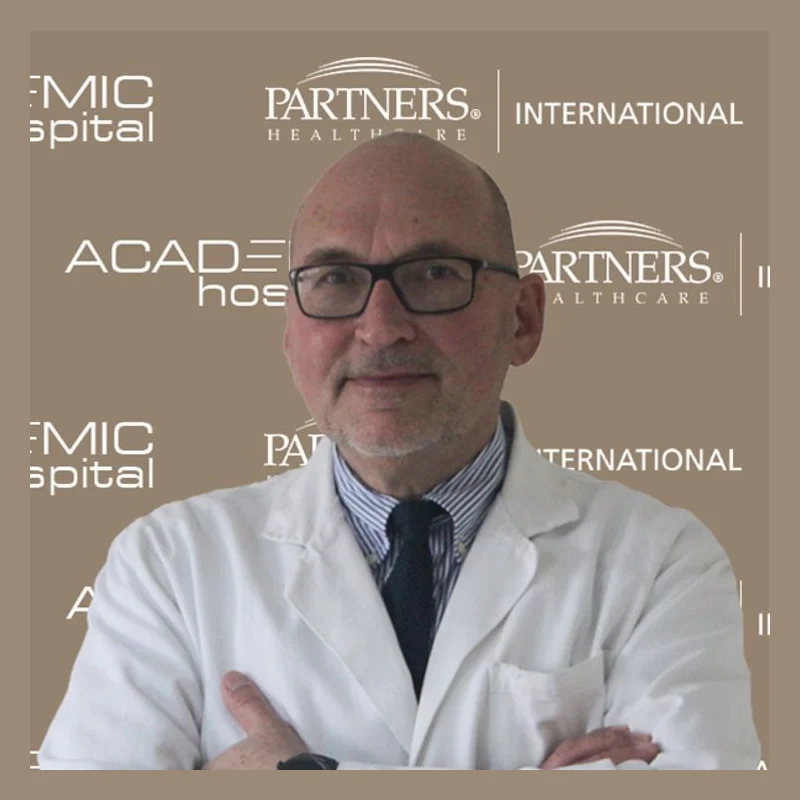
Prof. Dr. Turgay Çelikel
OncologyVerified
- 47+years exp.
English · Turkish
FromPrice on request
Free quote
60 seconds · no obligationView Profile
Carcinomatosis is an advanced oncological condition where cancer cells spread widely throughout a body cavity, frequently involving the peritoneum or pleura. It affects patients with progressive primary carcinomas. Symptoms prompting medical consultation include persistent abdominal swelling, fluid accumulation, unexplained weight loss, shortness of breath, and fatigue. Suitable palliative and therapeutic treatment options depend on a thorough specialist assessment. Compare hospitals in Turkey that treat Carcinomatosis and get a free review of your medical records.

1 doctor Compare doctors, ratings and prices — ask any of them for a free quote.
OncologyVerified
English · Turkish
60 seconds · no obligationView Profile
Carcinomatosis is an advanced oncological condition where cancer cells spread widely throughout a body cavity, frequently involving the peritoneum or pleura. It affects patients with progressive primary carcinomas. Symptoms prompting medical consultation include persistent abdominal swelling, fluid accumulation, unexplained weight loss, shortness of breath, and fatigue. Suitable palliative and therapeutic treatment options depend on a thorough specialist assessment.
Specialty: Oncology
The cost of treating Carcinomatosis depends on the diagnosis and the treatment chosen. Doctors first review your medical records — free of charge — and you then receive an itemised quote.
Carcinomatosis is treated by Oncology specialists. 2 clinics in Turkey on our platform offer this treatment.
Carcinomatosis is the widespread dissemination of cancer cells across the lining of a body cavity. Rather than forming an isolated mass, malignant cells detach from a primary tumour and seed the peritoneum in the abdomen or the pleura around the lungs, developing into extensive tumour nodules.
The condition commonly arises from advanced cancers of the digestive system, gynaecological organs, or lungs. When cancer spreads along these serosal linings, it disrupts normal fluid drainage. Patients seeking care through oncology typically report symptoms such as:
Evaluating carcinomatosis requires thorough staging to map tumour extent and locate the primary cancer. Hospitals in Turkey perform multi-phase contrast CT, PET-CT, and MRI scans through dedicated check-ups and diagnostics units to assess resectability.
Fluid samples from paracentesis or thoracentesis undergo cytological examination to confirm malignant cells. For peritoneal disease, surgeons often perform a diagnostic laparoscopy to calculate the Peritoneal Cancer Index (PCI), which quantifies disease burden across thirteen abdominal regions.
When travelling for specialist evaluation, patients should bring:
Care plans are determined by a multidisciplinary tumour board. Management aims to control disease progression, alleviate symptoms, and maintain daily functioning.
| Option | Typically used when | Things to know |
|---|---|---|
| Cytoreductive Surgery (CRS) + HIPEC | Selected patients with resectable peritoneal spread from colorectal, appendiceal, or ovarian cancer. | Involves tumour debulking by general surgery teams followed by heated intraperitoneal chemotherapy. |
| Pressurized Aerosol Chemotherapy (PIPAC) | Unresectable peritoneal disease or patients unsuitable for major surgical debulking. | Minimally invasive laparoscopic procedure delivering aerosolised chemotherapy directly to peritoneal nodules. |
| Systemic Chemotherapy & Targeted Drugs | Widespread systemic involvement, pleural dissemination, or aggressive histology. | Tailored regimens aimed at stabilising tumour growth and slowing disease spread. |
| Palliative Drainage & Stents | Recurrent ascites, pleural effusions, or gastrointestinal obstruction. | Provides symptom relief through indwelling catheters, paracentesis, or decompression. |
Gynaecological carcinomatosis involves specialised management from gynaecology oncologists. When gastrointestinal transit is compromised, gastroenterology specialists assist with nutritional support and bowel management. For thoracic spread, pulmonology and thoracic surgery teams offer pleurodesis or catheter placement to manage recurrent chest fluid.
Careful logistical planning is essential for patients with advanced oncological diagnoses. Most hospitals arrange an initial remote evaluation of imaging and pathology before travel to confirm that clinical options are available.
The required length of stay depends on the chosen treatment pathway. Patients undergoing diagnostic laparoscopy or PIPAC typically remain in Turkey for 10 to 14 days. Major cytoreductive surgery with HIPEC requires an inpatient hospital stay of 10 to 20 days, followed by two to three weeks of outpatient monitoring to manage surgical recovery before flying home.
Before departure, the treating team provides medical summaries, discharge instructions, and copies of all investigations. You must establish direct coordination with your local medical team at home to ensure uninterrupted ongoing care, regular blood monitoring, and prompt management of any post-treatment complications.
International travel is not suitable for all patients. Advanced carcinomatosis can make long journeys hazardous. Travel is generally contraindicated in individuals with severe malnutrition, unmanaged bowel obstruction, respiratory failure, or very low performance status.
Seek urgent medical attention at your local emergency department if you develop any of the following warning signs:
All clinical decisions regarding therapy and travel readiness are made by the treating doctor following individual diagnostic review.
Carcinomatosis represents an advanced stage of cancer where malignant cells have seeded across cavity linings such as the peritoneum or pleura. In the majority of clinical cases, it is considered incurable. However, specialised interventions such as complete cytoreductive surgery combined with heated chemotherapy can significantly prolong survival for select patients with colorectal, ovarian, or appendix primaries, provided the disease burden is technically resectable.
Peritoneal carcinomatosis involves malignant seeding throughout the abdominal cavity, often originating from gastrointestinal or gynaecological cancers and frequently causing fluid buildup called malignant ascites. Pleural carcinomatosis occurs in the chest cavity lining, commonly stemming from lung or breast tumours, and leads to recurrent pleural effusions that compress lung tissue and cause shortness of breath. Treatment approaches differ based on the anatomical compartment affected.
Eligibility relies on the peritoneal cancer index score, performance status, primary tumour histology, and the absence of distant extra-abdominal metastases. Surgeons assess whether all visible tumour nodules can be completely removed through cytoreduction. Patients with extensive small bowel involvement, severe organ dysfunction, or compromised nutritional reserves are generally not candidates for major surgical cytoreduction and instead receive systemic chemotherapy or palliative care.
Pressurized intraperitoneal aerosol chemotherapy delivers micronised liquid cytostatics directly into the abdominal cavity during a minimally invasive laparoscopy. Because the aerosol is applied under pressure, it achieves deeper tissue penetration within peritoneal nodules with minimal systemic absorption. This technique is typically reserved for individuals with unresectable peritoneal disease or those who cannot tolerate the physiological demands of major cytoreductive procedures.
Patients must secure explicit medical clearance from their treating oncologist and surgical team prior to air travel. Flying carries heightened risks of deep vein thrombosis, wound dehiscence, and symptom exacerbation. Patients should ensure that temporary surgical drains or indwelling fluid catheters are properly managed, carry detailed clinical discharge summaries, and have coordinated immediate follow-up care with an oncology provider in their home country.
Your request is in!
Your coordinator will contact you — usually within 2 hours, 24/7.
Want a faster, more accurate assessment?
Add photos & medical detailsLeave your number — a coordinator calls you in your language, usually within 15 minutes during office hours.
Thank you!
A coordinator will contact you at the time you chose.

