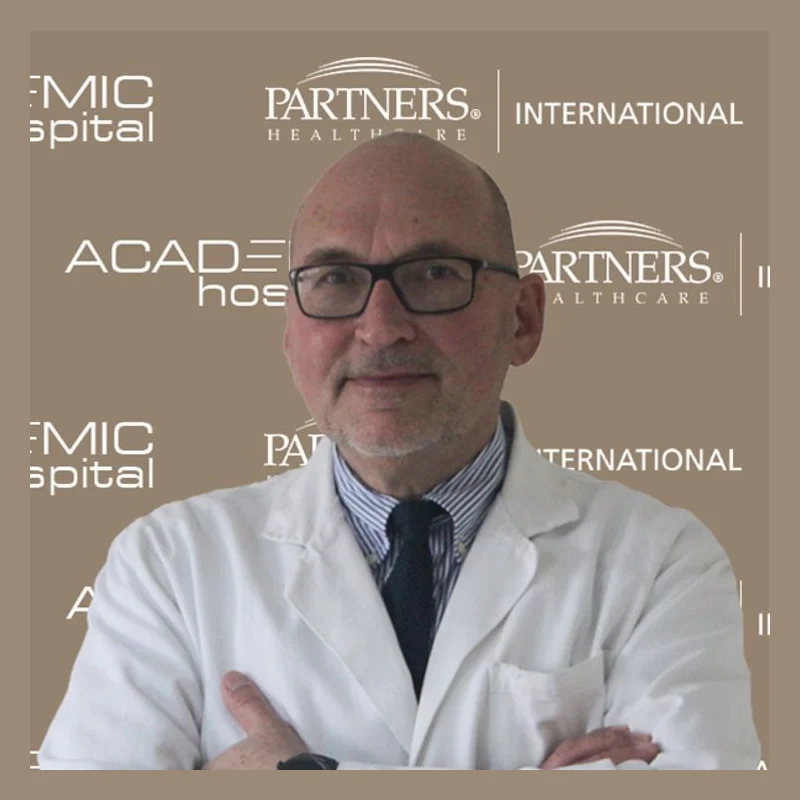
Prof. Dr. Turgay Çelikel
OncologyVerified
- 47+years exp.
English · Turkish
FromPrice on request
Free quote
60 seconds · no obligationView Profile
Osteosarcoma is a primary bone cancer that originates in bone-forming cells, most commonly developing in the arms or legs. It predominantly affects adolescents and young adults, though it can occur at any age, prompting medical consultation for persistent bone pain and localised swelling. Suitable treatment options depend on a specialist assessment of tumour location and overall stage. Compare hospitals in Turkey that treat Osteosarcoma and get a free review of your medical records.

1 doctor Compare doctors, ratings and prices — ask any of them for a free quote.
OncologyVerified
English · Turkish
60 seconds · no obligationView Profile
Osteosarcoma is a primary bone cancer that originates in bone-forming cells, most commonly developing in the arms or legs. It predominantly affects adolescents and young adults, though it can occur at any age, prompting medical consultation for persistent bone pain and localised swelling. Suitable treatment options depend on a specialist assessment of tumour location and overall stage.
Specialty: Oncology
The cost of treating Osteosarcoma depends on the diagnosis and the treatment chosen. Doctors first review your medical records — free of charge — and you then receive an itemised quote.
Osteosarcoma is treated by Oncology specialists. 2 clinics in Turkey on our platform offer this treatment.
Osteosarcoma is a primary bone cancer that originates in the bone-forming cells, known as osteoblasts. It most commonly affects the long bones surrounding the knee joint, such as the distal femur and proximal tibia, as well as the upper arm near the shoulder (proximal humerus). While it predominantly occurs in adolescents and young adults undergoing rapid growth spurts, it can also develop in older adults, sometimes secondary to pre-existing conditions like Paget's disease of the bone.
The symptoms of osteosarcoma often develop gradually and can initially be mistaken for growing pains or sports-related injuries. Key clinical indications include:
Obtaining an accurate histological diagnosis and precise staging is crucial before initiating any treatment plan. Hospitals in Turkey providing specialized care in Oncology follow strict clinical guidelines to evaluate bone tumours thoroughly.
When traveling to Turkey for diagnostic evaluation, patients are required to bring all primary medical records, including baseline blood test results, prior biopsy slides or tissue blocks, and DICOM-format files of existing imaging scans. The hospital team will typically perform or re-evaluate the following diagnostic procedures:
Osteosarcoma care almost always requires a multimodal approach coordinated by an interdisciplinary team, including medical oncologists, orthopedic surgical oncologists, and radiation specialists. Treatment decisions depend on precise tumour staging, histological grade, and whether the primary site allows for limb-sparing surgery.
| Option | Typically Used When | Things to Know |
|---|---|---|
Depending on individual patient needs, cases may involve secondary support from Orthopedics specialists for complex reconstructions or Paediatrics teams for adolescent care.
Organizing medical travel for complex bone cancer management requires precise logistics and clear communication with the treating medical team. International patients typically begin with a remote preliminary document review, where the hospital's tumor board evaluates prior imaging and biopsy reports to assess feasibility.
Patients should plan for an initial stay of several weeks if undergoing surgical resection and inpatient chemotherapy. The full treatment course, including both pre- and post-operative systemic therapy, often spans several months. If primary rehabilitation is needed after limb-salvage reconstruction, coordination with Rehabilitation specialists is arranged prior to discharge. Upon returning home, clear discharge summaries and digital imaging files are provided so local oncologists can continue follow-up monitoring and routine blood checks.
Travel is not advisable for patients experiencing severe untreated bone pain, acute pulmonary distress, or compromised systemic health following recent high-dose systemic therapy. Flying with severe anaemia or low blood cell counts increases the risk of complications such as deep vein thrombosis or severe infection.
Patients must seek immediate medical attention locally if they develop high fever, sudden inability to bear weight on the affected limb, progressive shortness of breath, or uncontrollable localized swelling. Final travel clearance and treatment decisions are strictly determined by the treating physician after comprehensive clinical evaluation.
A standard treatment protocol usually spans 6 to 9 months. It typically begins with 9 to 12 weeks of pre-operative chemotherapy, followed by limb-sparing surgery or amputation, and concludes with several additional months of post-operative chemotherapy based on the tumour's response to initial treatment.
Surgery is a necessary component of curative-intent treatment for osteosarcoma. Systemic chemotherapy alone cannot fully eliminate the primary bone tumour. Radiation therapy is rarely the primary local treatment and is reserved for cases where complete surgical removal is anatomically impossible.
Patients undergoing limb-sparing surgery usually stay in Turkey for 3 to 6 weeks. This period covers pre-operative assessments, the surgical procedure, initial post-operative recovery, wound healing monitoring, and early physical rehabilitation before safely traveling back home.
You should bring complete medical histories, operational notes, pathology reports with tissue blocks or slides if available, recent laboratory results, and all prior radiological imaging (MRI, CT, PET scans) provided on DICOM-formatted CDs or flash drives.
Yes, structured physical rehabilitation is essential following limb-preservation procedures. Rebuilding muscle strength, restoring joint flexibility, and learning to walk safely with an endoprosthesis or bone graft requires dedicated long-term physiotherapy coordinated by specialized rehabilitation teams.
Your request is in!
Your coordinator will contact you — usually within 2 hours, 24/7.
Want a faster, more accurate assessment?
Add photos & medical detailsLeave your number — a coordinator calls you in your language, usually within 15 minutes during office hours.
Thank you!
A coordinator will contact you at the time you chose.

