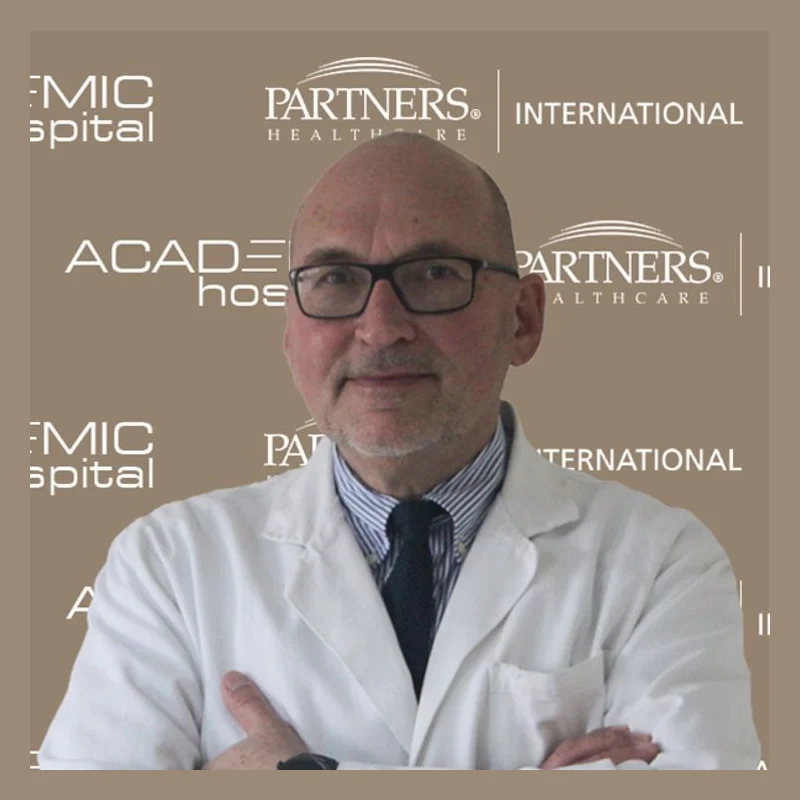
Prof. Dr. Turgay Çelikel
OncologyVerified
- 47+years exp.
English · Turkish
FromPrice on request
Free quote
60 seconds · no obligationView Profile
Larynx cancer affects the tissues of the voice box, developing within the vocal cords or surrounding structures. Individuals typically present to a doctor with persistent hoarseness, difficulty or pain when swallowing, a chronic cough, or an enlarged neck node. Selection of appropriate therapeutic options depends on an extensive specialist assessment involving endoscopic examination, biopsy confirmation, and cross-sectional imaging. Compare hospitals in Turkey that treat Larynx Cancer and get a free review of your medical records.

1 doctor Compare doctors, ratings and prices — ask any of them for a free quote.
OncologyVerified
English · Turkish
60 seconds · no obligationView Profile
Larynx cancer affects the tissues of the voice box, developing within the vocal cords or surrounding structures. Individuals typically present to a doctor with persistent hoarseness, difficulty or pain when swallowing, a chronic cough, or an enlarged neck node. Selection of appropriate therapeutic options depends on an extensive specialist assessment involving endoscopic examination, biopsy confirmation, and cross-sectional imaging.
Specialty: Oncology
Depending on the stage and your medical history, doctors may recommend:
The cost of treating Larynx Cancer depends on the diagnosis and the treatment chosen. Doctors first review your medical records — free of charge — and you then receive an itemised quote.
Options may include Chemotherapy for Larynx Cancer. Your doctor chooses the approach after reviewing your tests and scans.
Larynx Cancer is treated by Oncology specialists. 2 clinics in Turkey on our platform offer this treatment.
Larynx cancer, often referred to as voice box cancer, develops in the tissues of the larynx, which is situated at the top of the windpipe. The larynx plays a critical role in breathing, swallowing, and producing sound. Most laryngeal malignancies originate in the thin, flat squamous cells lining the inside of the voice box. When these cells mutate and grow uncontrollably, malignant lesions form on or around the vocal cords (glottis), above them (supraglottis), or below them (subglottis).
Early detection significantly influences management strategies and preservation of vocal function. Symptoms vary depending on the exact location of the tumour, but common warning signs include:
If you experience any of these symptoms continuously, a prompt consultation with an ENT specialist or an oncology team is essential.
When seeking evaluation in Turkey, clinical pathways follow international head and neck oncology standards. Hospitals utilise precise diagnostic modalities to determine the tumour's precise location, depth, and potential spread to adjacent structures or distant organs. Patients should bring all prior medical documentation, including physical copies or digital files of previous scans, biopsy slides, histology reports, and physician letters.
The diagnostic protocol in a Turkish medical centre typically involves:
Therapeutic decisions are tailored by a multidisciplinary tumour board based on staging, patient health, and functional preservation goals. Below is an overview of standard options:
| Option | Typically Used When | Things to Know |
|---|---|---|
| Transoral Laser Microsurgery (TLM) | Early-stage tumours limited to the vocal cords (Stage I or II). | Minimally invasive approach through the mouth aimed at preserving voice quality without neck incisions. |
| Radiotherapy | Early-stage disease as a primary treatment, or after surgery for high-risk features. | Delivers targeted radiation over several weeks; allows vocal box preservation but causes temporary throat sore and dry mouth. |
| Partial Laryngectomy | Selected intermediate-stage tumours confined to specific regions of the voice box. | Removes only the affected portion of the larynx, retaining natural breathing and partial voice capabilities. |
| Total Laryngectomy | Advanced-stage tumours or cases where the larynx is severely damaged. | Involves complete removal of the voice box and creation of a permanent breathing stoma in the neck. Speech rehabilitation is required. |
| Chemoradiation | Locally advanced tumours as an alternative to total laryngectomy, or as adjuvant therapy. | Combines systemic chemotherapy with daily radiation to maximize local control while attempting organ preservation. |
Surgical interventions fall under specialized head and neck procedures. When complex reconstructions or organ function support are required, multidisciplinary inputs from rehabilitation services help patients adapt to functional changes in speaking and swallowing.
Traveling abroad for complex oncology care requires thorough preparation. Before departing, send all relevant clinical records and imaging to the international patient office for a preliminary document review by an oncologist. This ensures that necessary resources and multidisciplinary teams are pre-arranged before your arrival.
Plan your stay according to your prescribed treatment pathway:
After returning home, long-term follow-up care must be established with a local oncologist or ENT specialist to monitor healing, manage late side-effects, and conduct routine surveillance imaging.
International travel is not suitable for everyone. You should postpone travel if you have severe, unmanaged breathing difficulties, acute airway obstruction, active internal bleeding from the airway, or severe malnutrition resulting from impaired swallowing. Patients who are medically unstable or unfit to fly due to severe co-morbidities should receive care locally.
Seek immediate emergency medical attention if you experience acute stridor (high-pitched breathing sounds), sudden severe shortness of breath, heavy coughing up of blood, or inability to swallow fluids. Treatment decisions are made exclusively by qualified medical specialists following comprehensive, in-person clinical evaluations.
The most common early symptom is persistent hoarseness or a voice change lasting longer than three weeks. Other early signs include a constant sore throat, pain when swallowing, an unexplained neck mass, or a chronic cough. Prompt medical evaluation is necessary to determine the cause.
Diagnosis relies on an endoscopic visual examination of the larynx (laryngoscopy) and a tissue biopsy, which is reviewed by a pathologist to confirm cancer cells. Imaging scans such as CT, MRI, or PET-CT are then performed to determine the exact stage and extent of the tumour.
Treatment can impact your voice, depending on the tumour's location and the chosen therapy. Early-stage laser surgery or radiotherapy often preserves clear speech. Extensive surgeries, such as partial or total laryngectomy, alter voice production, requiring post-operative speech therapy or prosthetic devices.
Diagnostic work-up and surgical procedures usually require a stay of 2 to 3 weeks. If your recommended plan involves primary or adjuvant radiotherapy or chemoradiation, you will need to remain in Turkey for 6 to 7 weeks to complete the daily treatment schedule safely.
Yes, many early and intermediate-stage laryngeal cancers are treated using organ-preservation approaches. These include transoral laser microsurgery, partial laryngectomy, or definitive radiotherapy with or without chemotherapy. A multidisciplinary tumour board determines whether organ preservation is clinically safe for your specific diagnosis.
Your request is in!
Your coordinator will contact you — usually within 2 hours, 24/7.
Want a faster, more accurate assessment?
Add photos & medical detailsLeave your number — a coordinator calls you in your language, usually within 15 minutes during office hours.
Thank you!
A coordinator will contact you at the time you chose.

