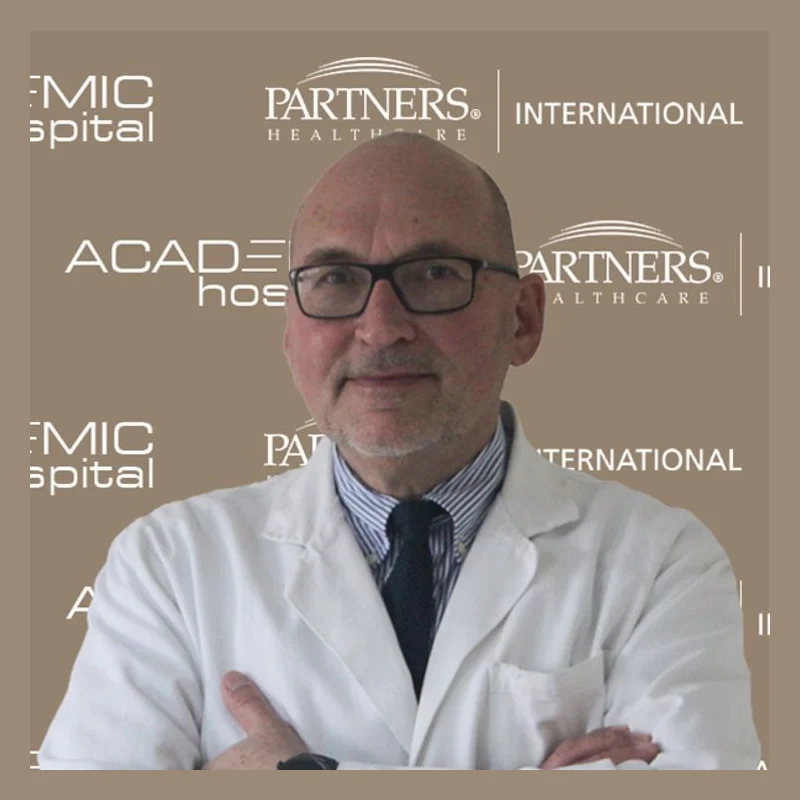
Prof. Dr. Turgay Çelikel
OncologyVerified
- 47+years exp.
English · Turkish
FromPrice on request
Free quote
60 seconds · no obligationView Profile
Sarcoma is an uncommon cancer arising in connective tissues, including bone, muscle, fat, cartilage, and blood vessels. It can develop in children and adults, frequently prompting medical visits when individuals discover a persistent, growing swelling or experience unexplained deep bone pain. Suitable treatment options depend on a thorough specialist assessment, accurate tissue biopsy, and imaging. Compare hospitals in Turkey that treat Sarcoma and get a free review of your medical records.

1 doctor Compare doctors, ratings and prices — ask any of them for a free quote.
OncologyVerified
English · Turkish
60 seconds · no obligationView Profile
Sarcoma is an uncommon cancer arising in connective tissues, including bone, muscle, fat, cartilage, and blood vessels. It can develop in children and adults, frequently prompting medical visits when individuals discover a persistent, growing swelling or experience unexplained deep bone pain. Suitable treatment options depend on a thorough specialist assessment, accurate tissue biopsy, and imaging.
Specialty: Oncology
Depending on the stage and your medical history, doctors may recommend:
The cost of treating Sarcoma depends on the diagnosis and the treatment chosen. Doctors first review your medical records — free of charge — and you then receive an itemised quote.
Options may include Radiation Therapy for Soft Tissue Sarcomas, Removal of Rhabdomyosarcoma, Sarcoma Immunotherapy, Leiomyosarcoma Removal, Removal of Ewing's Sarcoma. Your doctor chooses the approach after reviewing your tests and scans.
Sarcoma is treated by Oncology specialists. 2 clinics in Turkey on our platform offer this treatment.
Sarcoma is a rare category of malignant tumours that originate in the body's connective tissues. Unlike carcinomas, which develop in epithelial cells lining organs, sarcomas arise in mesodermal tissues such as bone, cartilage, fat, skeletal muscle, smooth muscle, blood vessels, and peripheral nerves. Because connective tissue exists throughout the human frame, these tumours can present in virtually any anatomical site, though they appear most frequently in the limbs, retroperitoneum, and pelvic region.
Due to the diversity of connective tissues, sarcomas are broadly divided into soft tissue sarcomas (such as liposarcoma, leiomyosarcoma, and synovial sarcoma) and bone sarcomas (such as osteosarcoma, Ewing sarcoma, and chondrosarcoma). Symptoms vary considerably based on location and size. Common clinical signs include:
Accurate diagnosis is paramount because sarcomas comprise over 80 distinct histological subtypes, each requiring a tailored strategy. When undergoing evaluation in Turkey, patients typically enter a multidisciplinary framework coordinated through oncology departments. Diagnostic pathways focus on precise staging and histological confirmation.
Hospitals routinely utilize advanced imaging to determine the extent of the primary tumour and check for distant metastasis. High-resolution magnetic resonance imaging (MRI) is the primary tool for soft tissue and extremity lesions, while computed tomography (CT) scans evaluate retroperitoneal sites and chest involvement. Positron emission tomography (PET-CT) scans are frequently integrated to detect metabolic activity and systemic spread.
Histopathological confirmation must be established before any therapeutic intervention. Biopsies are typically performed using ultrasound-guided or CT-guided core needles to prevent tumor seeding along the biopsy tract. International patients travelling for care should bring all pre-existing medical documentation, including:
Sarcoma management relies on a multidisciplinary tumour board where surgical oncologists, medical oncologists, radiation oncologists, and pathologists collaboratively review each case. Treatment strategies depend on the exact histological subtype, tumour grade, anatomical location, and overall patient health.
| Option | Typically used when | Things to know |
|---|---|---|
Complex surgical procedures, such as bone resections requiring endoprosthetic reconstruction, are frequently co-managed by specialist teams in orthopedics. For tumours involving major neural or vascular pathways, co-interventions with neurosurgery or general surgery specialists are incorporated into the primary surgical plan.
Traveling abroad for complex oncological care requires meticulous preparation. Before booking travel, foreign medical records undergo a preliminary review by Turkish clinical teams to confirm that travel is appropriate and to outline preliminary diagnostic requirements.
Patients should plan for an extended initial stay. A standard initial phase involves 1 to 2 weeks for comprehensive restaging, pathology confirmation, and treatment planning. If primary surgery is performed, patients generally stay in-country for 3 to 6 weeks to allow for post-operative recovery, wound management, and initial physical therapy supported by rehabilitation experts. If multi-cycle systemic chemotherapy or daily radiotherapy is required, stays may extend over several months, or care may be split into coordinated blocks with local oncologists back home.
Long-distance travel carries inherent risks for individuals with advanced malignant disease. Flying or undertaking extensive road travel is generally not recommended for patients experiencing severe respiratory compromise from pulmonary metastases, unmanaged deep vein thrombosis (DVT), severe pathological bone fractures, or acute spinal cord compression caused by vertebral lesions.
Patients experiencing urgent symptoms—such as sudden loss of bowel or bladder control, severe progressive limb weakness, high fever during chemotherapy, or persistent chest pain and shortness of breath—should seek immediate emergency care at the nearest local hospital rather than attempting international travel.
Soft tissue sarcomas originate in supportive tissues like fat, muscle, blood vessels, or deep nerve structures. Bone sarcomas develop directly within hard skeletal tissue or cartilage. Because these tissue types behave differently, they require distinct imaging protocols, surgical approaches, and systemic drug regimens.
Duration depends on the treatment plan. Initial diagnostic confirmation typically takes 7 to 14 days. If localized surgery is performed, expect a stay of 3 to 6 weeks for post-operative recovery. Treatments involving extended radiation or chemotherapy cycles require long-term planning discussed directly with your attending medical team.
Modern surgical techniques aim for limb-sparing resection whenever clinically safe, using advanced reconstructive methods like endoprostheses or tissue grafts. However, achieving clear surgical margins to prevent recurrence is the primary goal, and decisions are made by the multidisciplinary team after examining detailed high-resolution imaging.
Sarcoma subtypes are highly diverse and complex to categorize. Central pathology review of original tissue blocks or slides ensures the exact histological subtype and grade are correct. An accurate pathological diagnosis is essential because targeted therapies and chemotherapy protocols differ significantly between subtypes.
Before discharge, your treating team provides detailed medical reports, surgical summaries, and digital imaging files. Your Turkish oncologist will outline a long-term surveillance schedule—typically including periodic MRI or CT scans—which can be shared with your local medical practitioner for ongoing monitoring.
Your request is in!
Your coordinator will contact you — usually within 2 hours, 24/7.
Want a faster, more accurate assessment?
Add photos & medical detailsLeave your number — a coordinator calls you in your language, usually within 15 minutes during office hours.
Thank you!
A coordinator will contact you at the time you chose.

