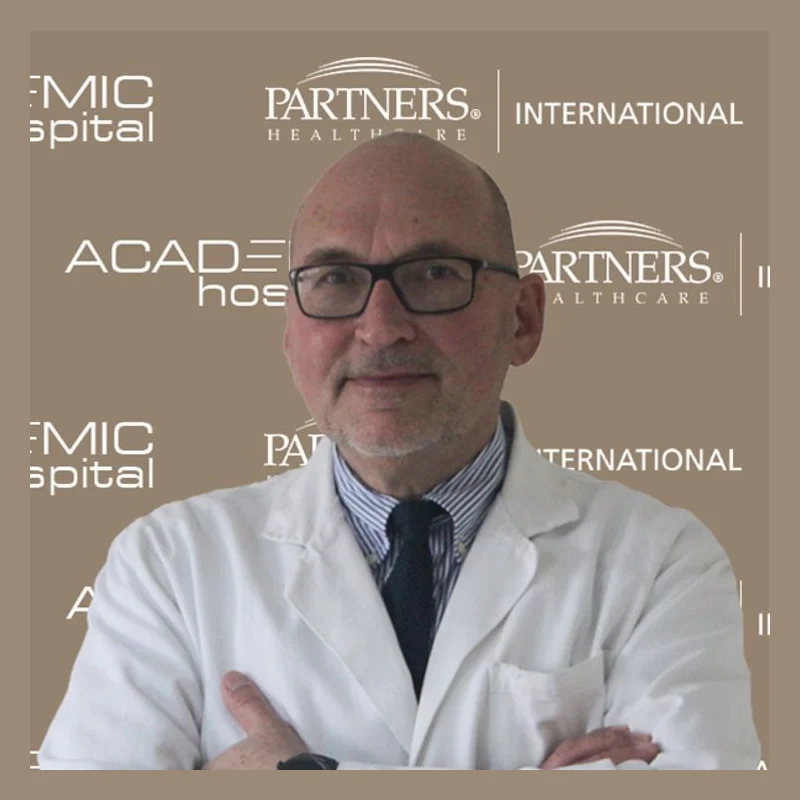
Prof. Dr. Turgay Çelikel
OncologyVerified
- 47+years exp.
English · Turkish
FromPrice on request
Free quote
60 seconds · no obligationView Profile
Retinoblastoma is a rare form of eye cancer that originates in the retina. It predominantly affects young children, prompting parents to seek specialist medical attention when noticing an unusual white reflection in the pupil, misaligned eyes, or persistent redness. Staging, vision preservation, and treatment options depend on a specialised clinical assessment by an ocular oncology specialist. Compare hospitals in Turkey that treat Retinoblastoma and get a free review of your medical records.

1 doctor Compare doctors, ratings and prices — ask any of them for a free quote.
OncologyVerified
English · Turkish
60 seconds · no obligationView Profile
Retinoblastoma is a rare form of eye cancer that originates in the retina. It predominantly affects young children, prompting parents to seek specialist medical attention when noticing an unusual white reflection in the pupil, misaligned eyes, or persistent redness. Staging, vision preservation, and treatment options depend on a specialised clinical assessment by an ocular oncology specialist.
Specialty: Oncology
Depending on the stage and your medical history, doctors may recommend:
The cost of treating Retinoblastoma depends on the diagnosis and the treatment chosen. Doctors first review your medical records — free of charge — and you then receive an itemised quote.
Options may include Complex Treatment of Retinoblastoma. Your doctor chooses the approach after reviewing your tests and scans.
Retinoblastoma is treated by Oncology specialists. 2 clinics in Turkey on our platform offer this treatment.
Retinoblastoma is a rare form of eye cancer that develops in the light-sensitive tissues of the retina. It primarily affects infants and young children under the age of five. The condition occurs when nerve cells in the retina undergo genetic mutations, causing them to multiply uncontrollably and form a tumour within the eye. It can affect one eye (unilateral) or both eyes (bilateral).
Parents often first notice signs during routine care or in photographs. Key symptoms of retinoblastoma include:
Early clinical evaluation is critical. If a child displays any of these symptoms, prompt assessment by an ocular oncology specialist is essential to preserve both life and sight.
When travelling for specialised care, diagnosis begins before departure with an initial review of local clinical notes. Medical teams specialising in oncology and paediatric ophthalmology require a comprehensive pre-arrival file to evaluate the urgency of the case.
Families should compile and bring the following clinical records:
Upon arrival at a facility in Turkey, the medical team conducts an Examination Under Anaesthesia (EUA). This allows the specialist to examine the entire retina using indirect ophthalmoscopy, measure tumour size, and take detailed retinal photographs (RetCam imaging). High-frequency ocular ultrasound and MRI scans of the brain and orbits are routinely performed to assess whether the tumour has extended beyond the eyeball or into the optic nerve.
The choice of treatment depends on the stage of the tumour, whether one or both eyes are involved, and the potential to preserve vision. Multidisciplinary teams evaluate each child individually to determine the appropriate clinical pathway.
| Option | Typically used when | Things to know |
|---|---|---|
| Systemic Chemotherapy | Large intraocular tumours or bilateral cases needing tumour shrinkage. | Administered via intravenous infusion; requires monitoring of blood counts and organ function. |
| Intra-arterial Chemotherapy (IAC) | Localized intraocular tumours where preserving the eye is feasible. | Delivers medication directly into the ophthalmic artery via a fine catheter; requires specialized neurointerventional care. |
| Focal Therapies (Cryotherapy / Laser) | Small, localized tumours or residual lesions after chemotherapy. | Uses extreme cold or laser heat to destroy tumour cells; often combined with systemic treatment. |
| Enucleation | Advanced tumours filling the eye with no potential for vision or risk of extraocular spread. | Surgical removal of the eye; followed by placement of an orbital implant and an aesthetic custom prosthesis. |
Children requiring advanced eye care or complex surgical interventions may also be evaluated within specialized pediatric eye surgery units or dedicated paediatrics departments to manage supportive care safely during therapy.
Arranging medical travel for a child with retinoblastoma requires careful coordination. Prior to travel, the hospital's international department reviews all diagnostic reports to provide a preliminary clinical outline. Because retinoblastoma protocols often involve multiple cycles of treatment, families usually stay in Turkey for several weeks or return for scheduled intervals.
A typical care path includes:
If general pediatric surgical support or comprehensive health evaluations are required during the stay, integration with general surgery or detailed check-ups & diagnostics services ensures all aspects of the child's health are monitored.
Air travel poses specific risks for children undergoing active eye cancer treatment. Immediate travel is not advisable under certain clinical circumstances:
If a child experiences sudden eye pain, bleeding, fever above 38°C, or a rapid deterioration in general well-being while traveling, seek immediate emergency care at the nearest equipped medical facility rather than waiting for scheduled travel routes.
The most common early sign is leukocoria, an abnormal white reflection in the pupil visible in bright light or photographs. Another frequent sign is strabismus, where the eyes appear misaligned or crossed. If either sign is noticed, an urgent examination by an eye specialist is necessary.
The duration depends on the treatment plan. Initial diagnostic evaluations and procedures like focal therapy or enucleation may require a stay of two to three weeks. Complex intra-arterial or systemic chemotherapy protocols may involve stays of several weeks or repeated visits over several months.
Vision preservation depends on the tumour's size, position relative to the optic nerve and macula, and early detection. When tumours are detected early and localized, targeted therapies can preserve useful vision. Advanced tumours may require focus on eradicating the cancer to protect overall health.
Flying is generally restricted immediately following intraocular procedures, catheterisation, or surgical interventions. Cabin pressure changes can increase ocular discomfort or risk complications. The treating ocular oncologist will provide clearance once it is clinically safe to fly.
Parents should provide complete ophthalmology consultation notes, high-resolution retinal images, laboratory blood results, and cranial or orbital MRI scans on digital media. Having these files reviewed in advance allows the medical team in Turkey to prepare an appropriate diagnostic plan.
Your request is in!
Your coordinator will contact you — usually within 2 hours, 24/7.
Want a faster, more accurate assessment?
Add photos & medical detailsLeave your number — a coordinator calls you in your language, usually within 15 minutes during office hours.
Thank you!
A coordinator will contact you at the time you chose.

