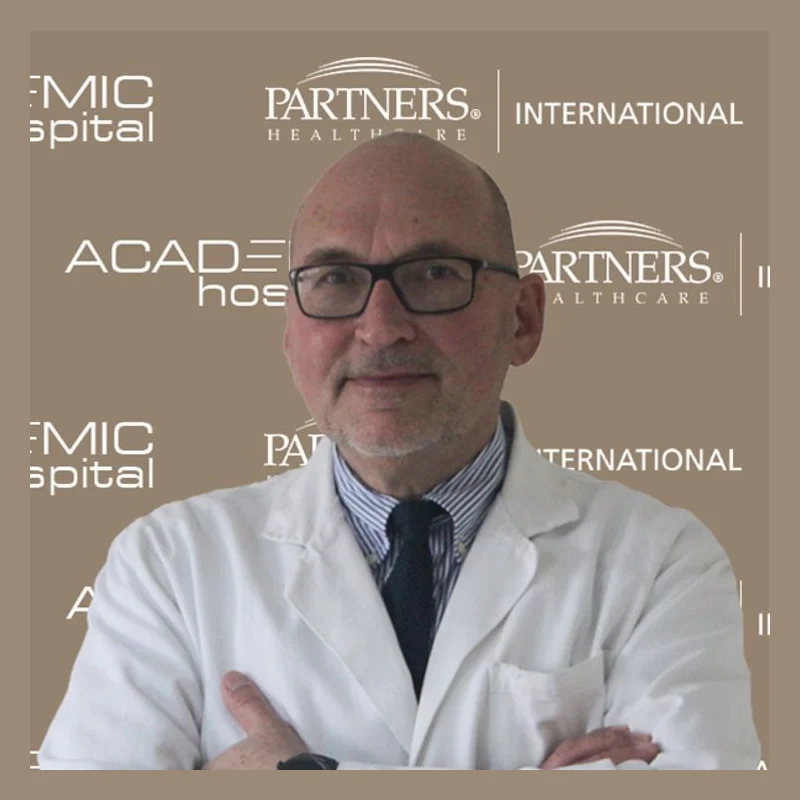
Prof. Dr. Turgay Çelikel
OncologyVerified
- 47+years exp.
English · Turkish
FromPrice on request
Free quote
60 seconds · no obligationView Profile
Melanoma is a type of skin cancer that develops in melanocytes, the cells responsible for producing pigment. It leads patients to see a doctor when new spots appear or existing moles change in size, colour, shape, or texture. Formulating suitable treatment options depends on a careful specialist assessment, including dermoscopic examination, biopsy analysis, and accurate pathological staging. Compare hospitals in Turkey that treat Melanoma and get a free review of your medical records.

1 doctor Compare doctors, ratings and prices — ask any of them for a free quote.
OncologyVerified
English · Turkish
60 seconds · no obligationView Profile
Melanoma is a type of skin cancer that develops in melanocytes, the cells responsible for producing pigment. It leads patients to see a doctor when new spots appear or existing moles change in size, colour, shape, or texture. Formulating suitable treatment options depends on a careful specialist assessment, including dermoscopic examination, biopsy analysis, and accurate pathological staging.
Specialty: Oncology
Depending on the stage and your medical history, doctors may recommend:
The cost of treating Melanoma depends on the diagnosis and the treatment chosen. Doctors first review your medical records — free of charge — and you then receive an itemised quote.
Options may include Melanoma Surgery, Wide Excision of Melanoma, Topical Therapy of Melanoma, Skin Cancer Screening with Dermoscopy. Your doctor chooses the approach after reviewing your tests and scans.
Melanoma is treated by Oncology specialists. 2 clinics in Turkey on our platform offer this treatment.
Melanoma is an aggressive form of skin cancer that originates in melanocytes, the specialized cells that produce melanin pigment. While less common than basal cell or squamous cell carcinomas, melanoma carries a significantly higher risk of spreading to lymph nodes and distant organs if not identified early. It frequently develops on sun-exposed areas such as the back, legs, arms, and face, but can also arise in unexposed sites, under nails, or on mucosal surfaces.
International patients often seek an urgent evaluation after noticing changes in existing moles or the appearance of new skin lesions. Clinical assessment commonly relies on the ABCDE criteria to evaluate suspicious spots:
Accurate staging dictates every stage of melanoma care. When visiting a hospital in Turkey for evaluation, the medical team conducts thorough diagnostic testing within an integrated multidisciplinary framework. Patients should bring all prior medical records, including previous skin check reports, photographic tracking, and histological slides or paraffin blocks from any previous biopsies performed in their home country.
Diagnostic workups typically involve:
Treatment strategies depend on the stage of the disease, anatomical location, depth of invasion, and genetic profile. Clinical decisions are made by the multidisciplinary board in Oncology after fully evaluating biopsy results and imaging.
| Option | Typically used when | Things to know |
|---|---|---|
| Wide Local Excision | Early-stage local melanoma (Stage I-II) | Removes wider safety margins of healthy tissue around the initial biopsy site to prevent local recurrence; often combined with Plastic & Aesthetic Surgery reconstructive techniques for clear surgical closures. |
| Sentinel Lymph Node Biopsy | Lesions exceeding specific thickness thresholds (Stage IB-II) | Identifies and tests the first lymph node filtering primary tumor drainage to check for micro-metastases before visible nodal spread occurs. |
| Targeted Therapy | Advanced or metastatic melanoma with positive BRAF mutations | Oral medications that specifically block altered signaling pathways in cancer cells, often achieving rapid disease control. |
| Immunotherapy | Resected high-risk melanoma or unresectable Stage III/IV disease | Systemic treatments (checkpoint inhibitors) that stimulate the patient's immune system to recognize and destroy melanoma cells. |
Traveling for complex cancer care requires structured coordination. Before traveling, international care teams conduct an initial document review of your medical reports and biopsy records. However, definitive treatment plans are established only after in-person consultations, clinical examination, and verification of pathology materials by local specialists.
Patients undergoing standard wide local excision or diagnostic node biopsies typically require a stay of 7 to 14 days in Turkey to complete pre-operative preparation, surgery, pathology confirmation, and initial wound review. If systemic treatments like immunotherapy or targeted therapy are indicated, clinicians establish multi-cycle protocols. Coordination with your home physician ensures safe continuation of systemic therapy or routine monitoring upon your return.
Long-distance travel is not advisable immediately following major surgical operations or when suffering from uncontrolled systemic symptoms. Patients with recent extensive surgical dissections, active wound infections, severe anemia, or acute respiratory problems must delay air travel until cleared by their clinical team. In cases requiring thoracic interventions, evaluation via Pulmonology & Thoracic Surgery is necessary to ensure flight safety.
Seek immediate emergency medical care locally if you experience any of the following warning signs:
Bring all recent medical notes, clinical photographs of your skin lesions, prior pathology reports, radiology scans on disc (CT, MRI, or PET-CT), and physical biopsy tissue blocks or slides if available. Having your complete medical history allows the multidisciplinary team to confirm the diagnosis efficiently without unnecessary repeat procedures.
For straightforward wide local excisions and sentinel lymph node biopsies, plan to remain in Turkey for approximately 7 to 14 days. This window allows adequate time for pre-operative assessments, the surgical procedure, pathology analysis of resected tissue, initial wound healing, and safety clearance for your return travel.
Yes, many international patients begin systemic therapies like targeted drugs or immune checkpoint inhibitors under the guidance of an oncologist in Turkey. Your medical team will provide a detailed treatment summary and prescription details to enable your oncologist at home to continue the standardized protocol safely.
Yes, an excisional biopsy performed by a trained clinician is the standard diagnostic procedure for suspected melanoma. Safely removing the full depth of the lesion does not cause the cancer to spread; rather, it provides essential histological information regarding tumor depth and characteristics needed for accurate staging.
If sentinel lymph node biopsy or imaging reveals regional node involvement, your multidisciplinary team will revise your staging and treatment plan. Options may include therapeutic lymph node management, targeted therapies, or systemic immunotherapy to target micro-metastatic disease, tailored to your specific clinical profile.
Your request is in!
Your coordinator will contact you — usually within 2 hours, 24/7.
Want a faster, more accurate assessment?
Add photos & medical detailsLeave your number — a coordinator calls you in your language, usually within 15 minutes during office hours.
Thank you!
A coordinator will contact you at the time you chose.

