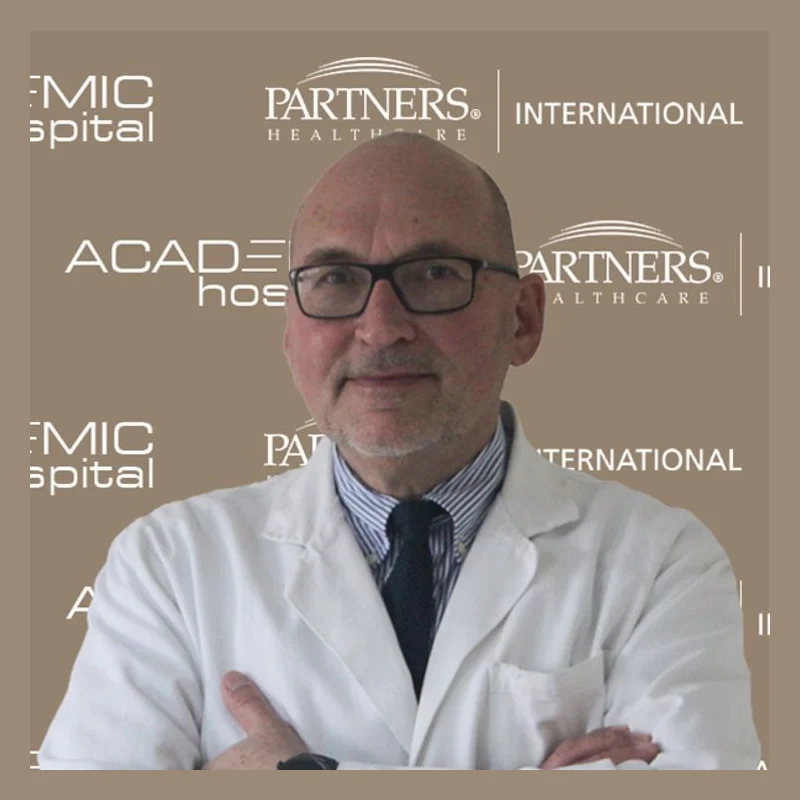
Prof. Dr. Turgay Çelikel
OncologyVerified
- 47+years exp.
English · Turkish
FromPrice on request
Free quote
60 seconds · no obligationView Profile
Testicular cancer is a cancer that starts in the testicle, most often in younger and middle-aged men. The usual first sign is a painless lump or swelling. It is diagnosed with examination, ultrasound and blood tumour markers. Treatment is planned by a specialist team and depends on the type and stage of the cancer. Compare hospitals in Turkey that treat Testicular Cancer and get a free review of your medical records.

1 doctor Compare doctors, ratings and prices — ask any of them for a free quote.
OncologyVerified
English · Turkish
60 seconds · no obligationView Profile
Testicular cancer is a cancer that starts in the testicle, most often in younger and middle-aged men. The usual first sign is a painless lump or swelling. It is diagnosed with examination, ultrasound and blood tumour markers. Treatment is planned by a specialist team and depends on the type and stage of the cancer.
Specialty: Oncology
Depending on the stage and your medical history, doctors may recommend:
The cost of treating Testicular Cancer depends on the diagnosis and the treatment chosen. Doctors first review your medical records — free of charge — and you then receive an itemised quote.
Options may include Radiation Therapy for Testicular Cancer, Chemotherapy for Testicular Cancer. Your doctor chooses the approach after reviewing your tests and scans.
Testicular Cancer is treated by Oncology specialists. 2 clinics in Turkey on our platform offer this treatment.
Testicular cancer develops when abnormal cells grow in the tissues of one or both testicles. It is most commonly diagnosed in younger and middle-aged men between the ages of 15 and 45. Most testicular tumours originate in the germ cells, which are responsible for producing sperm. These are broadly categorised as germ cell tumours, dividing into seminomas and non-seminomas. Seminomas tend to grow and spread more slowly, whereas non-seminomas often grow more rapidly and are composed of several different cell types.
The most frequent early indicator of testicular cancer is a small, painless lump or a noticeable firm swelling in one testicle. Other potential symptoms include:
Any persistent enlargement or palpable change in the testicle requires prompt medical evaluation to distinguish a malignant growth from benign conditions such as hydroceles, spermatoceles, or epididymitis.
When you seek evaluation for suspected testicular cancer in Turkey, specialists in urology and oncology perform a structured diagnostic assessment. The primary goal is to confirm whether a mass is malignant, determine its cell type, and establish whether the disease is localized or advanced.
Diagnostic protocols typically begin with a physical examination, followed quickly by advanced non-invasive tests:
To prevent duplicate procedures and streamline your care plan, international patients should collect and bring their full medical documentation. Ensure you have recent ultrasound scans, laboratory reports, previous biopsy or surgery records (if applicable), and clear imaging files on a CD or USB drive.
Treatment decisions depend on the specific histological type (seminoma vs. non-seminoma) and the clinical stage of the disease. Therapy is coordinated by a multidisciplinary team within specialized units such as check-ups & diagnostics, surgical urology, and medical oncology.
| Option | Typically Used When | Things to Know |
|---|---|---|
| Radical Inguinal Orchiectomy | First step for primary diagnosis and local control of almost all suspected cases. | The affected testicle is removed through a small incision in the groin. A prosthetic testicle can be inserted if requested. |
| Surveillance | Stage I seminomas or non-seminomas with low risk of recurrence. | Involves regular follow-ups, blood tests, and imaging without immediate further surgery or chemotherapy. |
| Chemotherapy | Advanced stages, spread to lymph nodes, or high-risk non-seminomas. | Uses targeted drug combinations (such as BEP) to target remaining cancer cells throughout the body. |
| Retroperitoneal Lymph Node Dissection (RPLND) | Persistent retroperitoneal masses or specific non-seminoma presentations. | A complex surgical procedure to remove abdominal lymph nodes; requires experienced surgical expertise. |
Prior to starting therapies that may affect future fertility, such as chemotherapy or RPLND, patients are offered options for sperm cryopreservation, often coordinated alongside IVF & fertility services.
Medical travel for cancer treatment requires carefully managed timelines. Before you travel, Turkish medical teams conduct an initial review of your home records. Once you arrive, initial consultations, imaging, and pre-operative checks typically take two to three days.
If surgery (orchiectomy) is performed, patients usually stay in the hospital for one to two nights and remain in Turkey for five to seven days post-operatively to monitor healing and retrieve pathology results. If adjuvant systemic treatment is recommended, additional time will be required depending on the prescribed regime. After returning home, your Turkish care team coordinates with your local oncologist to ensure smooth ongoing surveillance and follow-up care.
Traveling long distances is not recommended if you have severe post-operative complications, uncontrolled deep vein thrombosis (DVT), severe shortness of breath, or compromised cardiovascular function. Do not board a long flight if you are experiencing acute, unmanaged pain or high fevers.
Seek immediate local emergency medical care if you experience any of the following warning signs:
In most cases, a single remaining healthy testicle produces adequate testosterone and sufficient sperm for natural conception. However, if chemotherapy or abdominal surgery is required later, fertility may be reduced. Discussing sperm banking prior to starting active oncological treatment is strongly recommended to protect your future reproductive options.
Most patients remain in Turkey for 7 to 10 days for an orchiectomy. This timeframe includes initial consultations, pre-operative testing, the surgical procedure, a short hospital stay, post-operative monitoring, and a final review of the preliminary pathology report before traveling home safely.
Yes, a testicular prosthesis can often be inserted during the initial radical inguinal orchiectomy if discussed and planned in advance. The prosthesis is made of silicone gel or saline and matches the approximate size and shape of your remaining testicle for cosmetic symmetry.
Your treating team in Turkey provides a comprehensive medical report, pathology results, and surgical summaries translated into English. You will present these documents to your home oncologist or general practitioner to establish a routine surveillance plan, which includes regular blood tests, physical exams, and periodic CT scans.
Chemotherapy is not always required. If the cancer is caught in Stage I and is low-risk, active surveillance with frequent scans and blood tests may be the recommended path. Chemotherapy is typically reserved for higher-stage disease, high-risk features on pathology, or cases where cancer has spread beyond the testicle.
Your request is in!
Your coordinator will contact you — usually within 2 hours, 24/7.
Want a faster, more accurate assessment?
Add photos & medical detailsLeave your number — a coordinator calls you in your language, usually within 15 minutes during office hours.
Thank you!
A coordinator will contact you at the time you chose.

