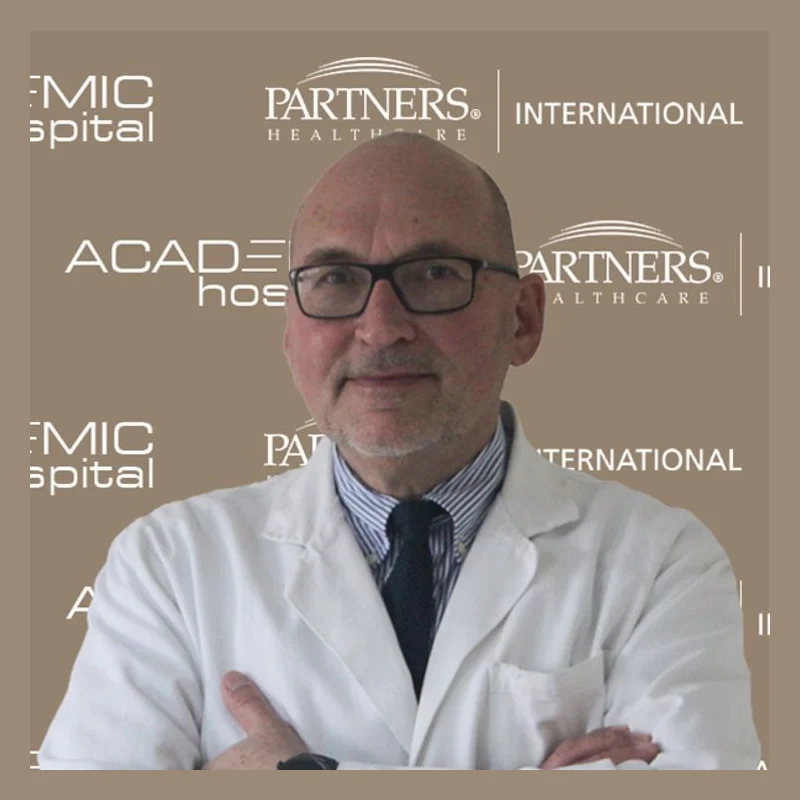
Prof. Dr. Turgay Çelikel
OncologyVerified
- 47+years exp.
English · Turkish
FromPrice on request
Free quote
60 seconds · no obligationView Profile
Ewing sarcoma is a rare malignancy that arises in bone or soft tissues, predominantly affecting children, teenagers, and young adults. Patients are generally prompted to see a doctor by worsening bone pain, palpable local swelling, tenderness, or unexplained fevers. Suitable treatment options depend on a multidisciplinary specialist assessment examining tumour spread, primary anatomical site, and individual physiological fitness. Compare hospitals in Turkey that treat Ewing Sarcoma and get a free review of your medical records.

1 doctor Compare doctors, ratings and prices — ask any of them for a free quote.
OncologyVerified
English · Turkish
60 seconds · no obligationView Profile
Ewing sarcoma is a rare malignancy that arises in bone or soft tissues, predominantly affecting children, teenagers, and young adults. Patients are generally prompted to see a doctor by worsening bone pain, palpable local swelling, tenderness, or unexplained fevers. Suitable treatment options depend on a multidisciplinary specialist assessment examining tumour spread, primary anatomical site, and individual physiological fitness.
Specialty: Oncology
The cost of treating Ewing Sarcoma depends on the diagnosis and the treatment chosen. Doctors first review your medical records — free of charge — and you then receive an itemised quote.
Ewing Sarcoma is treated by Oncology specialists. 2 clinics in Turkey on our platform offer this treatment.
Ewing sarcoma is a rare, aggressive malignancy that originates in the bones or surrounding soft tissues. It predominantly affects children, teenagers, and young adults, most frequently developing in the pelvis, femur, tibia, or chest wall. Because this tumour arises from primitive neural crest cells, prompt diagnostic evaluation and intervention are critical to manage potential metastatic spread, particularly to the lungs or other bone structures.
Patients or parents often seek medical evaluation after noticing localized discomfort that does not resolve with rest. Typical presentation includes:
Comprehensive staging is essential before any therapeutic strategy is selected. When evaluating suspected bone or soft tissue tumours, specialist hospitals in Turkey utilize standardized international oncology protocols. Initial evaluations fall under Check-ups & Diagnostics to confirm histological type and map localized or distant disease.
Standard diagnostic investigations include high-resolution MRI of the primary site to assess local tissue invasion, CT scans of the chest to rule out pulmonary metastases, and a whole-body PET-CT or bone scan. A definitive diagnosis requires a core needle biopsy analyzed by experienced pathologists, often incorporating molecular genetic testing to identify EWSR1 gene rearrangements.
International travel requires detailed preparation. Before arriving, patients should organize and transmit complete medical documentation, including:
Managing Ewing sarcoma demands a coordinated strategy directed by a multidisciplinary tumour board. Specialists in paediatric and adult oncology, orthopedic oncology, radiation oncology, and pathology collaborate to design an individualized sequence of therapies. Initial systemic chemotherapy is almost always administered first to shrink the primary tumour and target circulating micro-metastases.
Following induction chemotherapy, local control measures are evaluated. Depending on the anatomical location, primary local control may involve surgical resection, radiotherapy, or a combination of both. When surgical intervention involves bone removal in limbs, complex reconstruction techniques are performed by specialists in Orthopedics. For tumours located within the spine or near major neural structures, surgical consultation involves Neurosurgery teams.
| Option | Typically Used When | Things to Know |
|---|---|---|
| Induction Chemotherapy | Initial presentation for all localized and metastatic cases | Shrinks primary tumour and targets microscopic systemic disease prior to surgery. |
| Surgical Resection | Tumour is operable with achievable clear margins | Aims for complete removal; may require complex bone or tissue reconstruction. |
| Radiotherapy | Inoperable sites (e.g., pelvis, spine) or positive margins post-surgery | Used for local control when surgery carries unacceptable functional risk. |
| Consolidation Chemotherapy | Administered post-surgery or post-radiation | Eliminates remaining malignant cells to minimize the risk of distant recurrence. |
In cases where tumours involve the chest wall or thoracic cavity, care is co-managed with experts in Pulmonology & Thoracic Surgery. If comprehensive organ function monitoring or specialized systemic interventions are required, care falls under primary Oncology protocols. Supportive therapies managed via Paediatrics ensure young patients receive appropriate growth and developmental monitoring during intensive regimens.
Travelling for complex oncology care requires thorough logistical planning. The process begins with a remote records review, where Turkish medical teams assess diagnostic imaging and biopsy results to determine if travel is appropriate and safe. Because Ewing sarcoma care involves multi-week chemotherapy cycles and potential surgery, overseas visits require extended stays ranging from several weeks to several months.
Patients and caregivers must plan for safe accommodations between treatment cycles. Following active treatment phases, structured discharge planning ensures that care plans, post-chemotherapy monitoring guidelines, and rehabilitation goals are clearly communicated to home country physicians for seamless continuity of care.
Long-distance travel is not advisable if a patient has severely depressed blood counts (neutropenia or thrombocytopenia), active systemic infections, or severe breathing difficulties from lung metastases. Flying with low platelet counts increases the risk of unmanaged bleeding, while low white cell counts present severe infection risks in public transit settings.
Immediate local medical attention is required if a patient experiences sudden high fever (febrile neutropenia), severe unmanaged pain, persistent vomiting, shortness of breath, or new neurological symptoms such as limb weakness or loss of bowel control. Medical decisions must always be made by the treating physician after reviewing detailed clinical tests.
Treatment typically spans several months. It usually begins with 9 to 12 weeks of induction chemotherapy, followed by local control (surgery, radiation, or both), and concludes with several additional months of consolidation chemotherapy. The exact duration depends entirely on how the tumour responds and the patient's overall health.
Yes. If a definitive tissue diagnosis has not been established at home, Turkish medical centers can perform specialized core needle biopsies under image guidance. Pathologists then conduct necessary histological and molecular tests to confirm the diagnosis before any treatment plan is finalized.
Multidisciplinary surgical teams aim for limb-sparing surgery whenever clear anatomical margins can be achieved without compromising oncological safety. Surgical plans may include endoprosthetic implants or bone grafts. If limb preservation carries high recurrence risks, alternative surgical procedures are carefully discussed by the treating team.
Patients must provide complete high-resolution DICOM files of recent MRI, CT, or PET-CT scans, official pathology reports, past biopsy tissue blocks if available, recent blood lab results, and a comprehensive summary of any chemotherapy or radiation already administered.
Upon completing planned treatment phases in Turkey, the clinical team prepares a detailed summary including delivered chemotherapy dosages, surgical notes, and imaging results. This allows your home oncologist to continue routine monitoring, manage long-term recovery, and conduct necessary follow-up scans.
Your request is in!
Your coordinator will contact you — usually within 2 hours, 24/7.
Want a faster, more accurate assessment?
Add photos & medical detailsLeave your number — a coordinator calls you in your language, usually within 15 minutes during office hours.
Thank you!
A coordinator will contact you at the time you chose.

