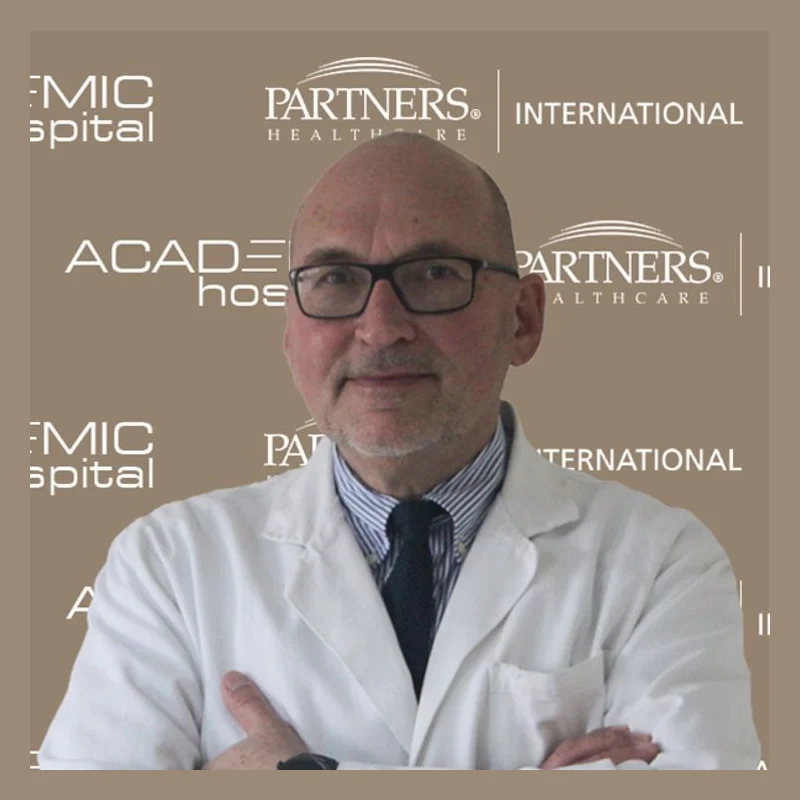
Prof. Dr. Turgay Çelikel
OncologyVerified
- 47+years exp.
English · Turkish
FromPrice on request
Free quote
60 seconds · no obligationView Profile
Small intestine cancer is a rare oncological condition where abnormal cells form tumours in the tissues of the small bowel. It predominantly affects older adults. Persistent abdominal cramping, unexplained weight loss, iron-deficiency anaemia, and blood in the stool commonly prompt individuals to visit a doctor. Available treatment options depend on a thorough specialist assessment. Compare hospitals in Turkey that treat Small Intestine Cancer and get a free review of your medical records.

1 doctor Compare doctors, ratings and prices — ask any of them for a free quote.
OncologyVerified
English · Turkish
60 seconds · no obligationView Profile
Small intestine cancer is a rare oncological condition where abnormal cells form tumours in the tissues of the small bowel. It predominantly affects older adults. Persistent abdominal cramping, unexplained weight loss, iron-deficiency anaemia, and blood in the stool commonly prompt individuals to visit a doctor. Available treatment options depend on a thorough specialist assessment.
Specialty: Oncology
The cost of treating Small Intestine Cancer depends on the diagnosis and the treatment chosen. Doctors first review your medical records — free of charge — and you then receive an itemised quote.
Small Intestine Cancer is treated by Oncology specialists. 2 clinics in Turkey on our platform offer this treatment.
Small intestine cancer is a rare malignant condition originating in the tissues of the small bowel, which comprises the duodenum, jejunum, and ileum. Because the small bowel is located between the stomach and the large intestine, tumours here can be challenging to detect in their early stages. The primary histological types include adenocarcinoma, neuroendocrine tumours (such as carcinoid tumours), lymphoma, and gastrointestinal stromal tumours (GIST).
Because early symptoms are often subtle and non-specific, diagnosis is frequently delayed. Patients commonly experience persistent abdominal cramping, unexplained weight loss, iron-deficiency anaemia due to occult gastrointestinal bleeding, and visible blood in the stool. In some cases, a growing tumour may cause a partial or complete bowel obstruction, leading to severe nausea, vomiting, and acute abdominal pain. Evaluation usually falls under Oncology and Gastroenterology.
Accurate staging and tissue diagnosis are essential before any therapeutic intervention begins. Hospitals in Turkey utilise modern imaging and endoscopic techniques to pinpoint small bowel lesions. Diagnostic protocols typically include:
International patients travelling to Turkey should bring all previous medical records, including detailed operative notes, formal histology reports, paraffin blocks or slide samples if available, and recent scan images (DICOM format on disc) to avoid unnecessary duplication of tests.
Management depends on tumour histology, anatomical location, clinical stage, and the patient's overall health status. Decisions are finalised by a multidisciplinary tumour board after a thorough review of all diagnostic data.
| Option | Typically used when | Things to know |
|---|---|---|
| Surgical Resection | Localised tumours (adenocarcinoma, GIST, localized NETs) | Aims to remove the tumour with clear margins; may be performed via General Surgery. |
| Systemic Chemotherapy | Advanced adenocarcinoma or metastatic disease | Used to shrink tumours before surgery or control disease progression post-operatively. |
| Targeted & Somatostatin Therapy | GISTs (TKIs) or metastatic Neuroendocrine Tumours | Focuses on specific molecular pathways or hormone receptors to suppress cell growth. |
Surgical intervention remains the primary curative intent treatment for localized disease. In complex cases involving surrounding organs or lymph nodes, additional procedures evaluated under Pulmonology & Thoracic Surgery or other surgical specialties may be discussed if secondary spread is suspected. Prior to any intervention, comprehensive pre-operative evaluations, including basic health screenings available through Check-ups & Diagnostics, ensure patient fitness for anaesthesia.
Travelling abroad for complex oncological care requires meticulous preparation. The initial phase involves a preliminary remote review of your medical files by the clinical team in Turkey. Once accepted, plan for an initial stay of approximately 2 to 3 weeks. This timeframe allows for confirmatory diagnostics, multidisciplinary planning, surgical intervention if indicated, and immediate post-operative recovery.
Before returning home, your care team will provide a comprehensive discharge summary, pathology reports, and a structured follow-up plan. Ongoing surveillance, such as periodic imaging and routine blood work, must be coordinated with your local oncologist to ensure long-term monitoring and continuity of care.
International travel is not advisable if you suffer from an acute bowel obstruction, severe uncorrected anaemia, active gastrointestinal haemorrhage, or severe post-operative complications. Flying with an unresolved bowel blockage can be life-threatening due to pressure changes and risk of perforation.
Seek immediate emergency medical attention locally if you experience severe, sudden abdominal pain, continuous vomiting, high fever, or large amounts of bright red blood in your stool. Clinical decisions must always be guided by direct examination by qualified medical specialists.
The four primary types are adenocarcinoma, neuroendocrine tumours (NETs), gastrointestinal stromal tumours (GISTs), and lymphoma. Each cell type behaves differently and requires a tailored approach involving specific surgical, medical, or targeted treatments determined by an oncology team.
Patients typically need to plan for 2 to 3 weeks. This period covers pre-operative assessments, the surgical procedure, hospital recovery, and initial post-operative follow-up appointments to ensure severe complications like anastomotic leaks or infection are ruled out before flying home.
You should gather complete medical history reports, previous clinical notes, formal pathology summaries, block or slide tissue samples if a biopsy was already performed, and actual DICOM image files on disc for any CT, MRI, or PET scans completed recently.
Surgery is the primary treatment for localized small bowel tumours. However, if the cancer has spread extensively or if surgery poses excessive risk, systemic treatments like chemotherapy, targeted therapies, or somatostatin analogues are used to control tumour growth and manage symptoms.
Upon discharge, your treating physicians in Turkey provide detailed medical reports, scan summaries, and care recommendations. You must share these documents with your primary doctor or local oncologist to arrange routine blood tests, surveillance imaging, and ongoing symptom management.
Your request is in!
Your coordinator will contact you — usually within 2 hours, 24/7.
Want a faster, more accurate assessment?
Add photos & medical detailsLeave your number — a coordinator calls you in your language, usually within 15 minutes during office hours.
Thank you!
A coordinator will contact you at the time you chose.

