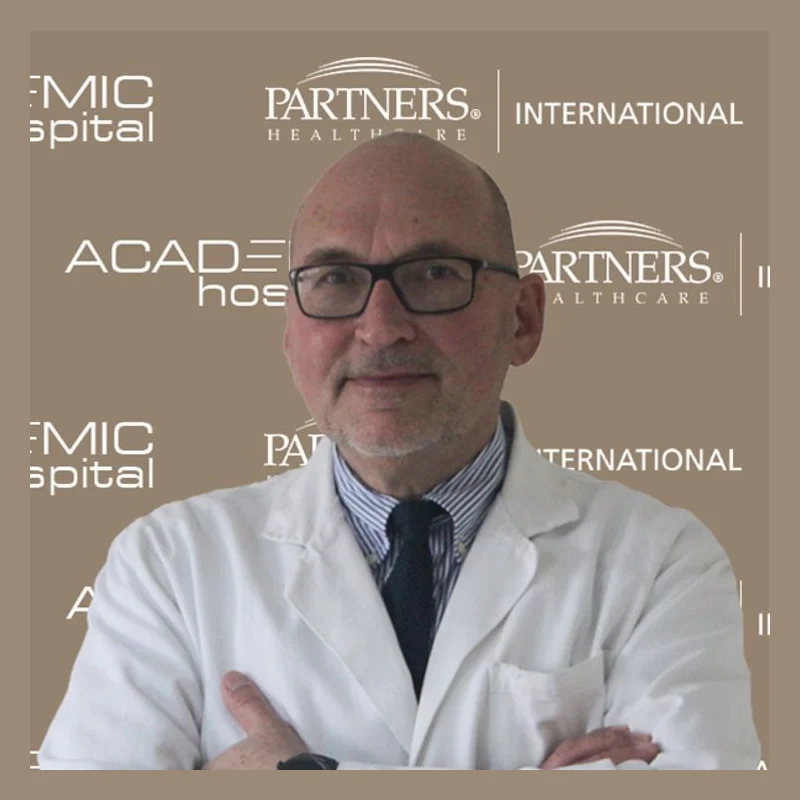
Prof. Dr. Turgay Çelikel
OncologyVerified
- 47+years exp.
English · Turkish
FromPrice on request
Free quote
60 seconds · no obligationView Profile
A salivary gland tumour is an abnormal growth arising within the salivary glands, most commonly the parotid gland. Individuals typically arrange a medical consultation after detecting a noticeable swelling or firm lump near the jaw, cheek, or neck, sometimes accompanied by facial discomfort. Identifying whether a growth is benign or malignant and establishing treatment options depend on a specialist assessment. Compare hospitals in Turkey that treat Salivary Gland Tumor and get a free review of your medical records.

1 doctor Compare doctors, ratings and prices — ask any of them for a free quote.
OncologyVerified
English · Turkish
60 seconds · no obligationView Profile
A salivary gland tumour is an abnormal growth arising within the salivary glands, most commonly the parotid gland. Individuals typically arrange a medical consultation after detecting a noticeable swelling or firm lump near the jaw, cheek, or neck, sometimes accompanied by facial discomfort. Identifying whether a growth is benign or malignant and establishing treatment options depend on a specialist assessment.
Specialty: Oncology
The cost of treating Salivary Gland Tumor depends on the diagnosis and the treatment chosen. Doctors first review your medical records — free of charge — and you then receive an itemised quote.
Salivary Gland Tumor is treated by Oncology specialists. 2 clinics in Turkey on our platform offer this treatment.
A salivary gland tumor is an abnormal growth of cells within the tissues that produce saliva. These glands are divided into major glands—including the parotid, submandibular, and sublingual glands—and hundreds of microscopic minor salivary glands lining the mouth, nose, and throat. The parotid gland, located just in front of and below the ear, is the most common site for these growths. Fortunately, the majority of parotid tumors are benign (non-cancerous), such as pleomorphic adenomas or Warthin tumors. However, tumors in smaller glands have a higher probability of being malignant (cancerous), including mucoepidermoid carcinoma or adenoid cystic carcinoma.
Patients typically seek a specialist evaluation after discovering a painless, firm lump near the jawline, cheek, under the chin, or inside the mouth. As a tumor enlarges, additional symptoms may develop depending on its location and whether it is invasive. Common signs include:
Accurate diagnosis is essential to distinguish between benign growths and malignant carcinomas, as well as to determine if the facial nerve is involved. Medical travel for evaluation often begins with diagnostic testing coordinated through oncology specialists and ENT (Ear, Nose & Throat) surgeons. Hospitals in Turkey typically execute a structured diagnostic protocol:
International patients must bring complete medical records, including prior ultrasound reports, contrast-enhanced scan files (DICOM format on CD or digital drive), pathology slides or tissue blocks if a biopsy was already performed, and a recent blood panel.
Treatment strategy depends on the tumor's exact histology, grade, size, and proximity to crucial facial nerves. Primary management is determined by the treating multi-disciplinary oncology team after evaluating complete diagnostic images.
| Option | Typically used when | Things to know |
|---|---|---|
| Parotidectomy / Gland Excision | Primary treatment for benign and localized malignant salivary tumors. | Surgical removal of part or all of the gland; conserving the facial nerve is a primary surgical goal whenever possible. |
| Neck Dissection | Confirmed malignant tumors with spread or high risk of lymphatic spread. | Removes regional lymph nodes in the neck alongside the primary tumor excision to prevent spread. |
| Radiation Therapy | High-grade cancers, incomplete margins, or advanced disease stages. | May be recommended post-surgery or combined with systemic treatments; coordinated via pulmonology & thoracic surgery or head-and-neck radiation units. |
| Reconstructive Surgery | Extensive surgical resection leaving soft tissue deficits. | Integrated plastic & aesthetic surgery techniques restore facial contour and symmetry. |
Traveling for complex head and neck surgery requires careful organization. Before arriving in Turkey, patients submit medical imaging and biopsy reports for preliminary review by surgical oncologists. If surgery is planned, expect an initial trip duration of 10 to 14 days. This covers pre-operative staging, surgical intervention, an inpatient stay of 2 to 5 days, and post-operative drain removal.
Patients undergoing nerve-sparing surgery may require targeted post-operative care, which can be complemented by physical therapy or rehabilitation if temporary facial weakness occurs. Before flying home, the medical team ensures surgical wounds are healing appropriately. Pathology results from the excised mass generally take several days; once finalized, long-term follow-up schedules or secondary recommendations (such as radiation treatment) are coordinated with your local oncologist.
Long-distance travel is contraindicated if a patient presents with severe airway compromise caused by a large tumor obstructing the pharynx, unmanaged bleeding, severe systemic infections, or acute neurological deficits. Patients should delay flights until stabilized by an emergency clinical team.
Immediate local medical care is required if you experience any of the following warning signs:
Most salivary gland tumors occur spontaneously without a clear single cause. Exposure to certain types of radiation, advanced age, and specific environmental or occupational exposures may slightly increase risk. However, many benign and malignant growths develop without identifiable predisposing risk factors.
Surgeons use specialized intraoperative facial nerve monitoring equipment to identify and trace nerve branches in real time. For benign and non-invasive tumors, preserving the facial nerve while removing the mass is a standard surgical priority.
Radiation therapy is generally reserved for malignant tumors, particularly those classified as high-grade, cases where complete surgical clearance is difficult, or when lymph nodes are involved. Benign tumors rarely require post-operative radiation.
Most patients stay between 10 and 14 days. This timeframe allows for pre-operative consultations, surgical execution, immediate post-operative wound care, drain removal, and preliminary recovery before clear medical clearance to fly is granted.
Certain benign salivary gland tumors, such as pleomorphic adenomas, carry a small risk of transforming into malignant cancers if left untreated over many years. For this reason, surgical removal is usually recommended even for non-cancerous growths.
Your request is in!
Your coordinator will contact you — usually within 2 hours, 24/7.
Want a faster, more accurate assessment?
Add photos & medical detailsLeave your number — a coordinator calls you in your language, usually within 15 minutes during office hours.
Thank you!
A coordinator will contact you at the time you chose.

