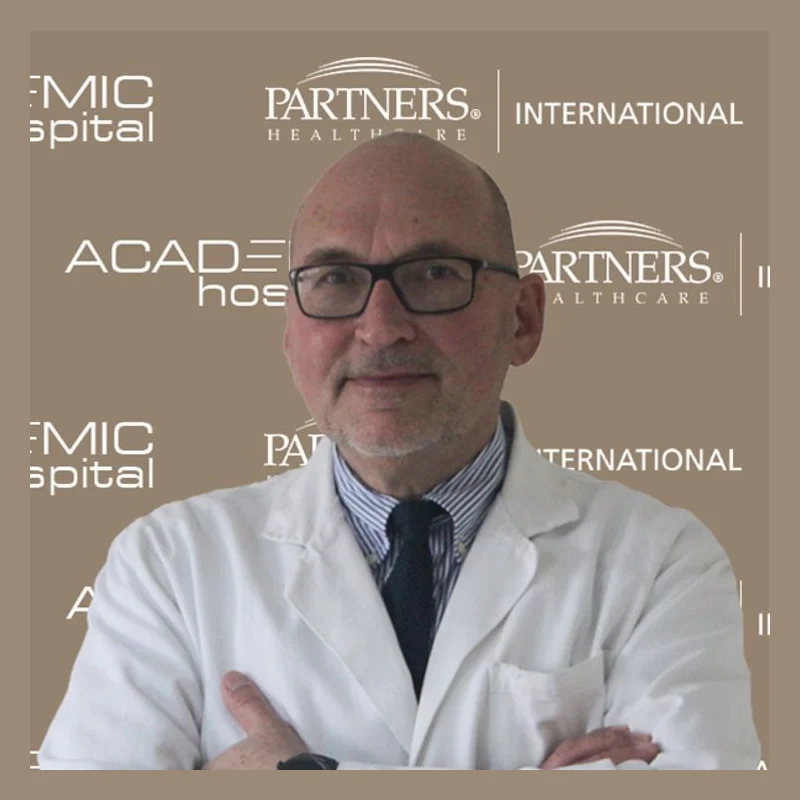
Prof. Dr. Turgay Çelikel
OncologyVerified
- 47+years exp.
English · Turkish
FromPrice on request
Free quote
60 seconds · no obligationView Profile
Thyroid cancer is a malignancy that develops within the thyroid gland situated at the base of the neck. Individuals often visit a doctor after identifying a persistent lump or swelling in the throat, voice changes, or difficulty swallowing. Following appropriate diagnostic evaluations, available treatment options depend on a detailed specialist assessment and the specific subtype identified. Compare hospitals in Turkey that treat Thyroid Cancer and get a free review of your medical records.

1 doctor Compare doctors, ratings and prices — ask any of them for a free quote.
OncologyVerified
English · Turkish
60 seconds · no obligationView Profile
Thyroid cancer is a malignancy that develops within the thyroid gland situated at the base of the neck. Individuals often visit a doctor after identifying a persistent lump or swelling in the throat, voice changes, or difficulty swallowing. Following appropriate diagnostic evaluations, available treatment options depend on a detailed specialist assessment and the specific subtype identified.
Specialty: Oncology
Depending on the stage and your medical history, doctors may recommend:
The cost of treating Thyroid Cancer depends on the diagnosis and the treatment chosen. Doctors first review your medical records — free of charge — and you then receive an itemised quote.
Options may include Treatment of Thyroid Cancer with Radioactive Iodine, Complex Treatment of Thyroid Cancer, Complex Diagnostics of Thyroid Cancer. Your doctor chooses the approach after reviewing your tests and scans.
Thyroid Cancer is treated by Oncology specialists. 2 clinics in Turkey on our platform offer this treatment.
Thyroid cancer begins in the cells of the thyroid gland, a butterfly-shaped organ located at the base of your neck. The thyroid produces crucial hormones that regulate heart rate, blood pressure, body temperature, and weight. While many thyroid nodules are non-cancerous, malignant tumors require thorough evaluation by an international specialist team, often coordinated within oncology departments.
In its early stages, thyroid cancer may not produce noticeable symptoms. However, as the tumor grows, individuals often observe specific warning signs. The most common indication is a painless lump or swelling in the front of the neck. Other typical symptoms include:
Subtypes of thyroid cancer include papillary, follicular, medullary, and anaplastic carcinoma. Papillary thyroid cancer is the most frequent form and generally grows slowly, whereas anaplastic thyroid cancer is rare and highly aggressive.
When traveling to Turkey for diagnostic evaluation, multi-specialty medical teams rely on standard international protocols. Correctly identifying the exact cancer type and stage determines the appropriate management plan, which may involve input from endocrinology specialists and surgeon oncologists.
Diagnostic workups usually start with comprehensive check-ups & diagnostics. Standard procedures include high-resolution neck ultrasound to examine the size and structure of the thyroid gland and nearby lymph nodes. If a suspicious nodule is identified, fine-needle aspiration biopsy (FNAB) is performed to extract cellular samples for pathological analysis. Blood tests measuring thyroid-stimulating hormone (TSH), calcitonin, and specific tumor markers help confirm functional activity and cancer subtype.
To ensure an efficient evaluation, international patients should collect and bring the following medical records:
Management strategies depend on the histological subtype, tumor size, patient age, and whether the cancer has spread beyond the thyroid gland. Treating doctors evaluate all diagnostic reports before recommending a specific protocol.
| Option | Typically used when | Things to know |
|---|---|---|
| Total or Partial Thyroidectomy | localized papillary, follicular, or medullary tumors | Surgical removal performed under general surgery protocols; requires lifelong hormone replacement if total. |
| Radioactive Iodine (RAI) Therapy | Differentiated thyroid cancers post-surgery to destroy microscopic residual tissue | Requires short-term isolation and specific dietary preparation; managed carefully by nuclear medicine. |
| External Beam Radiation | Advanced, aggressive, or recurrent cases unsuited for RAI | Targeted radiation delivered over several sessions to control local tumor growth. |
| Targeted Systemic Therapies | Advanced or metastatic cancers resisting standard interventions | Oral tyrosine kinase inhibitors used to block specific cancer growth signals. |
Surgical intervention is frequently combined with secondary procedures such as neck dissection to remove affected lymph nodes. Depending on the extent of surgical resection, patients may require evaluation by general surgery or ENT (Ear, Nose & Throat) surgical teams to protect vocal cord nerves and parathyroid glands.
Medical travel for thyroid cancer requires structured preparation. Most hospitals initiate care with a remote review of your records to estimate necessary diagnostic steps. Once in Turkey, the initial consultation and pre-operative testing usually take two to three days.
If surgery is performed, expect a hospital stay of one to three days for post-operative monitoring. Patients undergoing radioactive iodine therapy will need additional isolation days based on international safety guidelines. Overall, plan to remain in Turkey for 10 to 14 days post-procedure to ensure safe wound healing, initial blood hormone monitoring, and clearance from your treating doctor.
Before returning home, your medical team will provide a written summary detailing the surgical findings, pathology reports, and prescribed hormone replacement dosages. Follow-up monitoring—including regular blood tests and neck ultrasounds—must be pre-arranged with your local physician or endocrinologist.
Travel is not advisable for individuals experiencing acute respiratory distress, severe airway obstruction from rapid tumor growth, or unmanaged surgical complications. Flying immediately after neck surgery increases the risk of bleeding, wound disruption, or deep vein thrombosis.
Seek immediate emergency medical care locally if you develop any of the following urgent warning signs after treatment:
If your entire thyroid gland is removed (total thyroidectomy), you will need to take daily thyroid hormone replacement medication for the rest of your life. This synthetic hormone replaces what your body can no longer produce, maintaining your metabolic balance and helping suppress any residual cancer cell growth. Your treating doctor will monitor your blood levels to adjust the dosage correctly.
Most international patients stay in Turkey for 10 to 14 days. This timeline allows for initial consultations, standard diagnostic testing, one to three days of post-operative hospital admission, and mandatory follow-up visits to check wound healing and vocal cord function before flying home safely.
Radioactive iodine emits temporary radiation. If your treatment plan includes this therapy, nuclear medicine specialists will instruct you to follow strict isolation precautions for several days. These rules protect family members and the public, particularly young children and pregnant women, by maintaining physical distance until radiation levels fall to safe limits.
While thyroid surgery is commonly performed, potential surgical risks include bleeding, infection, and temporary or permanent damage to the parathyroid glands, which control calcium balance. There is also a risk of injury to the recurrent laryngeal nerve, which controls your vocal cords, potentially leading to hoarseness or voice changes. Your surgical team will discuss these risks beforehand.
Before leaving Turkey, your treating hospital will issue comprehensive discharge notes, surgical logs, and pathology reports. You must share these documents with your primary doctor or local endocrinologist, who will manage long-term blood tests, hormone dosage adjustments, and periodic ultrasound scans to monitor your health.
Your request is in!
Your coordinator will contact you — usually within 2 hours, 24/7.
Want a faster, more accurate assessment?
Add photos & medical detailsLeave your number — a coordinator calls you in your language, usually within 15 minutes during office hours.
Thank you!
A coordinator will contact you at the time you chose.

