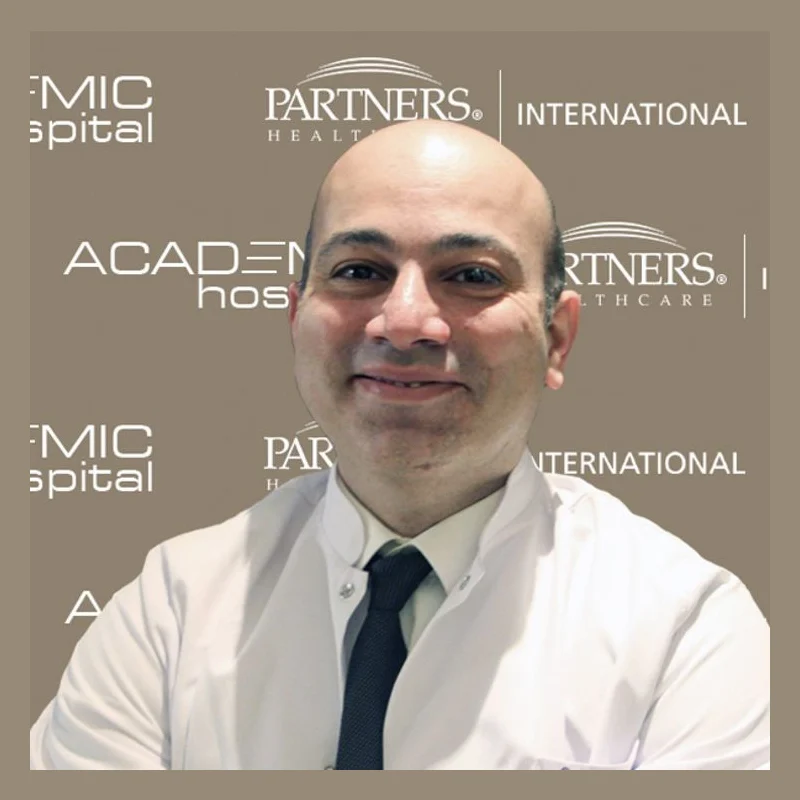
Dr. Öğr. Üyesi Görkem Kıyak
OrthopedicsVerified
- 21+years exp.
English · Turkish
FromPrice on request
Free quote
60 seconds · no obligationView Profile
Scoliosis is an abnormal sideways curvature of the spine that can develop during childhood growth spurts or through adult spinal degeneration. Patients commonly seek an orthopaedic evaluation because of visible asymmetry in the shoulders or hips, postural imbalance, or ongoing back discomfort. Suitable management and treatment options depend on a dedicated specialist assessment examining curve magnitude and spinal maturity. Compare hospitals in Turkey that treat Scoliosis and get a free review of your medical records.

1 doctor Compare doctors, ratings and prices — ask any of them for a free quote.
OrthopedicsVerified
English · Turkish
60 seconds · no obligationView Profile
Scoliosis is an abnormal sideways curvature of the spine that can develop during childhood growth spurts or through adult spinal degeneration. Patients commonly seek an orthopaedic evaluation because of visible asymmetry in the shoulders or hips, postural imbalance, or ongoing back discomfort. Suitable management and treatment options depend on a dedicated specialist assessment examining curve magnitude and spinal maturity.
Specialty: Orthopedics
Depending on the stage and your medical history, doctors may recommend:
The cost of treating Scoliosis depends on the diagnosis and the treatment chosen. Doctors first review your medical records — free of charge — and you then receive an itemised quote.
Options may include Operative Treatment of Scoliosis, Conservative Treatment of Scoliosis, Scoliosis Surgery, Stem Cell for Scoliosis. Your doctor chooses the approach after reviewing your tests and scans.
Scoliosis is treated by Orthopedics specialists. 2 clinics in Turkey on our platform offer this treatment.
Scoliosis is a structural condition defined by an abnormal lateral curvature of the spine, measuring 10 degrees or more on a standing X-ray, often accompanied by vertebral rotation. While idiopathic scoliosis frequently emerges during adolescent growth spurts, adult scoliosis can develop secondary to spinal degeneration, asymmetrical disc wear, or untreated childhood curves. A specialist evaluation within orthopedics or neurosurgery is essential to determine the structural cause and curve trajectory.
International patients often seek professional medical evaluation after noticing physical changes or experiencing physical discomfort. Common clinical presentations include:
Accurate diagnostic workups in Turkey begin with a comprehensive clinical examination and formal spinal imaging. Treating specialists assess spinal alignment, shoulder balance, pelvic level, and neurological function, including reflexes and muscle strength. To optimize your initial consultation, you should bring existing medical history, previous full-spine X-rays, and any recent advanced imaging on a digital disc.
Diagnostic evaluations typically include specific imaging protocols:
Management depends on the patient's age, Cobb angle magnitude, curve progression risk, and symptoms. Non-surgical options aim to halt curve progression and manage discomfort, whereas surgical interventions aim to correct spinal deformity, restore trunk balance, and prevent further deterioration. Treating surgeons determine the most appropriate approach after reviewing complete diagnostic tests.
| Option | Typically used when | Things to know |
|---|---|---|
| Observation & Monitoring | Cobb angle is under 25 degrees in growing patients or stable in adults. | Requires periodic clinical exams and full-spine X-rays every 6 to 12 months. |
| Custom Spinal Bracing | Cobb angle is 25 to 40 degrees in growing children and adolescents. | Designed to prevent further curvature progression; requires consistent daily wear. |
| Spinal Fusion Surgery | Cobb angle exceeds 45 to 50 degrees or shows rapid progression. | Uses metal rods, pedicle screws, and bone grafts to realign and permanently stabilize the spine. |
| Vertebral Body Tethering (VBT) | Selected skeletally immature adolescents with flexible curves. | A motion-sparing surgical alternative that uses a flexible cord to guide spinal growth. |
Travelling abroad for complex spinal evaluation or surgery requires structured preparation. International patients typically send recent standing radiographs and medical history for a preliminary multidisciplinary review before travelling. This helps the medical team assess whether diagnostic updates or surgical consultations are required upon arrival.
If non-surgical management or custom brace fitting is recommended, stays are typically brief (3 to 5 days). If complex spinal fusion or corrective surgery is planned, patients usually spend several days in hospital followed by 2 to 3 weeks of local recovery. This allows time for wound healing, initial mobility restoration, and post-operative X-ray verification. Following return home, post-surgical care often requires structured physical therapy and coordinated medical care alongside a local specialist or medical practitioner, accompanied by structured medical updates sent to the primary surgical team.
Long-distance travel is contraindicated in the immediate aftermath of major spinal surgery without direct clearance from the treating surgeon due to the risk of deep vein thrombosis and wound complications. Fit-to-fly clearance requires stable neurological status, controlled pain, and satisfactory post-operative imaging. Patients undergoing complex spinal care may also require physical support or structured rehabilitation to regain safe functional mobility.
Certain symptoms indicate an urgent medical situation and require immediate attention at the nearest emergency department rather than international travel:
Surgical intervention is generally considered when a scoliosis Cobb angle exceeds 45 to 50 degrees in growing adolescents, or when progressive curves in adults cause severe pain, neurological impairment, or functional disability. However, the final decision depends on a full specialist evaluation including curve flexibility, skeletal maturity, and overall symptoms.
Patients undergoing spinal fusion surgery usually spend 5 to 7 days in the hospital followed by 10 to 14 days of outpatient recovery nearby. This total stay of roughly 3 weeks allows the surgical team to monitor wound healing, initiate safe mobility, and perform post-operative imaging before clearing you to fly.
Yes, many adults manage degenerative or persistent scoliosis through conservative measures such as targeted physical therapy, core strengthening, pain management techniques, and lifestyle adjustments. Surgery is typically reserved for cases involving progressive deformity, severe functional limitation, or spinal cord and nerve compression.
Flying is generally permitted once the treating surgeon confirms that surgical wounds are healing well, pain is adequately controlled with oral medications, neurological status is stable, and post-operative X-rays show secure hardware placement. Most surgeons require patients to wait at least 14 to 21 days post-surgery before flying.
You should bring all recent full-spine standing X-rays, MRI or CT imaging files on a digital disc (DICOM format), official radiology reports, medical history summaries, and details of any previous spinal treatments or bracing. These records allow the orthopaedic team to assess curve stability and plan accurate diagnostic tests.
Your request is in!
Your coordinator will contact you — usually within 2 hours, 24/7.
Want a faster, more accurate assessment?
Add photos & medical detailsLeave your number — a coordinator calls you in your language, usually within 15 minutes during office hours.
Thank you!
A coordinator will contact you at the time you chose.

