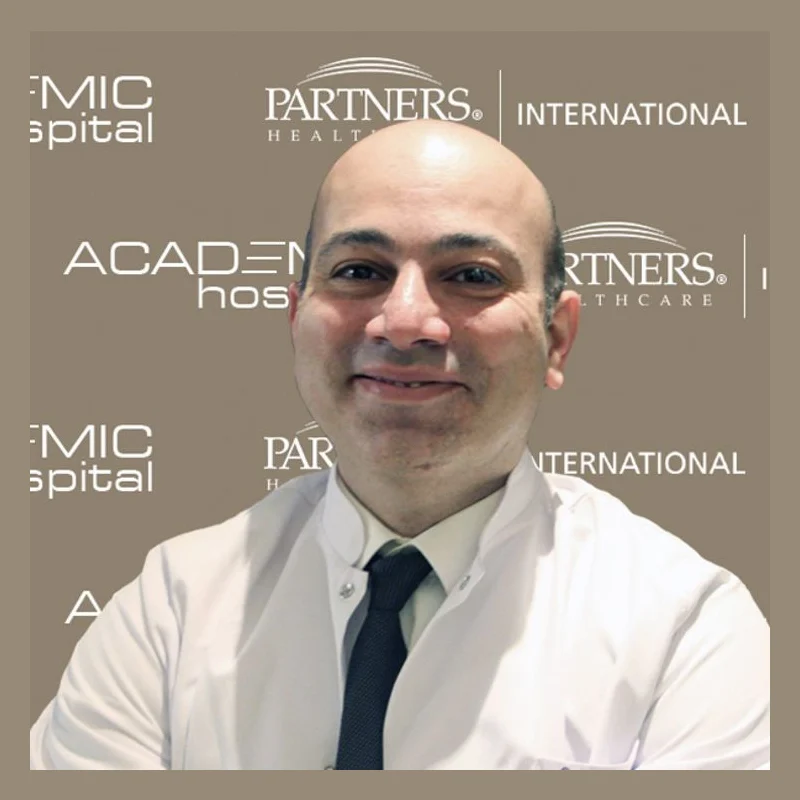
Dr. Öğr. Üyesi Görkem Kıyak
OrthopedicsVerified
- 21+years exp.
English · Turkish
FromPrice on request
Free quote
60 seconds · no obligationView Profile
A rotator cuff tear involves damage to the muscles or tendons stabilising the shoulder joint. It frequently affects older adults or individuals performing repetitive overhead arm movements, causing persistent shoulder pain, weakness, and difficulty lifting the arm. Available treatment options depend on a thorough specialist assessment, taking into account tear severity and individual physical demands. Compare hospitals in Turkey that treat Rotator Cuff Tear and get a free review of your medical records.

1 doctor Compare doctors, ratings and prices — ask any of them for a free quote.
OrthopedicsVerified
English · Turkish
60 seconds · no obligationView Profile
A rotator cuff tear involves damage to the muscles or tendons stabilising the shoulder joint. It frequently affects older adults or individuals performing repetitive overhead arm movements, causing persistent shoulder pain, weakness, and difficulty lifting the arm. Available treatment options depend on a thorough specialist assessment, taking into account tear severity and individual physical demands.
Specialty: Orthopedics
Depending on the stage and your medical history, doctors may recommend:
The cost of treating Rotator Cuff Tear depends on the diagnosis and the treatment chosen. Doctors first review your medical records — free of charge — and you then receive an itemised quote.
Options may include Stem Cell Therapy for Rotator Cuff Tear. Your doctor chooses the approach after reviewing your tests and scans.
Rotator Cuff Tear is treated by Orthopedics specialists. 2 clinics in Turkey on our platform offer this treatment.
A rotator cuff tear occurs when one or more of the four tendons that stabilize the shoulder joint become partially or completely frayed or detached from the humerus bone. The supraspinatus tendon is most commonly affected. These tears typically stem from progressive wear and tear over time—particularly in older adults—or from sudden trauma, such as a heavy lifting incident or a fall onto an outstretched arm.
Patients experiencing a rotator cuff tear often present with severe, dull shoulder pain that worsens at night, especially when lying on the affected side. Other classic signs include clear muscle weakness when attempting to lift or rotate the arm, persistent friction or crackling sensations (crepitus) during movement, and difficulty performing simple overhead tasks like combing hair or reaching behind the back. Early intervention is important, as chronic tears can lead to joint stiffness or muscle atrophy.
When seeking care in Turkey, your evaluation begins with a thorough clinical assessment by an Orthopedics specialist. The surgeon tests range of motion, muscle strength, and specific shoulder impingement signs. To confirm the diagnosis and assess the exact extent of the tear, specialized imaging is required.
International patients traveling for a consultation should prepare to undergo or bring the following diagnostic records:
It is crucial to bring recent digital MRI files (DICOM format on a USB or via cloud access) and previous medical reports to your initial appointment to facilitate an accurate comparative assessment.
Treatment choices range from conservative management to advanced surgical repair, depending heavily on the patient's age, activity level, hand dominance, and structural tear severity. Your treating orthopedic surgeon determines the appropriate plan following full clinical review.
| Option | Typically Used When | Things to Know |
|---|---|---|
Traveling abroad for shoulder care requires careful scheduling. Most orthopedic centers review your pre-travel imaging remotely to provide an initial impression. However, the definitive treatment plan is established only after an in-person physical examination in Turkey.
For keyhole arthroscopic tendon repair, patients generally need to stay in Turkey for 10 to 14 days. This timeline allows for surgery, hospital monitoring, suture removal, and initial post-operative immobilization fitting. If additional medical conditions exist, your care may be coordinated alongside Check-ups & Diagnostics or specialized medical teams. Before returning home, structured instructions for long-term physical therapy must be established, as complete tendon-to-bone healing typically takes several months. Dedicated Rehabilitation under local guidance at home is essential to recover full strength and movement safely.
Certain situations make air travel unsafe or inadvisable. Flying immediately after shoulder surgery is contraindicated due to increased risks of deep vein thrombosis (DVT) and swelling. You must be cleared to travel by your operating surgeon, typically after acute post-operative monitoring is complete and proper arm immobilization is fitted.
Seek immediate, urgent medical attention locally if you experience any of the following warning signs:
A partial tear damages part of the tendon's thickness without severing it entirely from the bone. A full-thickness tear goes completely through the tendon, creating a hole or detaching the tendon fully. Your doctor uses MRI imaging to determine the exact depth and width of the tear before recommending conservative care or surgical repair.
Most orthopedic patients stay in Turkey for approximately 10 to 14 days. This window allows for pre-operative consultations, the surgical procedure, initial hospital recovery, wound checks, suture removal, and early fitting of a shoulder immobilizer before taking a flight home.
Yes, immobilizing the shoulder is vital to protect the reattached tendon while it heals onto the bone. Patients typically wear a specialized sling or abduction pillow for four to six weeks following surgery, strictly adhering to movement restrictions provided by their surgical team.
Partial tears and minor tendinopathy may symptomatically improve with rest, physical therapy, and anti-inflammatory measures, though the structural tear itself does not typically stitch back together naturally. Full-thickness tears usually require surgical intervention if function and strength need to be restored.
Initial passive range-of-motion exercises are usually taught before you depart Turkey. Formal active physical therapy at home generally begins a few weeks post-surgery, strictly following the written protocol provided by your operating surgeon to protect the healing tendon.
Your request is in!
Your coordinator will contact you — usually within 2 hours, 24/7.
Want a faster, more accurate assessment?
Add photos & medical detailsLeave your number — a coordinator calls you in your language, usually within 15 minutes during office hours.
Thank you!
A coordinator will contact you at the time you chose.

