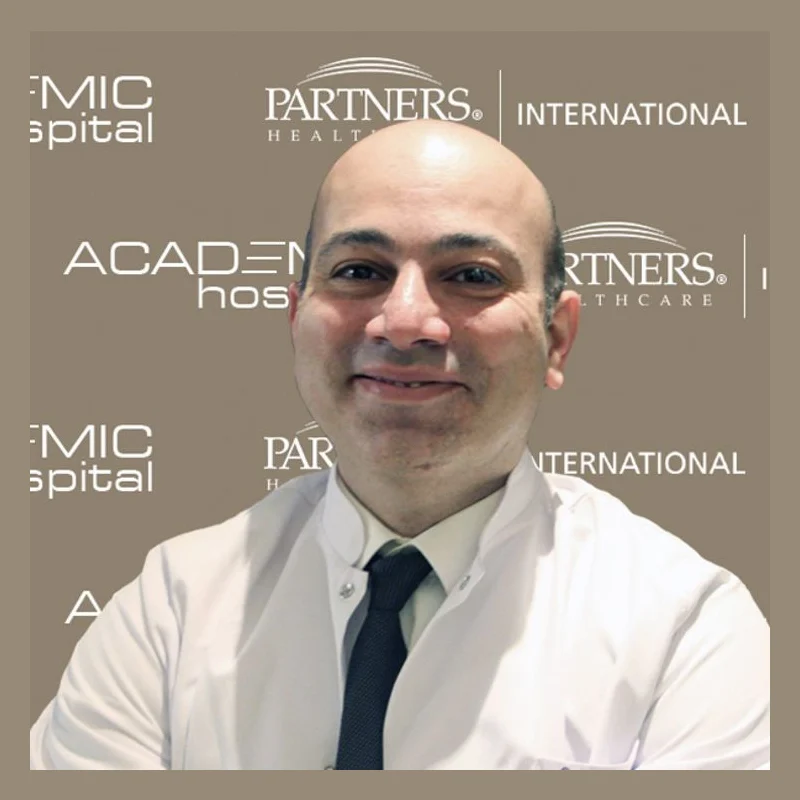
Dr. Öğr. Üyesi Görkem Kıyak
OrthopedicsVerified
- 21+years exp.
English · Turkish
FromPrice on request
Free quote
60 seconds · no obligationView Profile
Syndactyly is a congenital condition where two or more fingers or toes remain joined together by skin or bone. Parents typically consult a doctor following birth or during early childhood to evaluate hand or foot function and development. Feasible treatment options depend on a detailed specialist assessment and individual anatomical considerations. Compare hospitals in Turkey that treat Syndactyly and get a free review of your medical records.

1 doctor Compare doctors, ratings and prices — ask any of them for a free quote.
OrthopedicsVerified
English · Turkish
60 seconds · no obligationView Profile
Syndactyly is a congenital condition where two or more fingers or toes remain joined together by skin or bone. Parents typically consult a doctor following birth or during early childhood to evaluate hand or foot function and development. Feasible treatment options depend on a detailed specialist assessment and individual anatomical considerations.
Specialty: Orthopedics
The cost of treating Syndactyly depends on the diagnosis and the treatment chosen. Doctors first review your medical records — free of charge — and you then receive an itemised quote.
Syndactyly is treated by Orthopedics specialists. 2 clinics in Turkey on our platform offer this treatment.
Syndactyly is a congenital difference present at birth where two or more fingers or toes are joined together. It occurs during early foetal development when the webbed digits typical of early limb formation do not fully separate. This condition can affect just one hand or foot, or present bilaterally. It is typically identified immediately after birth during routine neonatal examinations.
The presentation of syndactyly varies depending on the underlying anatomical structures involved:
Symptoms primarily relate to restricted functional movement and altered physical appearance. When fingers are fused, a child may experience difficulty gripping objects, reaching developmental fine motor milestones, or moving individual digits independently. In toes, webbed features rarely impair walking unless accompanied by severe skeletal alignment issues. Specialist evaluation within Orthopedics or hand surgery clinics helps clarify the exact anatomical involvement.
When families seek a medical consultation in Turkey, paediatric orthopaedic specialists perform a comprehensive clinical and physical evaluation. The medical team assesses skin elasticity, passive range of motion, nail bed confluence, and vascular supply to each digit.
Hospital diagnostics typically involve several targeted assessments:
International patients traveling to Turkey should bring clear birth records, prior clinical photographs, physical therapy reports, and previous high-resolution digital X-rays (DICOM format on CD or digital drive) to prevent unnecessary repeat imaging.
The primary goal of treating syndactyly is to separate the fused digits to improve hand function and facilitate normal growth. Simple webbing between toes often requires no intervention if it does not affect gait, whereas finger fusion usually benefits from surgical reconstruction. Surgical timing depends on which digits are involved; border digits (such as the thumb and index finger, or ring and small finger) are usually separated earlier (around 6 to 12 months of age) to prevent developmental growth deformities caused by length mismatches.
| Option | Typically used when | Things to know |
|---|---|---|
Corrective procedures fall under paediatric hand reconstruction and general reconstructive techniques often discussed within Plastic & Aesthetic Surgery or paediatric orthopaedics. Decisions regarding graft selection, flap design, and surgical timing are determined by the treating surgeon after reviewing full diagnostic tests.
Planning medical travel for paediatric hand conditions requires careful timing and logistical preparation. Prior to travel, families submit photographic and radiographic records to the treating clinical team in Turkey to receive an initial clinical opinion regarding surgical feasibility, procedure complexity, and expected stay length.
A typical travel itinerary includes:
Travel for reconstructive surgery should be postponed if an infant or child has an active systemic infection, acute respiratory illness, unmanaged cardiac condition, or unresolved soft tissue skin infection near the prospective donor or recipient surgical site.
Urgent post-operative local medical attention is necessary if any of the following signs occur after returning home:
Surgical timing depends on the specific digits involved. Border digits like the thumb and index finger are often separated between 6 and 12 months of age to prevent developmental deformities. Central digits are commonly separated between 12 and 24 months. Your treating surgeon determines the precise timing after examining the child's hand structure.
When digits are separated, there is rarely enough local skin to cover the raw surfaces of both newly created fingers completely. Surgeons frequently use full-thickness skin grafts taken from areas like the groin or crease of the elbow to cover these gaps and prevent surgical web creep as the hand grows.
In most cases, webbed toes do not cause functional disability or impair walking. Unless the toe fusion involves complex bony malformations that cause pain or deformity, toe syndactyly often requires no surgical treatment and can be safely monitored over time without intervention.
Following surgical separation, a child typically wears a protective cast or heavy dressing for about two to three weeks to protect delicate skin grafts and bone alignments. Afterward, a removable custom splint may be recommended for several weeks, especially during sleep, to support proper healing.
While the separated bones and skin remain distinct, a phenomenon called 'web creep' can occur, where scar tissue slowly pulls the web space forward as the child grows. Long-term monitoring, scar massage, and following post-operative splinting instructions help minimize this risk, though secondary minor revision procedures are occasionally required.
Your request is in!
Your coordinator will contact you — usually within 2 hours, 24/7.
Want a faster, more accurate assessment?
Add photos & medical detailsLeave your number — a coordinator calls you in your language, usually within 15 minutes during office hours.
Thank you!
A coordinator will contact you at the time you chose.

