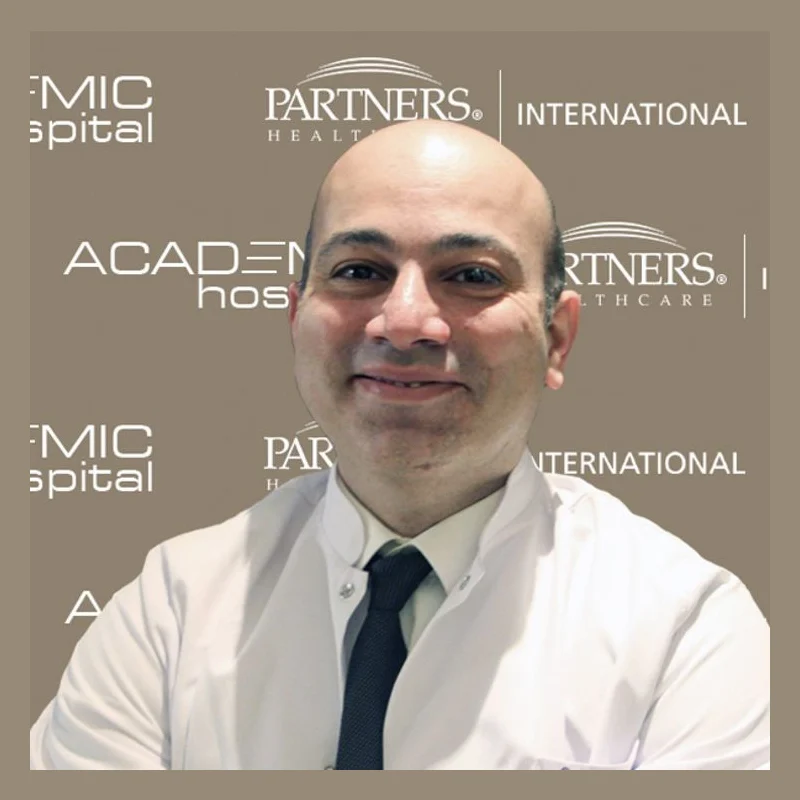
Dr. Öğr. Üyesi Görkem Kıyak
OrthopedicsVerified
- 21+years exp.
English · Turkish
FromPrice on request
Free quote
60 seconds · no obligationView Profile
Arthrosis is a degenerative joint disease where protective cartilage gradually wears away, commonly affecting the knees, hips, and hands. Individuals typically seek medical advice for persistent joint pain, stiffness, and reduced mobility that interfere with daily activities. Suitable treatment options depend on an individual specialist assessment, which considers joint function, disease progression, and overall general health. Compare hospitals in Turkey that treat Arthrosis and get a free review of your medical records.

1 doctor Compare doctors, ratings and prices — ask any of them for a free quote.
OrthopedicsVerified
English · Turkish
60 seconds · no obligationView Profile
Arthrosis is a degenerative joint disease where protective cartilage gradually wears away, commonly affecting the knees, hips, and hands. Individuals typically seek medical advice for persistent joint pain, stiffness, and reduced mobility that interfere with daily activities. Suitable treatment options depend on an individual specialist assessment, which considers joint function, disease progression, and overall general health.
Specialty: Orthopedics
Depending on the stage and your medical history, doctors may recommend:
The cost of treating Arthrosis depends on the diagnosis and the treatment chosen. Doctors first review your medical records — free of charge — and you then receive an itemised quote.
Options may include Arthrosis Treatment, Arthrosis Treatment with Stem Cells. Your doctor chooses the approach after reviewing your tests and scans.
Arthrosis is treated by Orthopedics specialists. 2 clinics in Turkey on our platform offer this treatment.
Arthrosis, also known as osteoarthritis, is a progressive joint disorder characterised by the gradual breakdown of articular cartilage. Articular cartilage serves as a smooth, protective cushion covering the ends of bones within synovial joints. When this cartilage deteriorates, bones begin to rub directly against one another, causing local inflammation, structural changes in underlying bone, and the formation of bony spurs termed osteophytes. Arthrosis most frequently affects weight-bearing joints such as the knees and hips, but it also commonly develops in the hands, cervical spine, and lumbar spine.
Patients typically experience several distinct symptoms that develop gradually over months or years:
When arriving for an evaluation within an orthopedics department in Turkey, specialists begin with a comprehensive clinical examination. The orthopedic surgeon assesses joint stability, alignment, gait mechanics, muscle strength, and specific points of tenderness. This clinical review is paired with hospital-based check-ups and diagnostics to determine the precise anatomical stage of joint degeneration.
Diagnostic assessments typically include:
International patients should bring recent digital imaging files (on disc or digital drive), prior surgical reports, and an up-to-date medication list to help the multidisciplinary team perform an accurate assessment.
Management depends upon disease severity, patient age, general fitness, functional limitations, and response to earlier conservative therapies. Decisions are made collaboratively by the treating physician after thorough review of diagnostic findings.
| Option | Typically used when | Things to know |
|---|---|---|
| Targeted Physiotherapy and Exercise | Mild to moderate joint disease with functional stiffness | Focuses on low-impact conditioning and strengthening surrounding muscle groups to reduce joint contact stress. |
| Viscosupplementation and Corticosteroid Injections | Moderate pain unresponsive to simple oral pain relief | Provides temporary mechanical lubrication or short-term anti-inflammatory relief; repeated injections require careful scheduling. |
| Regenerative Joint Injections | Mild to moderate cartilage thinning | Autologous options in regenerative medicine, such as platelet-rich plasma, aim to alleviate joint inflammation and symptoms. |
| Joint Realignment Osteotomy | Unicompartmental wear in active individuals under sixty | Bony realignments shift mechanical load onto preserved cartilage compartments, preserving the native joint surface. |
| Partial or Total Joint Replacement (Arthroplasty) | End-stage structural damage with severe daily functional limitation | Damaged bone and cartilage surfaces are resurfaced with metal and polyethylene components to restore functional joint mechanics. |
In patients where excessive body weight contributes to accelerated knee or hip joint wear, long-term weight management through lifestyle adaptation or bariatric surgery may be discussed to lower mechanical joint load and surgical complication risks.
Organising medical travel for arthrosis care involves several distinct phases. First, international patients submit recent standing radiographs and medical summaries for remote clinical evaluation. The orthopedic team reviews these materials to discuss whether conservative measures, arthroscopy, or joint arthroplasty are clinically appropriate. However, the definitive treatment plan is established only after in-person physical assessment and local imaging.
Travel timelines vary significantly based on the chosen path:
Structured rehabilitation starts immediately within the hospital, focusing on safe transfer techniques, walking with assistive devices, and gentle range-of-motion routines. Before departure, patients receive a detailed medical discharge summary in English, digital copies of post-operative imaging, clear venous thromboembolism prevention protocols, and a home-based physical therapy regimen to continue with clinicians in their home country.
Elective orthopedic travel requires stable physical health and the physical capacity to travel safely. Travel for elective arthrosis treatment should be postponed if you have unstable cardiovascular disease, active untreated systemic infections, poorly controlled diabetes, or a recent history of pulmonary embolism or deep vein thrombosis. Long-haul flights increase venous stasis; undergoing major joint surgery while harbouring unmanaged clotting risks poses severe medical complications.
Patients should seek urgent local medical attention rather than arranging international travel if experiencing red flag symptoms, including sudden inability to bear weight accompanied by fever, a hot and severely swollen joint that may indicate septic arthritis, or progressive numbness and weakness in a limb. Post-treatment travelers who develop calf swelling, breathlessness, chest discomfort, or spreading redness around surgical wounds must contact emergency medical services immediately.
Articular cartilage has limited vascularity, which means lost cartilage cannot naturally regenerate into original tissue. Current medical treatments focus on relieving pain, preserving joint mobility, strengthening supportive muscle groups, and slowing structural decline. In advanced cases where conservative measures no longer provide relief, joint replacement surgery resurfaces damaged surfaces using prosthetic implants to restore joint function.
Most orthopedic teams recommend staying in Turkey for ten to fourteen days. This timeframe allows for pre-operative consultations, blood screening, the hospital surgical stay of three to five days, early walking rehabilitation, wound assessment, and safety clearance before flight travel. Your treating surgeon determines your final departure date based on your individual recovery progress.
You should bring recent digital imaging files (weight-bearing X-rays, MRI scans, or CT scans on disc or portable drive), operative notes from any past joint surgeries, a detailed medical history, and a list of current prescription medicines. Having these original records allows Turkish specialists to evaluate joint wear progression and confirm procedural eligibility without unnecessary repeat scans.
Surgeons generally recommend waiting at least seven to ten days following joint arthroplasty before taking short-haul flights, and often twelve to fourteen days for longer journeys. Air travel increases venous thromboembolism risks after major orthopedic operations. Patients must receive formal medical clearance, wear compression stockings, take prescribed blood-thinning medication, and perform in-flight ankle exercises.
Before leaving Turkey, you will receive a comprehensive discharge package containing operative records, implant specifications, medication protocols, and physical therapy recommendations. Patients are advised to arrange pre-departure continuity of care with their local general practitioner or orthopedic doctor, who can monitor wound healing, oversee rehabilitation, and address any unexpected symptoms in your home country.
Your request is in!
Your coordinator will contact you — usually within 2 hours, 24/7.
Want a faster, more accurate assessment?
Add photos & medical detailsLeave your number — a coordinator calls you in your language, usually within 15 minutes during office hours.
Thank you!
A coordinator will contact you at the time you chose.

