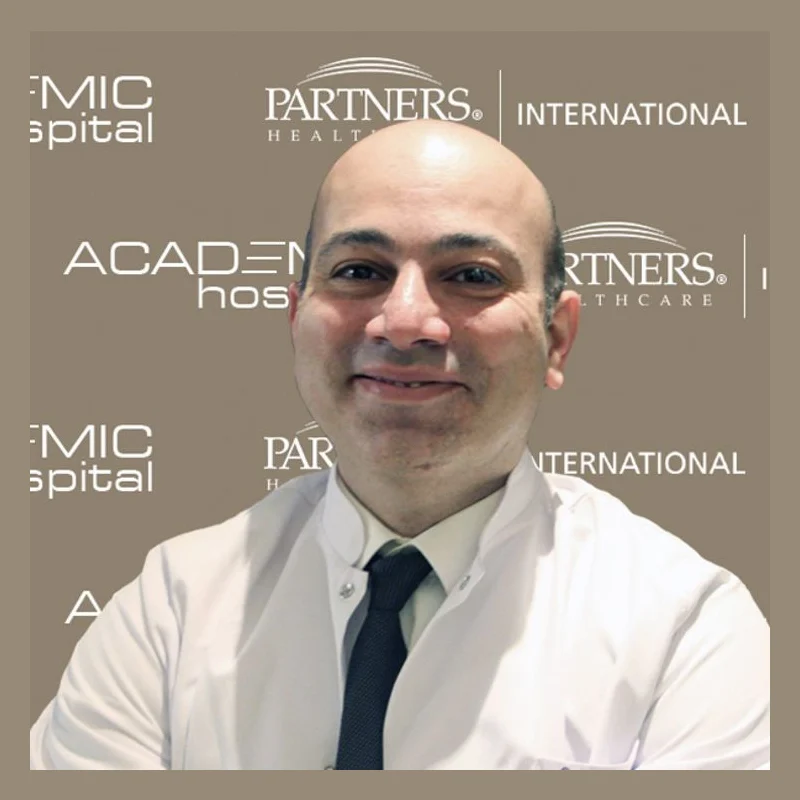
Dr. Öğr. Üyesi Görkem Kıyak
OrthopedicsVerified
- 21+years exp.
English · Turkish
FromPrice on request
Free quote
60 seconds · no obligationView Profile
Haglund's deformity is an enlargement of the bony prominence at the back of the heel bone. It frequently affects individuals wearing rigid shoes, causing localised pain, redness, swelling, and stiffness around the Achilles tendon. Patients often seek medical attention when walking becomes uncomfortable. Treatment options depend on a specialist assessment of the joint and surrounding tissues. Compare hospitals in Turkey that treat Haglund's Deformity and get a free review of your medical records.

1 doctor Compare doctors, ratings and prices — ask any of them for a free quote.
OrthopedicsVerified
English · Turkish
60 seconds · no obligationView Profile
Haglund's deformity is an enlargement of the bony prominence at the back of the heel bone. It frequently affects individuals wearing rigid shoes, causing localised pain, redness, swelling, and stiffness around the Achilles tendon. Patients often seek medical attention when walking becomes uncomfortable. Treatment options depend on a specialist assessment of the joint and surrounding tissues.
Specialty: Orthopedics
The cost of treating Haglund's Deformity depends on the diagnosis and the treatment chosen. Doctors first review your medical records — free of charge — and you then receive an itemised quote.
Haglund's Deformity is treated by Orthopedics specialists. 2 clinics in Turkey on our platform offer this treatment.
Haglund's deformity is a structural abnormality characterised by an enlargement of the bony prominence on the back of the heel bone (calcaneus). Soft tissue near the insertion of the Achilles tendon can become inflamed when this bony bump rubs constantly against the back of rigid footwear. It is sometimes referred to as 'pump bump' due to its association with stiff heel counters in dress shoes or boots.
While the bony projection itself is a permanent alteration of the bone structure, the primary source of pain is usually the secondary inflammation of the surrounding soft tissues. This frequently leads to retrocalcaneal bursitis—an inflammation of the fluid-filled sac located between the heel bone and the Achilles tendon—as well as Achilles tendinopathy.
Typical symptoms of Haglund's deformity include:
International patients seeking evaluation in Turkey undergo a comprehensive assessment within an experienced orthopedics department. Diagnostic protocols begin with a thorough clinical physical examination. The specialist evaluates your foot mechanics, heel shape, range of ankle motion, and the specific location of tenderness.
To confirm the diagnosis and assess tissue damage, hospitals perform imaging studies:
Before travelling, patients should collect recent medical records, previous foot X-rays, and details of prior treatments (such as physiotherapy sessions or orthotic prescriptions) to share with their medical team.
Management depends on the severity of the bony enlargement, the degree of Achilles tendon involvement, and how well the condition responds to initial measures. Non-surgical options are generally exhausted before operative management is considered by your treating physician.
| Option | Typically used when | Things to know |
|---|---|---|
| Conservative Care | Mild to moderate pain with minor inflammation | Includes footwear modifications, heel lifts, ice therapy, targeted physiotherapy, and temporary activity adjustments. |
| Custom Orthotics | Biomechanical issues or arch imbalances contribute to heel friction | Shoe inserts can alter foot mechanics to relieve tension on the Achilles tendon and reduce local pressure. |
| Surgical Decompression | Persistent pain and mobility issues after 6+ months of conservative management | Involves removing the bony exostosis and debriding the retrocalcaneal bursa; may require Achilles tendon repair if damaged. |
Surgical techniques range from minimally invasive endoscopic calcaneoplasty to open surgical resection. If the Achilles tendon is severely degenerated at its insertion point, the surgeon may need to detach a portion of the tendon, excise the bone, and reattach the tendon using suture anchors. Complex joint or lower limb rehabilitation may involve coordinated care alongside specialist rehabilitation services.
Travelling for orthopedic care requires careful preparation, as foot surgery directly impacts your mobility and ability to travel safely home.
The planning process typically involves:
International travel for foot surgery carries risks that must be carefully weighed against your current health state. You should delay medical travel if you have an active systemic infection, poorly controlled diabetes (which impairs wound healing), or unresolved severe cardiovascular conditions. Medical clearance from your doctor is necessary before booking flights.
Patients returning home after heel surgery must remain vigilant for complications. Seek urgent local emergency medical care if you experience any of the following warning signs:
Haglund's deformity is caused by a combination of foot anatomy and mechanical friction. High foot arches, a tight Achilles tendon, and a tendency to walk on the outside of the heel increase strain. Wearing rigid, tight-backed shoes exacerbates friction against the heel bone, leading to tissue inflammation.
No, surgery is not always necessary. Many patients manage their symptoms effectively through non-surgical methods such as changing footwear, using custom orthotics, stretching the Achilles tendon, using heel cups, and taking anti-inflammatory measures. Surgery is typically reserved for severe, persistent cases.
Recovery depends on whether the Achilles tendon was detached during surgery. If only bone is removed, weight-bearing may resume within a few weeks using a protective boot. If the tendon required detachment and repair, non-weight-bearing in a cast or boot may last 6 to 8 weeks, with full recovery taking 6 to 12 months.
No, you should not fly immediately after surgery. Long-distance flying increases the risk of deep vein thrombosis (DVT) and surgical swelling. Surgeons generally advise staying near the clinic for 7 to 14 days to monitor wound healing and remove stitches before flying.
Recurrence of the bony bump after complete surgical removal is uncommon. However, if the underlying biomechanical issues, such as tight calf muscles or improper footwear, are not addressed, inflammation and discomfort in the Achilles tendon area can potentially return.
Your request is in!
Your coordinator will contact you — usually within 2 hours, 24/7.
Want a faster, more accurate assessment?
Add photos & medical detailsLeave your number — a coordinator calls you in your language, usually within 15 minutes during office hours.
Thank you!
A coordinator will contact you at the time you chose.

