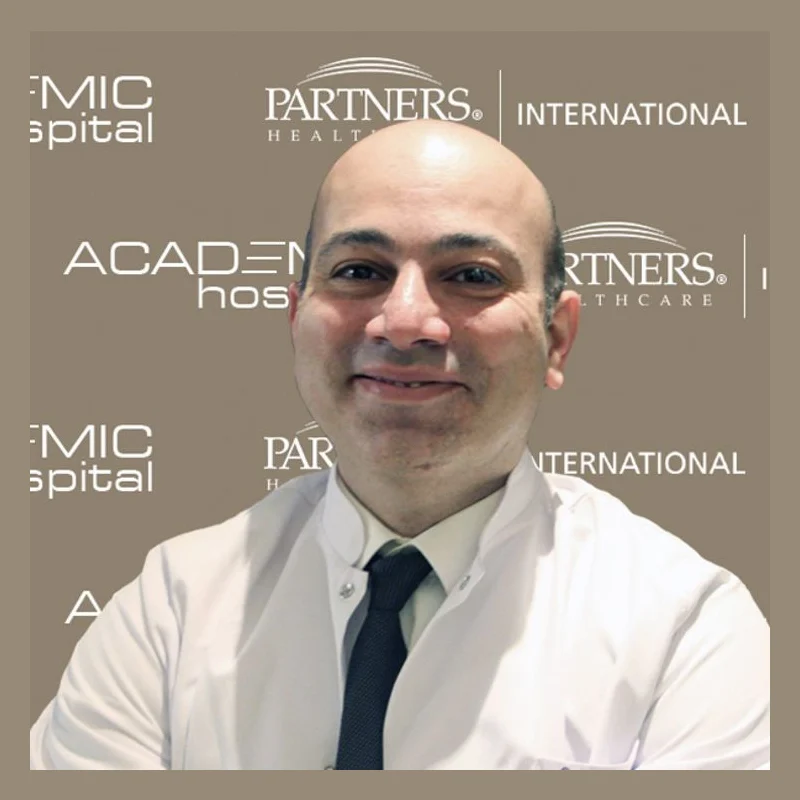
Dr. Öğr. Üyesi Görkem Kıyak
OrthopedicsVerified
- 21+years exp.
English · Turkish
FromPrice on request
Free quote
60 seconds · no obligationView Profile
Developmental dysplasia of the hip is a condition where the hip joint does not develop normally, causing the ball and socket to fit together loosely or become dislocated. It commonly affects infants and young children, often presenting with limited leg movement, uneven skin folds, or a limp when walking. Suitable treatment options depend on a specialist orthopaedic assessment. Compare hospitals in Turkey that treat Developmental Dysplasia of the Hip (DDH) and get a free review of your medical records.

1 doctor Compare doctors, ratings and prices — ask any of them for a free quote.
OrthopedicsVerified
English · Turkish
60 seconds · no obligationView Profile
Developmental dysplasia of the hip is a condition where the hip joint does not develop normally, causing the ball and socket to fit together loosely or become dislocated. It commonly affects infants and young children, often presenting with limited leg movement, uneven skin folds, or a limp when walking. Suitable treatment options depend on a specialist orthopaedic assessment.
Specialty: Orthopedics
The cost of treating Developmental Dysplasia of the Hip (DDH) depends on the diagnosis and the treatment chosen. Doctors first review your medical records — free of charge — and you then receive an itemised quote.
Developmental Dysplasia of the Hip (DDH) is treated by Orthopedics specialists. 2 clinics in Turkey on our platform offer this treatment.
Developmental Dysplasia of the Hip (DDH) is a structural condition where the hip's ball-and-socket joint does not form correctly. In a healthy hip, the rounded top of the thigh bone (femoral head) fits snugly into the cup-shaped socket of the pelvis (acetabulum). With DDH, the socket may be too shallow, allowing the ball to slide partially or completely out of place. This instability can range from mild joint laxity to total dislocation of the hip bone.
DDH is most frequently identified in infants and young children, though untreated mild forms may persist undetected into adolescence or adulthood. Common signs in babies include unequal skin creases around the thighs or buttocks, limited flexibility when spreading the legs outward, or one leg appearing shorter than the other. Once a child begins to walk, symptoms may manifest as a noticeable limp, a waddling gait, or walking on toes on one side. If left unmanaged, the abnormal joint friction can lead to premature joint wear, persistent pain, and early-onset osteoarthritis. Specialist care under a dedicated Orthopedics department is essential for establishing an accurate assessment and protective management plan.
When seeking an evaluation for DDH at a specialised medical centre in Turkey, international patients undergo thorough clinical assessments to evaluate joint stability and structural alignment. Specialist paediatric orthopaedic surgeons perform targeted physical manoeuvres (such as the Barlow and Ortolani tests in infants) to check for joint laxity or dislocation.
Diagnostic imaging is crucial for confirming the severity of the dysplasia and planning intervention:
Families travelling to Turkey should bring all prior medical records, including previous imaging scans (on CD or digital format), red-book growth tracking records, paediatrician reports, and notes on developmental milestones. Overseas clinics review these documents to streamline onsite diagnostic testing.
Management of DDH depends heavily on the patient's age, the degree of joint displacement, and how well the hip socket is forming. Early non-surgical intervention offers the highest chance of natural joint guidance, whereas older children often require surgical realignment.
| Option | Typically used when | Things to know |
|---|---|---|
| Pavlik Harness / Dynamic Splinting | Infants aged 0 to 6 months with mild to moderate hip instability. | Holds the legs in a bent and outward position to keep the ball centred in the socket, encouraging natural bone development. Requires strict compliance and routine ultrasounds. |
| Closed Reduction & Spica Casting | Children aged 6 to 18 months, or when harness therapy is insufficient. | The joint is manually manipulated into place under general anaesthesia without surgical incisions. A full-body plaster cast (Spica cast) is applied for several months to hold the position. |
| Open Reduction Surgery | Children over 18 months or cases where soft tissue blocks manual reduction. | Surgical intervention to clear obstructing tissue and reposition the femoral head. May involve reconstructive procedures in Paediatrics surgical units. |
| Pelvic or Femoral Osteotomy | Older children or adolescents with severe socket shallowing or structural deformity. | The surgeon cuts and repositions the pelvic or thigh bones to deepen the socket or re-align the joint, followed by internal fixation and cast immobilisation. |
Decisions regarding surgical or non-surgical paths are made exclusively by the attending orthopaedic specialist after detailed imaging reviews. Patients needing post-operative recovery support often coordinate with specialised Rehabilitation teams to rebuild muscle strength and mobility safety.
Travelling abroad for paediatric orthopaedic care requires meticulous logistical planning. The process begins with a remote document review, where foreign clinical teams analyse imported X-rays and medical histories to provide an initial evaluation and estimated timeline. Once cleared for travel, families usually arrive a few days before any procedure for in-person consultations, pre-operative bloodwork, and fresh imaging.
Duration of stay varies by treatment protocol:
Before departure, hospital teams provide detailed guidelines for cast maintenance, hygiene, and car seat adaptations. Follow-up care, including cast removal and progress X-rays, is typically coordinated with local orthopaedic specialists in the patient's home country.
Long-distance air travel is not safe for all patients. Children with active systemic infections, uncontrolled fever, or respiratory distress should postpone travel until stable. Flying shortly after major pelvic surgery without clearance from the operating surgeon carries risks of deep vein thrombosis, cast tightness due to cabin pressure changes, and severe discomfort.
Seek immediate local medical care if any of the following warning signs occur during travel or recovery:
Developmental Dysplasia of the Hip (DDH) is a structural condition where an infant's or child's hip joint does not form correctly. The socket may be too shallow, causing the thigh bone to fit loosely or dislocate. Early medical evaluation helps guide natural joint alignment.
The length of stay depends on the treatment. Non-surgical harness fittings may require 3 to 7 days for adjustments and safety checks. Surgical procedures involving Spica casting usually require 10 to 14 days post-operation to monitor wound healing and ensure safe travel clearance.
Yes, children can usually fly with a Spica cast once the surgical team provides clearance, usually 10 to 14 days after placement. You must arrange extra seating space with the airline and ensure proper positioning to maintain cast integrity and comfort during the flight.
You should bring all prior medical records, paediatrician notes, developmental reports, and original diagnostic images (such as ultrasounds, X-rays, or MRI scans) stored on a digital disk or drive. These allow foreign orthopaedic specialists to conduct a complete clinical review.
Immediate local medical attention is required if your child's toes become cold, pale, swollen, or blue, if they experience severe unmanaged pain, or if you notice foul odours or drainage coming from under the cast. These symptoms can indicate circulatory issues or infection.
Your request is in!
Your coordinator will contact you — usually within 2 hours, 24/7.
Want a faster, more accurate assessment?
Add photos & medical detailsLeave your number — a coordinator calls you in your language, usually within 15 minutes during office hours.
Thank you!
A coordinator will contact you at the time you chose.

