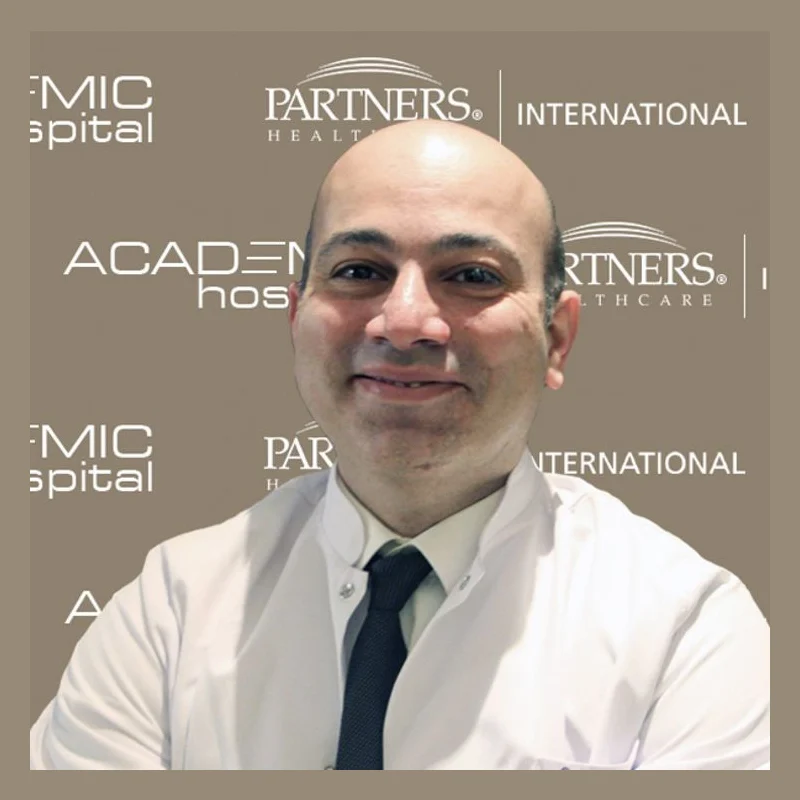
Dr. Öğr. Üyesi Görkem Kıyak
OrthopedicsVerified
- 21+years exp.
English · Turkish
FromPrice on request
Free quote
60 seconds · no obligationView Profile
Clubhand is a congenital musculoskeletal anomaly characterised by radial or ulnar longitudinal deficiency, resulting in forearm shortening and wrist deviation. Parents usually consult an orthopaedic specialist during infancy after observing unusual upper limb positioning, restricted motion, or hand weakness. Corrective splinting, physical therapy, and surgical treatment options depend on a detailed paediatric specialist assessment. Compare hospitals in Turkey that treat Clubhand and get a free review of your medical records.

1 doctor Compare doctors, ratings and prices — ask any of them for a free quote.
OrthopedicsVerified
English · Turkish
60 seconds · no obligationView Profile
Clubhand is a congenital musculoskeletal anomaly characterised by radial or ulnar longitudinal deficiency, resulting in forearm shortening and wrist deviation. Parents usually consult an orthopaedic specialist during infancy after observing unusual upper limb positioning, restricted motion, or hand weakness. Corrective splinting, physical therapy, and surgical treatment options depend on a detailed paediatric specialist assessment.
Specialty: Orthopedics
The cost of treating Clubhand depends on the diagnosis and the treatment chosen. Doctors first review your medical records — free of charge — and you then receive an itemised quote.
Clubhand is treated by Orthopedics specialists. 2 clinics in Turkey on our platform offer this treatment.
Clubhand is a congenital musculoskeletal anomaly characterised by radial or ulnar longitudinal deficiency, causing forearm shortening and wrist deviation. Longitudinal deficiency describes a failure of formation along the preaxial or postaxial border of the upper extremity. In radial clubhand (radial dysplasia), the radius bone and associated soft tissues are underdeveloped or absent, often accompanied by thumb hypoplasia. In severe radial cases, the entire radius is absent, leaving the hand unsupported and mechanically unstable. In ulnar clubhand, the ulna is deficient, tilting the wrist outward. These anomalies can occur alone or alongside systemic syndromes like VACTERL association, thrombocytopenia-absent radius (TAR) syndrome, or Holt-Oram syndrome.
Typical signs observed in infants include:
A detailed evaluation by a specialist in orthopaedics is necessary to assess functional potential and plan corrective care. Clinical specialists evaluate the passive correctability of the wrist contracture, the active movement of the fingers, and the stability of the elbow. Prior to intervention, hospitals in Turkey perform structured check-ups and diagnostics to evaluate limb anatomy and overall systemic health.
Standard diagnostic tests include:
Parents should bring complete medical files, including birth records, developmental notes, and previous imaging (DICOM format). Clear video recordings demonstrating how the child uses the hand for grasping and reaching also help surgeons assess compensatory movement.
Treatment aims to align the hand with the forearm, preserve joint mobility, and enhance manual function. Management depends on the child's age, deficiency severity, and elbow motion. Mild deformities may use non-operative therapy, while severe deficiencies require staged surgery.
| Option | Typically used when | Things to know |
|---|---|---|
| Serial splinting and stretching | Infants with flexible contractures or before planned surgery. | Gently stretches tight soft tissues to facilitate subsequent alignment. |
| Soft-tissue distraction | Rigid deformities with severe soft-tissue tightness. | Uses an external frame to lengthen tight tissues before bony surgery. |
| Centralisation or radialisation | Moderate to severe radial deficiency with adequate elbow flexion. | Realigns and secures the carpal bones over the end of the ulna. |
| Pollicisation surgery | Severe hypoplasia or complete absence of the thumb. | Transposes the index finger to create a functional thumb for pinching. |
After surgical realignment, targeted rehabilitation is essential to prevent recurrent deviation and build grasping strength.
Planning begins with a remote assessment of medical records, imaging, and functional videos by the treating surgeon to evaluate suitability and outline surgical steps.
Families should anticipate staying in Turkey for approximately two to four weeks. This period covers pre-operative assessments, surgery, hospital recovery, wound evaluation, and initial cast application. Direct hospital consultations verify previous imaging, assess skin condition, and allow the surgical team to discuss realistic goals with parents. If an external fixator is placed, multiple visits or an extended stay may be required.
Prior to departure, families receive translated discharge summaries, post-operative protocols, and therapy plans. Parents must coordinate ongoing care with a local paediatrician and physiotherapist to monitor cast condition and support developmental recovery.
Travel is not advisable if an infant has unstable systemic disorders, uncontrolled cardiac conditions, acute infections, or severe haematological complications such as unmanaged thrombocytopenia. Systemic stability takes priority over reconstructive limb procedures.
Seek urgent local medical attention if you observe:
All surgical decisions and clinical timelines are determined by the treating doctor following direct examination and diagnostic evaluation.
Initial non-surgical management, including gentle stretching and passive splinting, typically begins within the first few weeks of life to maintain soft-tissue flexibility. If corrective surgery is recommended, procedures such as centralisation or radialisation are commonly performed between six and twelve months of age, provided the child is systemically healthy and demonstrates adequate elbow function.
A child requires active elbow flexion to bring the hand to the mouth for eating and facial hygiene. When the wrist is bent inwards due to radial deficiency, the child may compensate for a stiff elbow by using the deviated angle. Straightening the wrist surgically without adequate elbow flexion could prevent the child from reaching their face, compromising independent function.
Pollicisation is a reconstructive procedure performed when the thumb is severely underdeveloped or entirely absent, which occurs frequently alongside radial clubhand. The surgeon transposes the index finger into the thumb position, restructuring its tendons, nerves, and joints. This allows the child to develop pinch grasp and manipulate objects, significantly improving functional capability and manual independence.
Yes, recurrence of wrist deviation is a recognised risk as the child grows. Because the underlying longitudinal growth deficiency persists and asymmetric muscle forces continue to pull on the hand, the wrist may gradually drift back towards the deficiency. Long-term use of night splints, consistent rehabilitation exercises, and regular paediatric orthopaedic follow-ups help minimise recurrent deformity.
Following centralisation or radialisation surgery, the arm is immobilised in a solid cast for approximately six to eight weeks to protect soft tissues and bony healing. Afterwards, the rigid cast is replaced with a custom-moulded removable splint. This splint is typically worn full-time for several months and then at night for years to maintain corrected wrist alignment during growth.
Your request is in!
Your coordinator will contact you — usually within 2 hours, 24/7.
Want a faster, more accurate assessment?
Add photos & medical detailsLeave your number — a coordinator calls you in your language, usually within 15 minutes during office hours.
Thank you!
A coordinator will contact you at the time you chose.

