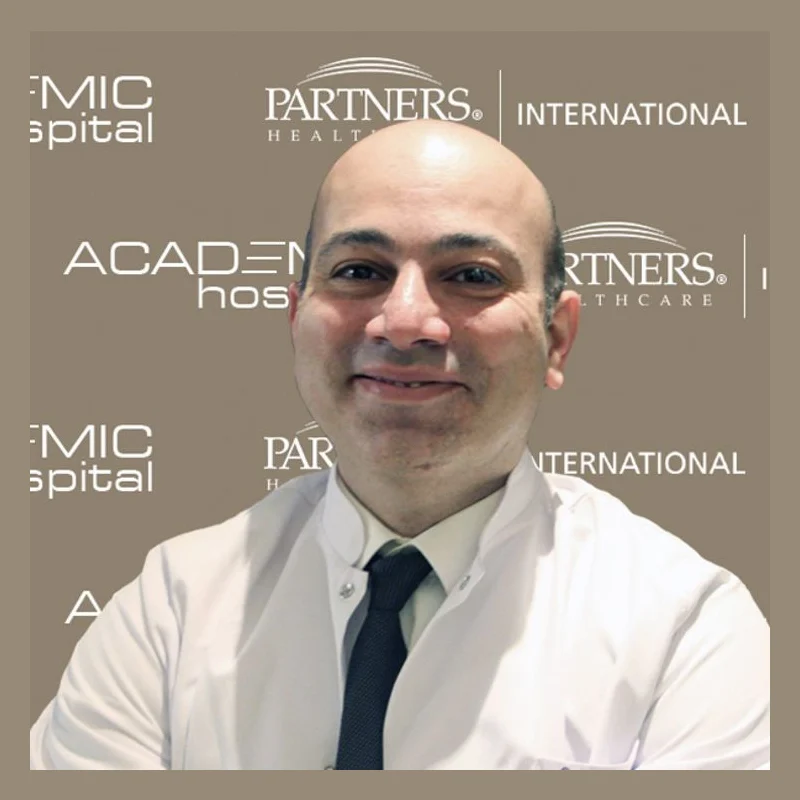
Dr. Öğr. Üyesi Görkem Kıyak
OrthopedicsVerified
- 21+years exp.
English · Turkish
FromPrice on request
Free quote
60 seconds · no obligationView Profile
Shoulder osteoarthritis is a degenerative joint disease involving the gradual breakdown of protective cartilage within the shoulder joint. It primarily affects older adults and individuals with prior joint trauma. Progressive shoulder stiffness, deep aching discomfort, and reduced range of motion during routine arm movements generally prompt medical consultation. Personalised treatment options depend on a detailed specialist assessment. Compare hospitals in Turkey that treat Shoulder Osteoarthritis and get a free review of your medical records.

1 doctor Compare doctors, ratings and prices — ask any of them for a free quote.
OrthopedicsVerified
English · Turkish
60 seconds · no obligationView Profile
Shoulder osteoarthritis is a degenerative joint disease involving the gradual breakdown of protective cartilage within the shoulder joint. It primarily affects older adults and individuals with prior joint trauma. Progressive shoulder stiffness, deep aching discomfort, and reduced range of motion during routine arm movements generally prompt medical consultation. Personalised treatment options depend on a detailed specialist assessment.
Specialty: Orthopedics
The cost of treating Shoulder Osteoarthritis depends on the diagnosis and the treatment chosen. Doctors first review your medical records — free of charge — and you then receive an itemised quote.
Shoulder Osteoarthritis is treated by Orthopedics specialists. 2 clinics in Turkey on our platform offer this treatment.
Shoulder osteoarthritis is a progressive, degenerative condition characterised by the gradual wear and breakdown of articular cartilage within the shoulder joint. It most frequently involves the glenohumeral joint—the primary ball-and-socket connection between the humerus and the scapula—or the acromioclavicular joint. As the protective smooth tissue wears away, bone-on-bone friction develops, leading to localized inflammation, bone spur development, and joint capsule tightening. Patients seeking care through Orthopedics specialists often experience symptoms that develop slowly over several years.
Typical clinical features of shoulder osteoarthritis include:
When evaluating shoulder joint degeneration, medical centres in Turkey follow comprehensive diagnostic protocols to assess the extent of cartilage loss, bone deformity, and surrounding soft tissue integrity. Patients travelling for evaluation are encouraged to bring all previous medical documentation, including physical therapy reports and past operative notes if prior shoulder procedures were performed.
Standard diagnostic procedures typically involve:
Management strategies depend on the stage of cartilage erosion, functional impairment, and overall patient health. Interventions range from conservative therapies to advanced reconstructive surgeries. A treating orthopedic surgeon determines the final care plan following direct physical examination and image analysis.
| Option | Typically Used When | Things to Know |
|---|---|---|
| Conservative Therapy | Mild to moderate early-stage osteoarthritis with preserved joint space. | Combines targeted physical therapy, activity modification, anti-inflammatory medications, and intra-articular joint injections. |
| Arthroscopic Debridement | Symptomatic mild wear with loose bodies, mechanical catching, or focal cartilage lesions. | A minimally invasive procedure to clear joint debris and smooth rough surfaces; provides temporary relief rather than a permanent structural cure. |
| Anatomic Total Shoulder Arthroplasty | Advanced end-stage joint damage where the rotator cuff muscles remain intact. | Replaces both the ball and socket with prosthetic components; restores smooth articulation and significantly reduces pain. |
| Reverse Total Shoulder Arthroplasty | Severe joint degeneration accompanied by irreparable rotator cuff tears or significant bone deficiency. | Reverses the natural ball-and-socket configuration, relying on the deltoid muscle rather than the rotator cuff to lift the arm. |
In cases where joint stiffness is compounded by neurological or systemic conditions, multi-specialty reviews involving Neurosurgery or Endocrinology may be conducted to ensure overall physiological stability prior to intervention. For patients requiring post-surgical functional training, structured programs arranged through Rehabilitation specialists assist in recovering arm mobility.
Organising care abroad requires structured preparation to allow for proper diagnostic review, surgical execution, and safe initial healing. International patients usually undergo a pre-travel review of existing X-rays or MRI scans. However, final confirmation of any treatment plan always occurs after in-person clinical tests upon arrival.
Most orthopedic protocols necessitate a stay in Turkey lasting between 10 to 14 days. This timeframe covers pre-operative laboratory clearances, initial surgery, in-patient ward monitoring, and early outpatient physical therapy sessions. Before departing, patients receive detailed medical discharge summaries, wound management instruction, and post-operative exercise protocols to share with their healthcare team back home. Long-term progress requires ongoing communication between the overseas specialist and local care providers.
Long-distance travel is not advisable for individuals with unmanaged cardiovascular instability, active systemic infections, or untreated deep vein thrombosis. Flying immediately following major shoulder joint replacement is restricted until the surgical team confirms that systemic healing is stable and the risk of blood clots is minimized.
Seek immediate emergency medical attention locally if you experience any of the following warning signs:
Anatomic shoulder replacement replaces the ball and socket in their natural positions and requires an intact rotator cuff. Reverse shoulder replacement reverses the socket and ball orientation, allowing the deltoid muscle to move the arm when the rotator cuff is severely damaged or irreparable.
Most patients stay in Turkey for 10 to 14 days. This window permits thorough pre-operative assessments, the surgical procedure, inpatient hospital monitoring, initial wound healing checks, and introductory physical therapy sessions before traveling home.
Osteoarthritis is a chronic, progressive condition that cannot be reversed. However, non-surgical treatments such as targeted physical therapy, lifestyle adjustments, oral medications, and joint injections can manage pain and restore function effectively in mild to moderate stages.
Patients are generally cleared to fly short distances 10 to 14 days post-surgery, provided recovery is uncomplicated and clearance is granted by the orthopedic surgeon. Long-haul flights may require additional precautions to prevent blood clots.
You should bring all recent shoulder X-rays, MRI or CT imaging files on a USB or CD, medical discharge summaries, list of current medications, and reports from past physical therapy or surgical procedures relevant to your joint condition.
Your request is in!
Your coordinator will contact you — usually within 2 hours, 24/7.
Want a faster, more accurate assessment?
Add photos & medical detailsLeave your number — a coordinator calls you in your language, usually within 15 minutes during office hours.
Thank you!
A coordinator will contact you at the time you chose.

