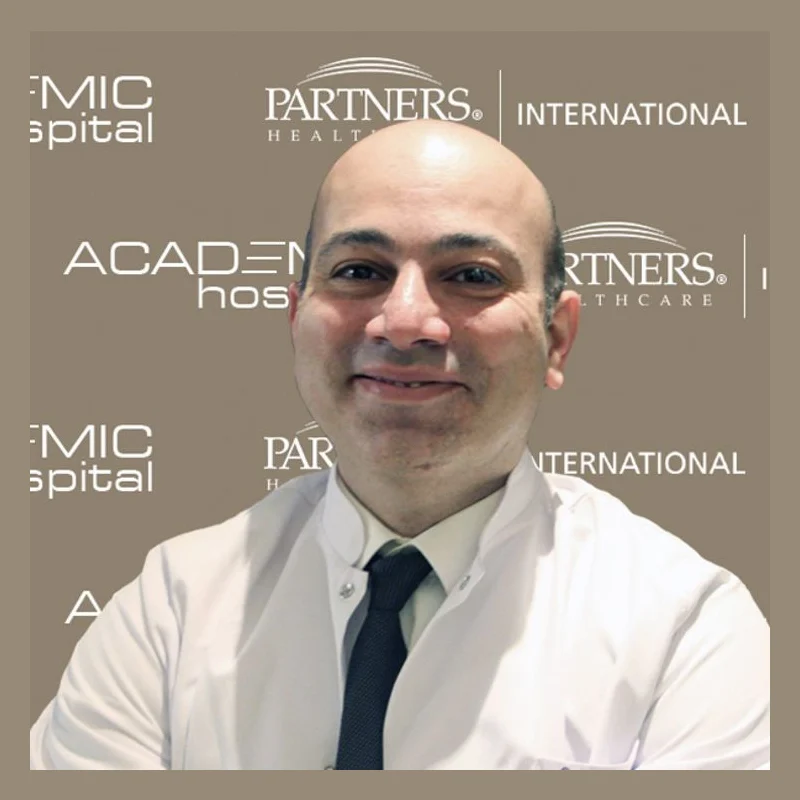
Dr. Öğr. Üyesi Görkem Kıyak
OrthopedicsVerified
- 21+years exp.
English · Turkish
FromPrice on request
Free quote
60 seconds · no obligationView Profile
A ganglion cyst is a benign, fluid-filled swelling that develops adjacent to joint capsules or tendon sheaths, frequently along the wrist or hand. Individuals usually attend a medical consultation when noticing a visible lump, localised aching, joint stiffness, or nerve tingling during daily physical tasks. Observational, aspiration, or excision treatment options depend on a comprehensive specialist assessment. Compare hospitals in Turkey that treat Ganglion Cyst and get a free review of your medical records.

1 doctor Compare doctors, ratings and prices — ask any of them for a free quote.
OrthopedicsVerified
English · Turkish
60 seconds · no obligationView Profile
A ganglion cyst is a benign, fluid-filled swelling that develops adjacent to joint capsules or tendon sheaths, frequently along the wrist or hand. Individuals usually attend a medical consultation when noticing a visible lump, localised aching, joint stiffness, or nerve tingling during daily physical tasks. Observational, aspiration, or excision treatment options depend on a comprehensive specialist assessment.
Specialty: Orthopedics
The cost of treating Ganglion Cyst depends on the diagnosis and the treatment chosen. Doctors first review your medical records — free of charge — and you then receive an itemised quote.
Ganglion Cyst is treated by Orthopedics specialists. 2 clinics in Turkey on our platform offer this treatment.
A ganglion cyst is a non-cancerous, fluid-filled sac that develops along the joint capsules or tendon sheaths, most frequently on the dorsum (back) of the wrist, the palm side of the wrist, or the base of the fingers. The cyst is filled with a thick, jelly-like synovial fluid. While these swellings are benign, their size can fluctuate based on joint activity, sometimes enlarging after repetitive hand or wrist movements.
International patients typically seek a specialist consultation in Orthopedics when they notice specific clinical features, including:
When evaluating a swelling in the hand or wrist, orthopedic specialists in Turkey perform a structured diagnostic assessment to differentiate a ganglion cyst from solid soft-tissue tumours, giant cell tumours of the tendon sheath, or inflammatory arthritis. Before travelling, patients should bring previous diagnostic imaging scans, written reports from their local physician, and details of any prior drainage procedures.
During an initial hospital consultation, the medical team usually undertakes the following investigations:
Management depends on the severity of symptoms, cyst location, and how much the swelling restricts daily function. The examining orthopedic surgeon determines the appropriate pathway after reviewing imaging findings.
| Option | Typically used when | Things to know |
|---|---|---|
| Observation | The cyst is small, causes no pain, and does not restrict joint movement. | Many cysts spontaneously resolve or remain stable without medical intervention. |
| Aspiration | The cyst is painful or causes mild discomfort, and the patient prefers a non-surgical approach. | Fluid is drawn out using a fine needle under local anaesthetic. Recurrence rates can be relatively high because the cyst wall remains intact. |
| Surgical Excision | The cyst causes persistent pain, nerve symptoms, or recurs following aspiration. | Performed open or arthroscopically to remove the cyst sac and its attachment stem to reduce recurrence risk. Requires post-operative wound care. |
Surgical excision may be combined with diagnostic arthroscopy if the surgeon suspects underlying ligament instability. If skin changes or scar management are secondary concerns, patients might also discuss soft-tissue healing with specialists in Plastic & Aesthetic Surgery, though the primary joint procedure remains within orthopedic care.
Travelling for hand or wrist care requires practical scheduling to ensure adequate wound healing before long-haul travel. A typical plan includes a preliminary remote records review followed by an in-person assessment upon arrival.
Patients should delay international flight travel if they present with active, untreated hand infections, severe unmanaged systemic illness, or acute unexplained nerve deficits that require emergency intervention locally. Furthermore, flying immediately after surgery without medical clearance increases the risk of limb swelling and deep vein thrombosis.
Seek immediate local emergency medical care if you experience any of the following red flag symptoms:
Yes, a ganglion cyst can recur, although surgical excision has a lower recurrence rate than aspiration. The surgeon removes the cyst sac and its attachment root to lower this risk, but small tissue remnants or ongoing joint capsule stress can cause a new cyst to form over time.
Most international patients remain in Turkey for 5 to 7 days after surgical excision. This allows time for the initial post-operative check, dressing changes, and an evaluation by the orthopedic surgeon to ensure wound healing is progressing safely before you travel home.
Aspiration removes the fluid inside the cyst to relieve pressure, but it leaves the outer cyst wall intact. Because the capsule remains, fluid often reaccumulates over time. Your treating doctor will explain the likelihood of recurrence compared to surgical removal.
A temporary splint is often applied for a few days to immobilise the wrist, protect the healing joint capsule, and reduce post-operative swelling. Your orthopedic surgeon will decide if immobilisation is required based on the size and location of the excised cyst.
Patients can usually fly shortly after a simple aspiration, provided there are no immediate complications. However, you should allow at least 24 to 48 hours for your medical team to confirm there is no unexpected bleeding, severe pain, or early sign of local infection.
Your request is in!
Your coordinator will contact you — usually within 2 hours, 24/7.
Want a faster, more accurate assessment?
Add photos & medical detailsLeave your number — a coordinator calls you in your language, usually within 15 minutes during office hours.
Thank you!
A coordinator will contact you at the time you chose.

