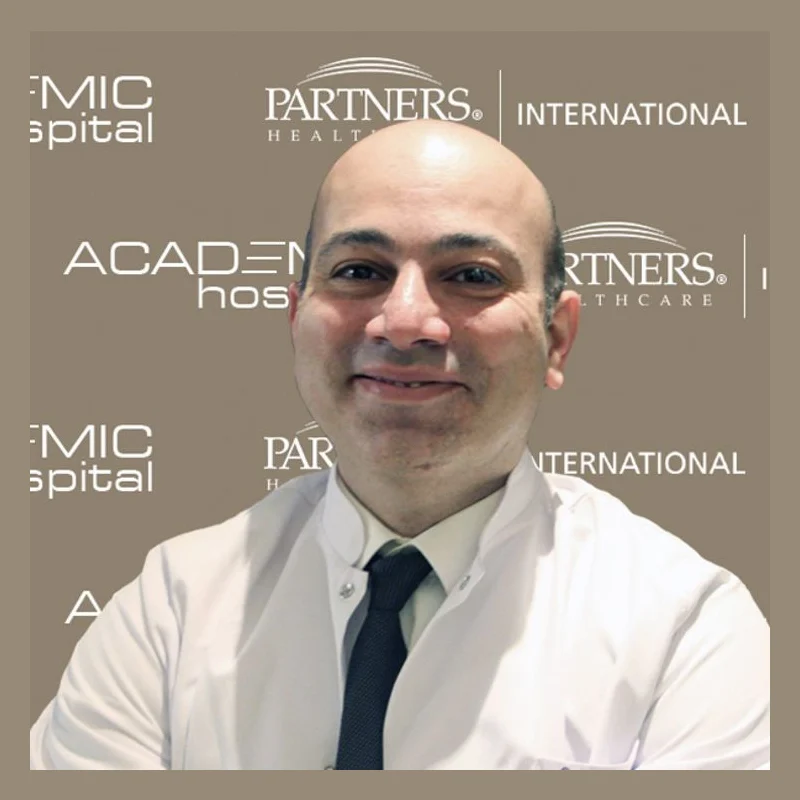
Dr. Öğr. Üyesi Görkem Kıyak
OrthopedicsVerified
- 21+years exp.
English · Turkish
FromPrice on request
Free quote
60 seconds · no obligationView Profile
When scoliosis surgery is advised, how spinal fusion with screws and rods straightens and stabilises the curve, how it compares with bracing, vertebral body tethering and non-fusion devices, what it costs in Turkey against the UK, US and Germany, the hospital stay, recovery timeline, risks and how to check a spine team.
A written plan with the surgeon's name and the full price — usually within 24 hours.

1 doctor Compare doctors, ratings and prices — ask any of them for a free quote.
OrthopedicsVerified
English · Turkish
60 seconds · no obligationView Profile
Scoliosis surgery straightens as much as is safely possible, and then stabilises, a spine that curves sideways and rotates. The most common operation is posterior spinal fusion: through an incision down the back, the surgeon places screws into the vertebrae of the curve, connects them with rods shaped to a straighter profile, and lays bone graft along the spine so that the treated vertebrae fuse into one solid segment over the following months. The aim is not a perfectly straight spine; it is to reduce the curve, stop it getting worse and rebalance the trunk.
This guide explains when surgery is advised, how the operation is done, what the main alternatives are, what it costs in Turkey compared with the UK, US and Germany, what the hospital stay and recovery look like and how to check a team. For the surgical technique in more detail see our page on operative treatment of scoliosis.
Not every curve needs an operation. Many mild curves are only watched with regular X-rays. In growing teenagers, surgery is usually discussed when the curve measured by the Cobb angle is large, often above roughly 45 to 50 degrees, or when it keeps progressing despite bracing. In adults, the reasons are more often pain that has not responded to other care, a curve that is worsening, nerve symptoms from pressure on the spinal canal, or imbalance that makes standing difficult.
Age and growth matter. Early-onset scoliosis in young children is a different problem and may need growing rods or casting rather than fusion. A spine surgeon should look at the whole spine on standing X-rays, bending films and sometimes an MRI, and should explain whether the curve is idiopathic (no known cause), congenital, neuromuscular or degenerative, because the choice of operation differs.
The operation commonly takes four to eight hours depending on the length of the curve and the complexity, and blood loss is managed with techniques such as a cell saver and medication that reduces bleeding. A smaller number of curves are treated from the front of the body, or with a combined approach.
For appropriately chosen curves, fusion is well established as a way to correct deformity and stop progression, and large series report high satisfaction in teenagers and clear improvement in pain and function in many adults. The curve reduction is real and visible on X-ray, and the trunk often appears more balanced, although the shoulders and ribs may not look completely level.
The evidence is less certain on other points. Fusion does not give a "normal" back, because the fused segment no longer bends, and the vertebrae above and below can take extra load over many years. In adults, outcomes depend heavily on bone quality, general health and the extent of the fusion. No surgeon can promise exact degrees of correction, and anyone who guarantees a straight spine or a pain-free life is overstating the evidence.
The figures below are approximate ranges for a typical fusion, not hospital quotes. They vary with the number of levels fused, the implant system, whether neuromonitoring and a stay in intensive care are included and whether the case is revision or primary surgery. Each hospital confirms its own price in a written quote.
| Country | Approximate cost range |
|---|---|
| Turkey | €12,000 – €32,000 |
| United Kingdom | €28,000 – €65,000 |
| United States | €80,000 – €200,000 |
| Germany | €25,000 – €55,000 |
What changes the price: the number of vertebrae fused, the implant brand and type, the use of navigation or robotics, the length of the hospital and intensive-care stay, and the surgical team's experience in deformity cases. A written quote should list the operation, implants, neuromonitoring, anaesthesia, hospital days, medication, a physiotherapy review and transfers, and should say what happens if a complication needs further treatment.
Surgery is only one of several approaches, and the choice depends on age, growth remaining, curve size and flexibility.
| Option | Best suited to | Typical limits |
|---|---|---|
| Observation or bracing | Growing children with smaller curves; see conservative treatment of scoliosis | Does not correct an existing curve; needs long daily use |
| Posterior spinal fusion | Large or progressing curves, in teenagers and adults | Stiffens the fused segment; major operation |
| Vertebral body tethering | Selected growing teenagers with flexible curves | May need further surgery; limited long-term data |
| Non-fusion systems such as ApiFix | Selected moderate curves in near-mature patients | Strict selection; not suitable for every curve |
The newer non-fusion techniques try to keep more movement but are used only for selected patients and have shorter follow-up than fusion. Ask the surgeon why a particular method fits your curve, and for a second opinion if you are unsure.
The decision is made by a spine surgeon after examining the spine and the X-rays. Candidates are people whose curve is large, progressing or painful, and who are healthy enough for a long operation. Surgery may be postponed or avoided when the curve is small and stable, when heart, lung or bone-health problems make anaesthesia risky, when smoking has not been stopped, or when the hope is purely cosmetic for a small curve. Adults with osteoporosis may need medical treatment first. Ask what happens if you choose to wait, because for some curves waiting is a safe choice.
Before and after X-rays show the angle of the curve and the screws and rods in place. A typical fusion reduces the main curve substantially, and the trunk looks straighter and more balanced, but the curve is rarely brought to zero. Clothes fit better, the rib hump may be less obvious, and in many adults back pain and standing tolerance improve. A small number gain a little height. What photographs and X-rays do not show is flexibility: bending forwards and sideways is reduced in the fused segment, although daily activities remain possible. Ask the surgeon to explain the expected correction for your own X-rays rather than an average.
You usually spend the first night in an intensive care or high-dependency unit and then four to seven days on the ward, depending on pain, mobility and bowel function. Pain relief is given through a drip and tablets, and a physiotherapist helps you stand and walk within a day or two. Most people return to the hotel or home after about a week, and the surgeon will want to examine and X-ray you before you fly, usually ten to fourteen days after surgery.
Follow-up appointments with X-rays are important and can be arranged locally with the surgeon's records.
Scoliosis surgery is a major operation. Risks include bleeding that may need a transfusion, wound infection, nerve injury that can range from temporary numbness to, rarely, serious weakness or paralysis, a screw or rod problem, failure of the bone to fuse (pseudarthrosis), pain at the graft site, blood clots and anaesthetic complications. Over years, the segments next to a fusion can wear faster, and some people need further surgery. Organisations such as the Scoliosis Research Society and national health services publish plain-language information on these risks; ask the surgeon for the numbers from their own practice and for the plan if a complication occurs far from home.
Check that the surgeon is a specialist in spinal deformity who performs these operations regularly, that the hospital has neuromonitoring, a blood bank, intensive care and a spinal imaging service, and that you receive a written plan and price before paying a deposit. Red flags include a guaranteed result, a quote with no breakdown, no review of full-length spine X-rays, pressure to book quickly, no plan for follow-up or no named surgeon. Read how our process works and use our free quote page so the hospital can review your X-rays and send a written plan.
Questions to ask the clinic:
It is an operation that corrects and stabilises a sideways spinal curve, most often by fusing vertebrae with pedicle screws, rods and bone graft. The aim is to reduce the curve, stop progression and rebalance the trunk rather than make the spine perfectly straight.
It is usually discussed for large or progressing curves, in teenagers often above about 45 to 50 degrees, and in adults for pain, nerve symptoms or worsening imbalance. Many mild curves only need observation.
For well-selected curves, fusion reliably reduces and stabilises the curve and improves pain and function for many people. It does not give a normal back, as the fused segment no longer bends, and exact correction cannot be guaranteed.
Approximate ranges are €12,000 to €32,000 in Turkey, against roughly €28,000 to €65,000 in the UK. The price depends on the number of vertebrae fused, the implants, intensive care days and the hospital, and is confirmed in a written quote.
Expect four to seven days in hospital, six weeks of limited activity, a return to school or desk work at about six to twelve weeks, and the fusion maturing over six to twelve months. Contact sports are discussed individually.
It is painful in the first days, controlled with drips and tablets, and most people walk with a physiotherapist within a day or two. Pain eases steadily over the following weeks.
Usually about ten to fourteen days after surgery, covering the hospital stay and a check with X-rays before flying. The surgeon decides when it is safe to travel.
Risks include bleeding, infection, nerve injury, screw or rod problems, failure of the bone to fuse, blood clots and anaesthetic complications. Serious neurological injury is rare, and the surgeon should share the numbers from their own practice.
Yes. Bracing and observation suit growing children with smaller curves, and vertebral body tethering or non-fusion systems are used in selected patients. They have limits and less long-term evidence than fusion.
Yes, when pain, nerve symptoms or imbalance justify it and general health and bone quality allow. Adult surgery has a longer recovery and higher risks than in teenagers, so a careful assessment is essential.
Your request is in!
Your coordinator will contact you — usually within 2 hours, 24/7.
Want a faster, more accurate assessment?
Add photos & medical detailsLeave your number — a coordinator calls you in your language, usually within 15 minutes during office hours.
Thank you!
A coordinator will contact you at the time you chose.

