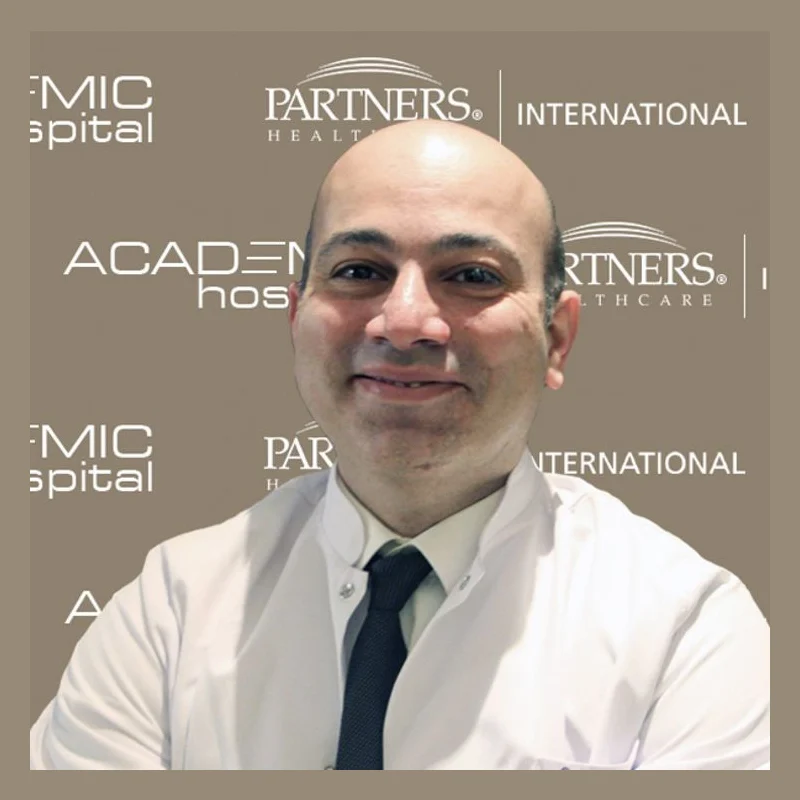
Dr. Öğr. Üyesi Görkem Kıyak
OrthopedicsVerified
- 21+years exp.
English · Turkish
FromPrice on request
Free quote
60 seconds · no obligationView Profile
What osteoplasty is, how surgeons reshape or rebuild bone, which conditions it is used for, how it differs from osteotomy and bone grafting, what the operation involves, approximate costs in Turkey against the UK, US and Germany, a week-by-week recovery outline, realistic results, risks, and how to check a hospital and surgeon.
A written plan with the surgeon's name and the full price — usually within 24 hours.

1 doctor Compare doctors, ratings and prices — ask any of them for a free quote.
OrthopedicsVerified
English · Turkish
60 seconds · no obligationView Profile
Osteoplasty means surgical reshaping or repair of bone. The word is used for several operations that have one aim: change the shape or contour of a bone so that it fits, moves or looks as it should. The surgeon may smooth a bump, remove an extra growth, rebuild a defect with graft material or shape the bone around a joint. It is performed by orthopaedic surgeons, and in dentistry and jaw surgery by oral and maxillofacial surgeons, under the same name. In Turkey the operation is carried out in orthopaedic departments and hospitals, often by arthroscopy (keyhole) when a joint such as the hip is involved.
The term is broad, so the first task is to find out exactly which operation your surgeon means. This guide explains the main uses, how osteoplasty differs from cutting and realigning a bone, what it costs in Turkey compared with the UK, US and Germany, what recovery looks like and what to ask a clinic. For other bone and joint care see our page on orthopaedic treatments in Turkey.
The commonest uses are these. In the hip, a femoroacetabular impingement (FAI) cam lesion, a bump on the neck of the thigh bone, catches against the socket; reshaping it (femoral head-neck osteoplasty) lets the hip move without pinching. Bone spurs and bony prominences in the shoulder, foot, ankle or knee can rub against tendons and soft tissue, and reshaping the bone relieves the friction. After a fracture that has healed badly, or removal of a bone lesion, a defect can be filled and contoured. In the spine, vertebral cement procedures are sometimes called osteoplasty and are used to stabilise fractured vertebrae, although they are a different operation. In the jaw, alveolar osteoplasty smooths the ridge so that a denture or implant fits well.
If the plan involves a spinal curve, a different set of operations applies; see the page on operative treatment of scoliosis.
An osteoplasty reshapes bone by removing, smoothing or adding material while keeping the bone in its basic position. An osteotomy cuts the bone completely, moves the two parts into a new alignment and fixes them with plates or screws, which is used to correct leg angles or deformities; read about osteotomy and the example of tibial osteotomy. Where a larger defect must be filled, a bone graft may be added.
| Operation | Suited to | Typical limits |
|---|---|---|
| Osteoplasty | Bumps, spurs, impingement, small defects | Does not change overall alignment; not for arthritis in its later stages |
| Osteotomy | Angular deformity, early knee or hip arthritis with misalignment | Longer healing; needs fixation hardware |
| Bone graft or reconstruction | Missing or weak bone, non-union, large defects | Depends on graft source and healing |
A surgeon will often combine procedures, for example reshaping the bone at the same time as repairing a torn lip of the hip socket, so ask which parts of your operation are osteoplasty and which are something else.
The evidence varies by condition. For hip impingement, studies and guidance from bodies such as the American Academy of Orthopaedic Surgeons show that arthroscopic reshaping can reduce pain and improve function in carefully selected people, with the clearest benefit when cartilage damage is limited before surgery. It does not reverse arthritis that has already developed. For a painful bone prominence, removal of the bump generally relieves rubbing, but the pain may come from soft tissue too, and an accurate diagnosis matters. Vertebral cement procedures have mixed evidence, and the NHS and the National Institute for Health and Care Excellence recommend them only in specific cases.
A good surgeon will explain the expected benefit, the chance of needing further surgery and what happens if the problem returns. Be cautious of anyone who promises a complete cure.
You are more likely to benefit if you have a clear structural problem shown on X-ray, CT or MRI that matches your symptoms, if physiotherapy, medication and activity change have not helped, and if the joint cartilage is still in good condition. You are less likely to benefit if the joint already has advanced arthritis, if pain comes from another source such as the spine or soft tissue, if you have an active infection, poor bone quality or uncontrolled diabetes, or if you smoke and cannot stop, as nicotine slows bone healing. A joint replacement, rather than reshaping, may be more suitable at a later stage of joint damage.
The method depends on the site. In arthroscopic hip osteoplasty, you are under general or spinal anaesthesia, the leg is gently pulled to open the joint, and two or three small cuts allow a camera and instruments. The surgeon shaves down the bump with a burr, checks the movement on screen with X-ray guidance and repairs any damage to the cartilage or labrum. Operating time is about one to two hours. In open surgery, the surgeon exposes the bone through a larger incision, smooths or adds material and closes in layers. In the jaw, the gum is lifted, the ridge reshaped and the gum stitched back.
Most hip arthroscopies involve one night in hospital. The surgeon should explain the plan, show you the scans and describe the steps in advance. Ask which approach is planned and why.
The figures below are approximate ranges for the operation including a short hospital stay, not hospital quotes. They depend on the site, the technique, whether it is keyhole or open, implants or graft material and the length of stay. Each hospital confirms its price in writing.
| Country | Approximate cost range |
|---|---|
| Turkey | €2,500 – €9,000 |
| United Kingdom | €6,000 – €16,000 |
| United States | €10,000 – €40,000 |
| Germany | €5,000 – €15,000 |
What changes the price: arthroscopic or open technique, whether other procedures such as a labral repair are added, graft or implants, and the length of stay and rehabilitation. A package normally includes pre-operative tests and imaging, the surgeon and anaesthetist, the hospital stay, medication, a first physiotherapy session and airport transfers; ask what is not included, such as crutches, braces and follow-up scans.
Recovery depends on the operation. After arthroscopic hip osteoplasty you usually use crutches for two to four weeks, start gentle movement with a physiotherapist within days, and return to desk work after about two weeks. Driving is allowed when you can control the leg safely, often after four to six weeks. Running and sport are usually delayed for three to six months. After open surgery on a bone that has been cut or grafted, protected weight bearing may last six to twelve weeks. In the jaw, healing of the gum takes about two weeks.
Most surgeons advise staying in Turkey for three to seven days for a hip operation so the wound can be checked, pain controlled and the first walking practised. Flying is usually possible after the surgeon agrees, and blood-thinning injections or tablets and regular walking in the cabin reduce the risk of clots. Physiotherapy after you go home is part of the result, so arrange it in advance.
Most people notice that pinching, catching or rubbing eases within weeks, but swelling and strength take months to settle. The result is a change in the shape of the bone, so before-and-after images show the contour on X-ray rather than the outside of the body. Results depend on the diagnosis, the amount of cartilage damage and how closely you follow the rehabilitation plan.
Risks include infection, bleeding, stiffness, numbness around the cuts, damage to nerves or blood vessels, blood clots, over- or under-correction of the bone and, in the hip, a small risk of fracture of the neck of the femur if too much bone is removed. Pain can persist, and some patients need further surgery. The NHS and orthopaedic societies advise choosing a surgeon who performs the operation regularly and asking how many similar cases they have done.
Look for an orthopaedic surgeon with experience in your particular operation, a hospital with an operating theatre, imaging, an anaesthetist and a physiotherapy team, and a written plan with the price before you pay a deposit. Red flags include a surgeon who recommends surgery without reviewing your scans, promises that the problem will not return, a vague quote and pressure to book quickly. Read how our process works and request a plan through our free quote page.
Osteoplasty is surgical reshaping or repair of bone. It is used to smooth bumps and spurs, correct hip impingement, rebuild defects and contour the jaw ridge. The exact operation depends on the bone and the condition being treated.
Osteoplasty reshapes a bone while it stays in position, by smoothing, trimming or adding material. An osteotomy cuts the bone, moves the parts into a new alignment and fixes them with plates or screws. Osteotomy is used for deformities and misaligned joints.
Approximate ranges are €2,500 to €9,000 in Turkey, against about €6,000 to €16,000 in the UK. The price depends on the site, keyhole or open surgery, graft or implants and the length of stay; the hospital confirms it in writing.
It varies by site. After hip arthroscopy many people use crutches for two to four weeks and return to desk work after about two weeks. Sport usually resumes after three to six months with the surgeon's agreement.
You are under anaesthesia during the operation. Afterwards there is soreness and swelling, usually controlled with prescribed painkillers and ice. Pain generally eases over the first weeks, and physiotherapy then helps restore movement and strength.
In carefully selected patients, reshaping the bump on the hip bone reduces pain and improves movement, especially when cartilage damage is limited before surgery. It does not reverse arthritis that has already developed, and a surgeon should explain realistic expectations.
It is generally safe when done by an experienced surgeon in a well-equipped hospital. Risks include infection, bleeding, stiffness, nerve irritation, blood clots and, rarely, bone fracture. Your surgeon should explain these in advance and how they are managed.
The reshaped bone stays reshaped, but symptoms can return if the underlying joint keeps wearing or the bump regrows. Ongoing physiotherapy, sensible weight and activity management and regular reviews help protect the result over the years.
Yes, many joint procedures, especially in the hip, shoulder and ankle, are done arthroscopically through small cuts with a camera. Other situations, such as large defects or grafting, may need open surgery. The surgeon will explain which approach suits your scans.
For a hip arthroscopy most surgeons advise three to seven days, so the wound can be checked and walking practised before the flight. Open operations may need longer. Your surgeon will confirm the time after reviewing your scans and the plan.
Your request is in!
Your coordinator will contact you — usually within 2 hours, 24/7.
Want a faster, more accurate assessment?
Add photos & medical detailsLeave your number — a coordinator calls you in your language, usually within 15 minutes during office hours.
Thank you!
A coordinator will contact you at the time you chose.

