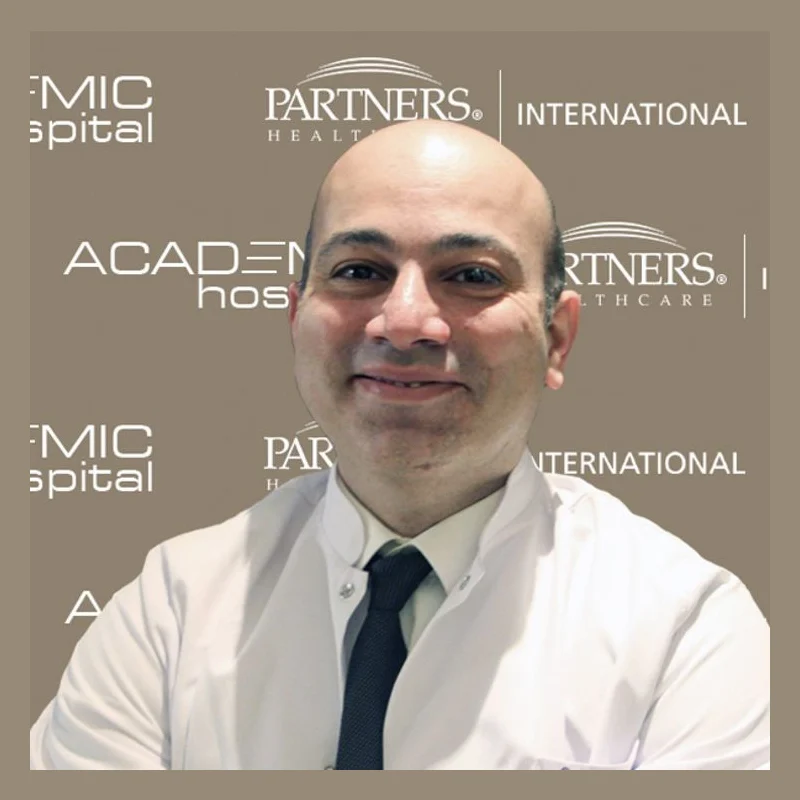
Dr. Öğr. Üyesi Görkem Kıyak
OrthopedicsVerified
- 21+years exp.
English · Turkish
FromPrice on request
Free quote
60 seconds · no obligationView Profile
What bone deformity correction surgery is, how a surgeon cuts and realigns a bent or twisted bone, when plates, nails or an external frame are used, which deformities are treated, how it compares with bracing and joint replacement, approximate costs in Turkey against the UK, US and Germany, recovery milestones, risks and how to check a hospital.
A written plan with the surgeon's name and the full price — usually within 24 hours.

1 doctor Compare doctors, ratings and prices — ask any of them for a free quote.
OrthopedicsVerified
English · Turkish
60 seconds · no obligationView Profile
Bone deformity correction surgery straightens or realigns a bone that has grown, healed or worn into an abnormal shape. The usual method is an osteotomy: the surgeon cuts the bone at a planned level, moves the pieces into the correct angle, rotation or length and holds them there with a plate, a rod inside the bone (intramedullary nail) or an external frame until the bone has healed. The aim is to restore the normal axis of the limb so that the joints above and below carry weight evenly, to relieve pain and to improve walking. Orthopaedic departments in Turkey treat both children and adults with these operations.
This guide explains how the surgery works, which deformities are treated, how the different fixation methods compare, what it costs compared with the UK, US and Germany, how long recovery takes and how to check a hospital. See our orthopedics treatments in Turkey for related operations.
The word covers many conditions, and the plan differs for each. Common examples are bowed legs (genu varum) or knock knees (genu valgum) that did not correct with growth, deformity left after a fracture that healed crooked (malunion), rotational problems of the thigh or shin, differences in leg length, growth plate injuries, Blount disease, deformity from rickets or other metabolic bone disease, and misaligned forearm or ankle bones. In adults a correction may also protect a knee or ankle: a small realignment of the shin bone (high tibial osteotomy) can shift load away from a worn part of the joint. Deformity of the spine is a separate field; see operative treatment of scoliosis.
Planning decides the result more than the cut itself. You have full-length standing X-rays of both legs and often a CT scan or MRI. The surgeon measures the mechanical axis and the angles at each joint, finds the level where the deformity starts (the apex) and works out the amount of correction needed. In complex cases digital planning software and 3D-printed guides are used. The goal is not always a perfectly straight bone; it is a limb that balances load across the knee or ankle. Expect the surgeon to show you the measurements and explain why a particular level and method was chosen.
Each method holds the corrected bone while it heals, and each suits different situations.
| Method | Best suited to | Typical limits |
|---|---|---|
| Osteotomy with plate and screws | Single-plane correction near a joint, such as high tibial osteotomy | Weight bearing restricted until healing; plate may be removed later |
| Intramedullary nail | Shaft deformity of the thigh or shin bone in adults | Less suited to correction near the joint or in growing children |
| External frame (Ilizarov or hexapod) | Complex, multi-plane deformity, shortening and gradual lengthening | Pin-site care, longer treatment, many follow-up visits |
| Guided growth plate ("eight-plate") | Growing children with leg-axis deformity | Only while growth remains |
Frames allow the bone to be corrected slowly over days and weeks by turning adjusting struts, which is gentler on nerves and vessels in large corrections and can add length. Plates and nails correct in one step and usually mean a shorter treatment. A surgeon may combine them. Ask to see the plan for your limb and the reasons for the method chosen.
For well-chosen cases, yes. Osteotomy to realign a bone has a long track record, and studies of knee osteotomy for people with early arthritis and a leg-axis deformity show reduced pain and delayed need for knee replacement in many patients. Gradual correction with external frames is well described for complex deformities and leg-length difference. The evidence is less clear about who benefits most when the joint is already badly worn, and results also depend on healing, rehabilitation and weight. Corrections for appearance only, without pain or functional problems, are harder to justify, and a surgeon should discuss the benefits against the length and risks of treatment.
The figures below are approximate ranges for one limb segment and a standard hospital stay, not hospital quotes. Each hospital confirms its own price in a written quote.
| Country | Approximate cost range |
|---|---|
| Turkey | €3,500 – €15,000 |
| United Kingdom | €9,000 – €30,000 |
| United States | €20,000 – €70,000 |
| Germany | €8,000 – €25,000 |
The width of the range reflects how different the operations are. What changes the price: the complexity of the deformity, whether a plate, nail or a frame is used (a hexapod frame and its software cost more than a plate), whether both legs or several levels are done, the length of the hospital stay, the implants, physiotherapy and any second operation to remove hardware. A bone deformity correction surgery price quoted without seeing your X-rays is only a guide. A package normally includes the consultation, imaging, operation, implants, stay, medication and transfers; ask for the list in writing, and ask whether hardware removal and follow-up scans are covered.
Good candidates are patients with a clear deformity that causes pain, a limp, instability, early joint wear or a visible functional problem, whose bones and soft tissues are healthy enough to heal. Age is not a barrier in itself: children are treated with growth-guiding methods or osteotomy, young and middle-aged adults often benefit most from realignment. You are less suited if you smoke and cannot stop (smoking slows bone healing), have an active infection, poor circulation in the limb, uncontrolled diabetes, severe arthritis that calls for a joint replacement instead, or cannot follow weight-bearing restrictions. Medical conditions that cause the deformity, such as rickets, need treating alongside.
The operation is done under general or spinal anaesthesia and takes from one hour for a simple osteotomy to several hours for a complex correction. The surgeon exposes the bone, makes the planned cut, moves it to the new position, checks it with X-ray imaging in theatre and fixes it. For a frame, wires and pins are passed through the bone and attached to rings or struts, and the adjustment schedule begins a few days later. Bone graft is added in some cases. Stay in hospital is usually two to five days, longer for bilateral or complex work.
Recovery is measured in weeks to months, not days. After a plate or nail you use crutches or a frame and limit weight on the leg, often partial weight bearing for six to twelve weeks, depending on the bone and the surgeon. Physiotherapy starts early to keep the joints moving and the muscles working. X-rays at about six weeks and again at twelve weeks show whether the bone has healed; full healing may take three to six months or longer. Frames stay on for months, with daily pin-site cleaning and adjustments.
For travellers, that has practical consequences. Plan to stay in Turkey for about seven to ten days after a plate or nail operation so that wounds, pain and mobility are checked before you fly, and discuss long flights, blood-clot prevention and who will review your X-rays at home. A frame often needs the team to monitor you for several weeks, which may not suit a short trip. Read how it works to see how follow-up is coordinated.
Most patients see the limb alignment improve on the X-ray right after surgery, and a straighter leg, less pain and more stable walking as the bone heals and the muscles recover. You will notice swelling and a scar over the operated bone for some months. Some people have a plate or nail removed after healing; others keep it. The result is not always perfect alignment, and a small remaining deformity is common after complex corrections. Ask the surgeon to show you before and after X-rays of similar cases, and to explain how your own result is measured.
Every operation carries risks. For bone correction these include infection of the wound or at the pin sites, delayed or failed healing of the bone (nonunion), over- or under-correction, nerve or blood vessel injury, blood clots in the leg (deep vein thrombosis), compartment syndrome, stiffness of nearby joints, hardware irritation and pain, and fracture through the cut. Anaesthetic risks apply as well. The NHS and the British Orthopaedic Association explain these risks for osteotomy and fracture surgery, and the American Academy of Orthopaedic Surgeons gives similar information. Ask what the hospital does if a complication occurs and who treats you after you leave Turkey.
Check that the operation is done by a specialist orthopaedic surgeon with experience in deformity correction (not only general trauma), in a licensed hospital with imaging, an intensive-care unit and a physiotherapy team. You should receive a written plan, price and expected stay before paying a deposit. Red flags include a firm plan with no X-rays, promises of perfect straightness, no discussion of weight-bearing limits and no plan for follow-up. Send your X-rays and history through our free quote page for a written plan.
Questions to ask the clinic:
It is an operation to straighten or realign a bone that is bent, twisted or healed in the wrong position. The surgeon cuts the bone, moves it to the planned angle and holds it with a plate, nail or external frame until it heals.
In well-chosen cases it does: it improves limb alignment, can reduce pain and may delay the need for joint replacement. Results depend on the condition, healing, rehabilitation and how worn the joint is already.
Approximate ranges are €3,500 to €15,000 in Turkey, against about €9,000 to €30,000 in the UK. The price depends on the deformity, the fixation method and the hospital stay; the hospital confirms its price after reviewing X-rays.
Expect partial weight bearing for around six to twelve weeks and bone healing over three to six months or longer. A frame stays on for months and needs daily care and regular adjustments.
You are asleep or numbed for the operation. Pain afterwards is usually managed with regular painkillers and nerve blocks, and eases over the first weeks. Frames bring pin-site discomfort that needs careful cleaning.
A plate holds the bone from the outside, a nail runs inside the bone, and a frame uses pins connected to rings outside the limb. Frames allow gradual correction and lengthening; plates and nails usually give a shorter treatment.
Yes, with an osteotomy that realigns the thigh or shin bone. It is often done to relieve pain, protect a worn knee compartment or correct a deformity that did not settle during growth.
Possible problems include infection, delayed bone healing, over- or under-correction, nerve or vessel injury, blood clots and stiffness. Your surgeon should explain these risks for your own case.
For a plate or nail operation about seven to ten days is usual so the team can check wounds, pain and walking. Frames need longer monitoring and a clear plan for follow-up at home.
Sometimes. Plates and screws are removed after healing if they cause irritation, and frame pins and rings are removed at the end of treatment. Many people keep an intramedullary nail. Ask whether removal is included in the price.
Your request is in!
Your coordinator will contact you — usually within 2 hours, 24/7.
Want a faster, more accurate assessment?
Add photos & medical detailsLeave your number — a coordinator calls you in your language, usually within 15 minutes during office hours.
Thank you!
A coordinator will contact you at the time you chose.

