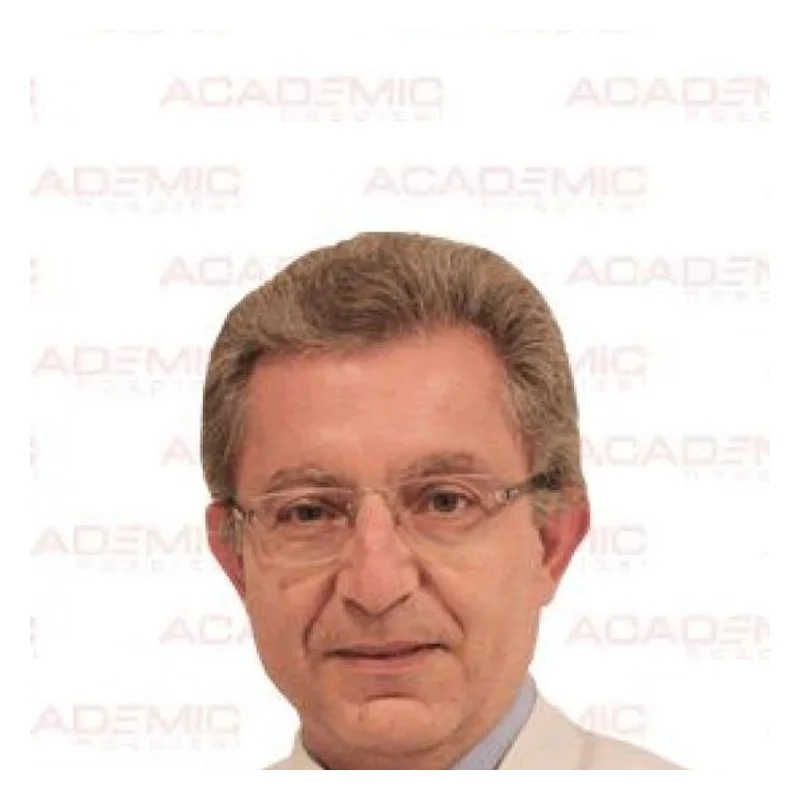
Prof. Dr. Ali Serdar Fak
Cardiac SurgeryVerified
- 29+years exp.
English · Turkish
FromPrice on request
Free quote
60 seconds · no obligationView Profile
An aneurysm of the abdominal artery, commonly called an abdominal aortic aneurysm, is an abnormal enlargement of the main blood vessel supplying the abdomen. It often develops quietly in older adults, though some individuals notice a pulsing sensation near the navel or persistent backache. Potential treatment options depend on a specialist assessment measuring the aneurysm's diameter, shape, and growth rate. Compare hospitals in Turkey that treat Aneurysm of the Abdominal Artery and get a free review of your medical records.

2 doctors Compare doctors, ratings and prices — ask any of them for a free quote.
Cardiac SurgeryVerified
English · Turkish
60 seconds · no obligationView Profile
Cardiac SurgeryVerified
English · Turkish
60 seconds · no obligationView Profile
An aneurysm of the abdominal artery, commonly called an abdominal aortic aneurysm, is an abnormal enlargement of the main blood vessel supplying the abdomen. It often develops quietly in older adults, though some individuals notice a pulsing sensation near the navel or persistent backache. Potential treatment options depend on a specialist assessment measuring the aneurysm's diameter, shape, and growth rate.
Specialty: Cardiac Surgery
The cost of treating Aneurysm of the Abdominal Artery depends on the diagnosis and the treatment chosen. Doctors first review your medical records — free of charge — and you then receive an itemised quote.
Aneurysm of the Abdominal Artery is treated by Cardiac Surgery specialists. 2 clinics in Turkey on our platform offer this treatment.
An aneurysm of the abdominal artery, commonly called an abdominal aortic aneurysm, is a focal enlargement of the abdominal aorta. The aorta is the main blood vessel delivering oxygenated blood from the heart through the chest and abdomen. When degenerative changes, arterial disease, or genetic factors weaken the arterial wall, constant blood pressure causes the vessel to balloon outward beyond its normal width of approximately two centimetres. In clinical practice, an abdominal aorta dilated to three centimetres or wider is diagnosed as an aneurysm.
Most individuals experience no symptoms during initial stages. As the aneurysm expands, some individuals notice warning signs, such as:
Because an expanding aneurysm stretches the arterial wall, it carries a risk of rupture. Treatment strategies are coordinated by specialist cardiac surgery and vascular teams to prevent serious complications.
Hospitals in Turkey use detailed diagnostic evaluations to establish the precise diameter, shape, and progression of an aneurysm before recommending treatment.
Patients travelling abroad should bring previous ultrasound reports, recent CT scan files in digital DICOM format, kidney function blood tests, a current medication list, and documented cardiology history.
Intervention depends on the aneurysm's diameter, growth rate, morphology, and the patient's surgical fitness. Small, asymptomatic aneurysms are generally managed through conservative surveillance.
| Option | Typically used when | Things to know |
|---|---|---|
| Active Surveillance | Aneurysm is smaller than 5.0 to 5.5 centimetres, asymptomatic, and stable. | Involves regular ultrasound scans every six to twelve months, blood pressure management, and smoking cessation. |
| Endovascular Aneurysm Repair (EVAR) | Aneurysm reaches intervention threshold (usually 5.5 cm in men, 5.0 cm in women) with suitable vascular anatomy. | Minimally invasive approach placing a stent-graft through groin punctures; requires long-term imaging follow-up to detect endoleaks. |
| Open Surgical Repair | Anatomy is unsuitable for EVAR (such as short arterial necks) or in younger, low-risk patients. | Open abdominal operation replacing the weakened section with a durable synthetic graft, supported by general surgery units. |
The treating vascular specialist determines the most suitable approach following detailed review of arterial imaging.
Undergoing elective aneurysm repair abroad requires structured planning and close coordination between home and international medical teams.
Surgical teams in Turkey review your digital CTA scans prior to travel. This confirms anatomical feasibility for EVAR or open surgery and ensures required graft components are prepared in advance.
For EVAR, hospitalisation is typically two to three days, followed by five to seven days in local accommodation for wound assessment and imaging before flying home (total stay seven to ten days). Open surgical repair requires five to seven days in hospital, followed by seven to ten days of outpatient recovery before fit-to-fly clearance. Post-operative recovery may incorporate structured cardiovascular rehabilitation.
Stent-graft recipients need imaging at one month, six months, and annually thereafter. You must arrange for a local doctor or vascular unit to perform ongoing surveillance scans and review graft positioning.
Medical travel is contraindicated if an aneurysm is unstable. You must not undertake commercial air travel if your aneurysm exceeds 5.5 centimetres without specialist clearance, shows rapid recent expansion, or causes persistent abdominal or back discomfort. Atmospheric pressure shifts and lack of immediate surgical access during transit present grave dangers.
A leaking or ruptured aneurysm is a life-threatening medical emergency. Seek urgent emergency care locally rather than travelling if you notice:
These warning signs demand immediate emergency ambulance transport and urgent intervention at your local hospital.
Most abdominal aortic aneurysms develop without symptoms and are discovered incidentally during routine medical examinations or imaging for unrelated complaints, such as kidney or digestive evaluations. In other instances, a doctor might detect a pulsating lump during a physical examination of the abdomen. If an aneurysm is suspected, a simple abdominal ultrasound or computed tomography scan confirms the diagnosis and measures its size accurately.
Endovascular aneurysm repair is a minimally invasive technique where surgeons insert a fabric-covered stent through small incisions in the groin, guiding it into the aorta under X-ray imaging. Open surgical repair involves a larger abdominal incision to replace the dilated aorta with a synthetic tube graft. EVAR offers faster initial recovery, whereas open repair is a durable option for complex vascular anatomies unsuitable for stenting.
Air travel is generally acceptable for small, stable aneurysms measuring under 5 centimetres, provided your blood pressure is well controlled. However, if an aneurysm is large, growing rapidly, or causing pain, flying commercially is unsafe due to the risk of rupture. You must obtain formal clearance from your vascular specialist before booking any international flights for assessment or treatment.
If your aneurysm does not yet require surgical intervention, lifestyle adjustments help reduce the rate of expansion. The most crucial step is quitting smoking, as tobacco accelerates arterial wall weakening. Keeping blood pressure within target limits through prescribed medication, eating a heart-healthy diet, managing cholesterol, and avoiding heavy lifting or sudden strenuous exertion protect arterial integrity between regular surveillance scans.
Patients undergoing endovascular repair require lifelong surveillance to verify that the stent-graft remains firmly anchored and free from leaks. Typical follow-up schedules involve contrast CT angiography or duplex ultrasound at one month, six months, and annually thereafter. You can arrange these scans with your local vascular specialist in your home country and share the imaging reports with your Turkish surgical team if needed.
Your request is in!
Your coordinator will contact you — usually within 2 hours, 24/7.
Want a faster, more accurate assessment?
Add photos & medical detailsLeave your number — a coordinator calls you in your language, usually within 15 minutes during office hours.
Thank you!
A coordinator will contact you at the time you chose.