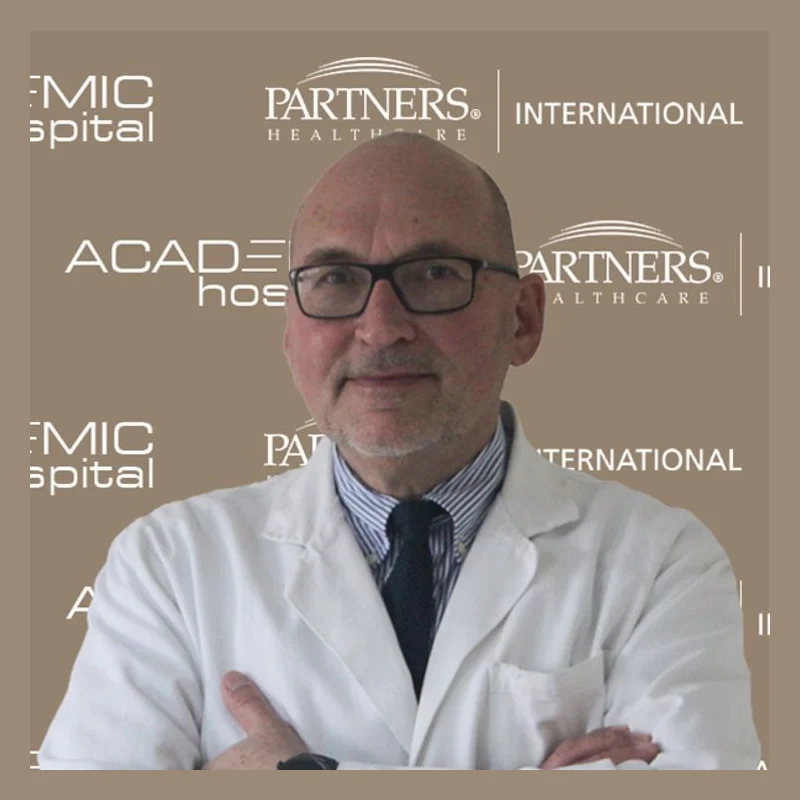
Prof. Dr. Turgay Çelikel
OncologyVerified
- 47+years exp.
English · Turkish
FromPrice on request
Free quote
60 seconds · no obligationView Profile
A guide to local tumour treatment in Turkey: radiofrequency ablation, HIFU, NanoKnife, cryotherapy, oncothermia, liver chemoembolization and SIRT. It explains how these image-guided treatments differ, who may be considered, what the trip and recovery involve, what shapes the price and how to check a hospital and oncology team.
A written plan with the surgeon's name and the full price — usually within 24 hours.

1 doctor Compare doctors, ratings and prices — ask any of them for a free quote.
OncologyVerified
English · Turkish
60 seconds · no obligationView Profile
Ablation and embolization are local treatments for tumours. Instead of treating the whole body, as chemotherapy does, they act on one tumour or a small number of tumours, usually through a needle or a thin catheter guided by ultrasound, CT or MRI. The hospitals on our site list radiofrequency ablation, including radiofrequency ablation of the liver, HIFU ablation and HIFU for prostate cancer, NanoKnife, cryotherapy for kidney cancer, chemoembolization of the liver, SIRT therapy and oncothermia. They belong to the wider field of oncology treatments in Turkey.
The methods work in different ways. Radiofrequency ablation heats a tumour with an electrical current delivered through a needle. Cryotherapy freezes it. HIFU focuses ultrasound waves to heat tissue from outside the body. NanoKnife uses short electrical pulses to damage tumour cells while sparing nearby structures such as vessels. Chemoembolization delivers chemotherapy and blocks the tumour's blood supply through the hepatic artery, and SIRT does the same with tiny radioactive beads. Oncothermia is a form of heat treatment, usually given alongside other therapy.
Local treatment is considered for particular situations: a small tumour in the liver or kidney, a prostate cancer confined to the gland, or a liver tumour that cannot be removed by surgery. It may be offered instead of surgery, to buy time before a transplant, or alongside systemic therapy. It does not suit every cancer, and size, position, number of tumours and the surrounding organs all matter. For some patients standard surgery, radiotherapy or drug treatment remains the sounder choice.
The decision belongs to a multidisciplinary tumour board that reviews your scans, biopsy and earlier treatment. Be cautious about any clinic that recommends one method for everyone, or that describes a local treatment as a cure without first seeing your records. Bring your pathology report, recent imaging, blood results and a summary from your own oncologist, because a reliable opinion needs them. Ask what the alternatives are, and what happens if the tumour returns.
Most of these treatments are less invasive than open surgery. Radiofrequency ablation, cryotherapy and NanoKnife are usually done under general anaesthesia or sedation, with a hospital stay of a day or a few days. HIFU for the prostate is also done under anaesthesia and often needs a catheter for a short time afterwards. Chemoembolization and SIRT involve a planning angiogram, followed by the treatment itself, and may be repeated in cycles. Tiredness, mild pain and a low fever are common after embolization.
You will normally need follow-up scans and blood tests at set intervals to see how the tumour has responded. Plan how and where these will be done and who will read them. Your own oncologist at home should receive the full report, images and treatment details.
We do not quote figures on this page. The price depends on the method, the number and size of the tumours, the number of sessions, the anaesthesia, the hospital stay and the equipment or devices used. SIRT uses a specific radioactive product, and NanoKnife uses single-use probes, so both add device costs. Planning scans, laboratory tests and later follow-up imaging may be priced separately. Ask whether a repeat session is included in the quote or charged on its own.
Because local treatments are specialised, ask for details before you decide:
A good team will also tell you honestly if you are not a suitable candidate.
Send your reports and imaging through our free quote form. We pass them to licensed hospitals, and each oncology team replies with a written plan that names the doctor, the proposed treatment, the stay and what the price includes, or explains why the treatment is not advised. You compare the plans without obligation, ask questions and decide with your own oncologist. Our service is free for patients, and you pay the hospital directly if you go ahead. A coordinator can help with appointments and transfers.
For wider background, read about cancer treatment in Turkey or the page on radiofrequency ablation.
Ablation destroys a tumour in place, using heat, cold, focused ultrasound or electrical pulses, usually through a needle guided by imaging. It treats one or a few tumours rather than the whole body.
Ablation destroys tumour tissue directly. Embolization blocks the artery that feeds the tumour, often delivering chemotherapy or radioactive beads at the same time. Both are performed through small punctures rather than open surgery.
HIFU is usually considered for localised prostate cancer that has not spread beyond the gland, after MRI and biopsy. A urologist decides whether it suits your case or whether surgery or radiotherapy is the better option.
No. Both are delivered through the hepatic artery, but chemoembolization uses chemotherapy and blocks the vessel, while SIRT places tiny radioactive beads. The choice depends on the tumour and on your liver function.
Often only a few days, as many procedures are minimally invasive. Some treatments are given in several sessions, and you will need follow-up scans. The team will give you a schedule.
Sometimes it is used instead of surgery for small tumours, and sometimes alongside other treatment. It does not suit every cancer, so the decision belongs to a tumour board that has seen your records.
Ask each hospital to name the doctor, the exact method, the number of sessions, the device and what is included. Compare these details and the reasons given, not only the price.
Your request is in!
Your coordinator will contact you — usually within 2 hours, 24/7.
Want a faster, more accurate assessment?
Add photos & medical detailsLeave your number — a coordinator calls you in your language, usually within 15 minutes during office hours.
Thank you!
A coordinator will contact you at the time you chose.

