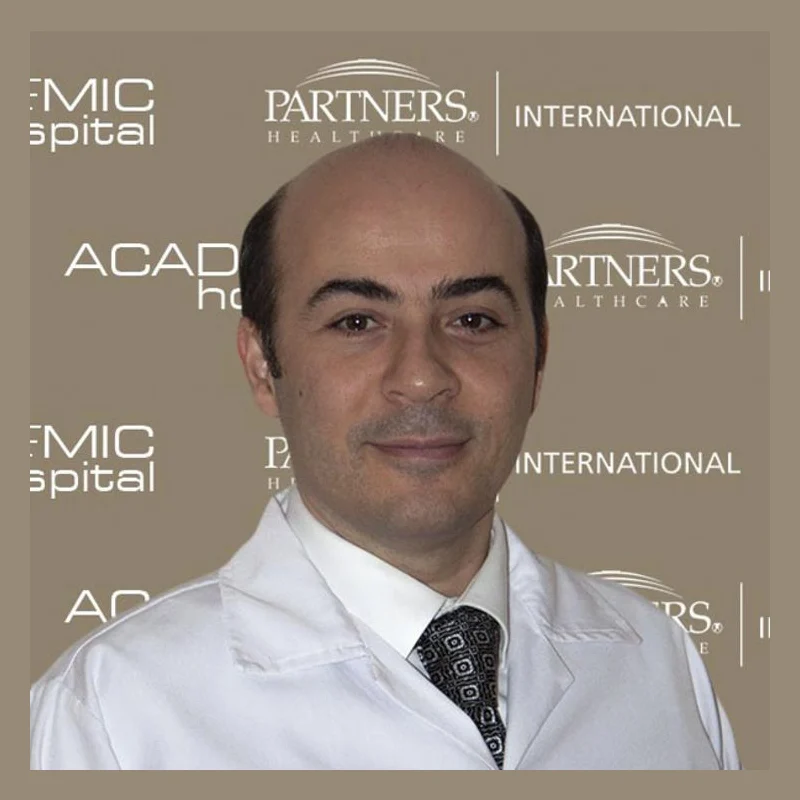
Op. Dr. Fikret Düşünceli
General SurgeryVerified
- 36+years exp.
English · Turkish
FromPrice on request
Free quote
60 seconds · no obligationView Profile
A medical guide to thyroidectomy, covering total and partial thyroid removal for nodules, goitres, and cancer. Learn how the thyroid gland is excised through neck surgery, what clinical evidence says about outcomes, realistic cost comparisons in Turkey against the UK and US, hospital stay duration, scar healing, hormone therapy, and how to verify an endocrine surgeon.
A written plan with the surgeon's name and the full price — usually within 24 hours.

1 doctor Compare doctors, ratings and prices — ask any of them for a free quote.
General SurgeryVerified
English · Turkish
60 seconds · no obligationView Profile
A thyroidectomy is the surgical removal of all or part of the thyroid gland, the butterfly-shaped endocrine organ situated at the lower front of the neck. The thyroid gland produces crucial metabolic hormones—primarily thyroxine (T4) and triiodothyronine (T3)—that regulate heart rate, body temperature, energy consumption, and cellular metabolism. When structural growths or hormonal dysfunctions cannot be managed with medication alone, surgical excision becomes necessary. Surgeons perform a thyroidectomy in Turkey to address three primary clinical indications: confirmed or suspected thyroid cancer, benign multinodular goitres causing mechanical compression of the airway or oesophagus, and medical therapy-resistant hyperthyroidism such as Graves' disease or toxic adenomas.
Thyroid surgery requires delicate precision. Because the gland lies immediately adjacent to the trachea, oesophagus, parathyroid glands, and recurrent laryngeal nerves that control the vocal cords, operative technique prioritises preserving healthy tissues while removing diseased thyroid lobes. Patients considering treatment abroad often seek experienced surgical care within general surgery treatments in Turkey. This guide explains how the operation is performed, what clinical research confirms about outcomes, realistic cost comparisons across Europe, recovery milestones, and safety risks.
A thyroidectomy is performed under general anaesthesia in an accredited operating theatre, lasting between 90 minutes and three hours depending on the extent of excision. The procedure follows an exact sequence:
Clinical evidence demonstrates that thyroidectomy is a dependable, curative treatment for both benign and malignant thyroid conditions. Data from the British Association of Endocrine and Thyroid Surgeons (BAETS) and the American Thyroid Association (ATA) confirm that surgical outcomes are predictable when performed by experienced endocrine specialists.
For patients with large multinodular goitres, surgery provides immediate anatomical relief. Mechanical symptoms such as breathing difficulties when lying down (orthopnoea), swallowing obstruction (dysphagia), and persistent neck tightness resolve completely once the enlarged mass is excised. In hyperthyroidism, removing the hyperactive tissue cures thyrotoxicosis permanently, eliminating reliance on antithyroid medications.
For differentiated thyroid cancer (papillary and follicular carcinoma), complete surgical resection provides 10-year survival rates exceeding 95% in early-stage disease. Full removal also enables precise histological staging and clear post-treatment monitoring using serum thyroglobulin measurements.
However, total excision cannot maintain natural hormone synthesis. Patients without thyroid tissue require lifelong daily levothyroxine replacement tablets. Surgery also carries measurable risks of vocal hoarseness and transient calcium drops, meaning an operation should only proceed for verified clinical indications rather than benign, non-growing nodules.
The cost of thyroid surgery varies considerably between countries. Private healthcare in the UK, US, and Germany often bills separately for hospital beds, surgeons, anaesthetists, and laboratory histopathology. In Turkey, private hospitals package these clinical elements into bundled treatment plans.
| Country | Approximate cost range |
|---|---|
| Turkey | €2,200 – €4,800 |
| United Kingdom | €5,500 – €11,000 |
| United States | €7,500 – €18,000 |
| Germany | €4,800 – €9,500 |
These figures represent broad, approximate price ranges rather than fixed quotations. Your final thyroidectomy cost depends on whether you require a partial hemithyroidectomy or a total thyroidectomy with central lymph node dissection, the use of nerve monitoring electrodes, frozen-section pathology during surgery, and hospital admission duration.
A standard medical travel package in Turkey covers pre-operative blood panels, neck ultrasound, anaesthesia, surgical fees, one to two nights in hospital, routine histopathology, discharge medications, and airport transfers. You can request a clear breakdown on our free quote page.
The surgical approach depends on whether disease affects one or both thyroid lobes, the cytological risk of malignancy, and individual gland function. While abdominal investigations may employ diagnostic laparoscopy, thyroid disease relies on ultrasound, fine-needle biopsy, and direct surgical resection.
| Procedure or approach | Best suited to | Typical limits |
|---|---|---|
| Total thyroidectomy | Bilateral goitre, invasive thyroid cancer, Graves' disease | Requires lifelong levothyroxine tablets; risks all four parathyroid glands |
| Hemithyroidectomy (lobectomy) | Solitary unilateral benign nodule, low-risk indeterminate nodule | Risk of requiring completion surgery if histology reveals malignancy |
| Radioiodine / Active surveillance | Small low-risk microcarcinomas, non-compressive toxic nodular goitres | Does not yield surgical tissue pathology; ineffective for large compressive goitres |
A total thyroidectomy removes both thyroid lobes, the central isthmus, and any associated pyramidal tissue. It eliminates recurrence risk within the neck, making it the standard surgical option for bilateral disease and invasive cancer, though it necessitates lifelong daily levothyroxine tablets. A hemithyroidectomy excises only the affected lobe. Around 75% of patients maintain normal natural hormone production without needing daily tablets, although completion surgery remains necessary if pathology identifies cancer.
Suitability for a thyroidectomy is determined by neck ultrasound scans, fine-needle aspiration (FNA) cytology results, and blood hormone profiles. Good candidates generally meet one of the following criteria:
Surgery is not recommended for small, asymptomatic benign nodules without suspicious features. In patients with uncontrolled thyrotoxicosis, surgery must be delayed until anti-thyroid medications normalise hormone levels to prevent a dangerous thyroid storm. Patients with unmanaged bleeding disorders, severe heart disease, or active infections must also be medically stabilised before scheduling surgery.
Understanding realistic outcomes helps patients prepare properly for surgery. Before-and-after photographs typically illustrate the appearance of the surgical neck scar. When placed within a natural skin crease, the incision heals initially as a pink line before maturing over 6 to 12 months into a flat, faint, barely visible mark.
However, photographs cannot display internal healing and physiological recovery:
Experienced surgical teams provide scar-care guidance, recommending silicone gel and sun protection once incisions have fully closed.
International patients travelling to Turkey for thyroid surgery typically stay five to seven nights to complete pre-operative tests, surgery, and post-operative calcium checks before flying home.
At home, thyroidectomy recovery progresses steadily. Most patients return to desk work after 10 to 14 days. Driving can resume once neck rotation is painless and strong. Heavy lifting, strenuous sports, and swimming should be paused for three to four weeks. To understand travel arrangements and coordination, explore how it works.
While modern endocrine surgery is well established, potential complications exist. Authoritative clinical data from the NHS and the British Association of Endocrine and Thyroid Surgeons (BAETS) identify the following thyroidectomy complications:
Surgeon experience is the strongest predictor of safety, with high-volume specialists reporting significantly fewer complications.
Choosing an experienced specialist minimizes surgical risks to your voice and parathyroid glands. When planning your thyroidectomy Turkey procedure, evaluate these core standards:
Avoid clinics that operate out of day-surgery centres without intensive care facilities, providers who quote prices omitting pathology or nerve monitoring, or coordinators claiming surgery leaves no trace or carries zero risk.
Compare treatment pathways under general surgery treatments in Turkey and submit your medical reports via our free quote form for an itemised review.
A thyroidectomy is the surgical removal of part or all of the thyroid gland, located in the lower neck. It is performed to treat thyroid cancer, large multinodular goitres that cause difficulty breathing or swallowing, and hyperthyroidism that does not respond to medical therapy. Depending on the condition, surgeons perform either a partial lobectomy or a total thyroidectomy.
Yes. Thyroidectomy is a highly effective, definitive treatment. It immediately relieves airway and swallowing compression caused by large goitres and permanently cures hyperthyroidism by removing the overactive tissue. For differentiated thyroid cancer, complete surgical excision provides 10-year survival rates exceeding 95% in early stages and enables accurate post-operative surveillance through blood thyroglobulin testing.
A thyroidectomy in Turkey typically costs between €2,200 and €4,800, compared with €5,500 to €11,000 in the UK and up to €18,000 in the US. The price depends on whether surgery is partial or total, the use of nerve monitoring, and the hospital stay. Package prices generally include surgical fees, anaesthesia, hospital nights, pathology, and transfers.
Surgeons place the incision within a natural horizontal skin crease low on the neck. Initially, the scar appears as a thin pink line, but with proper aftercare and sun protection, it flattens and fades over 6 to 12 months into a faint, discreet crease that is barely noticeable during normal conversation.
Most patients spend one to two nights in the hospital and return to light desk work within 10 to 14 days. Driving can resume once neck rotation is comfortable. Strenuous exercise, heavy lifting, and swimming should be avoided for three to four weeks. Full internal healing and hormone stabilization typically take two to three months.
The operation is performed under general anaesthesia, so you feel nothing during surgery. Afterward, most patients describe mild to moderate throat soreness, swallowing discomfort, and neck stiffness rather than severe pain. These symptoms resemble a common sore throat and are well managed with standard oral painkillers for the first three to five days.
If you have a total thyroidectomy, you must take daily synthetic levothyroxine tablets for the rest of your life to replace the missing hormones. If you undergo a hemithyroidectomy (removing only one lobe), the remaining lobe usually produces adequate hormone levels, meaning about 75% of patients do not require any lifelong hormone medication.
Thyroidectomy is generally very safe when performed by an experienced, high-volume endocrine surgeon. Sourced from the NHS and BAETS, primary risks include temporary vocal hoarseness in 3% to 5% of patients, temporary low calcium from parathyroid stunning in 15% to 30%, and neck haematoma in about 1%. Permanent nerve injury occurs in less than 2%.
A total thyroidectomy removes the entire gland, eliminating local recurrence risk for cancer or bilateral goitre, but requires lifelong levothyroxine tablets. A hemithyroidectomy removes only one lobe, preserving natural hormone production in the majority of patients, but carries a risk of needing completion surgery if final pathology reveals unexpected malignancy.
International patients should plan to stay five to seven nights in Turkey. This timeframe allows for pre-operative consultations, blood work, and ultrasound on day one, the surgical procedure on day two, one or two nights of hospital monitoring for calcium levels, and a post-operative review and fit-to-fly check before departure.
Your request is in!
Your coordinator will contact you — usually within 2 hours, 24/7.
Want a faster, more accurate assessment?
Add photos & medical detailsLeave your number — a coordinator calls you in your language, usually within 15 minutes during office hours.
Thank you!
A coordinator will contact you at the time you chose.

