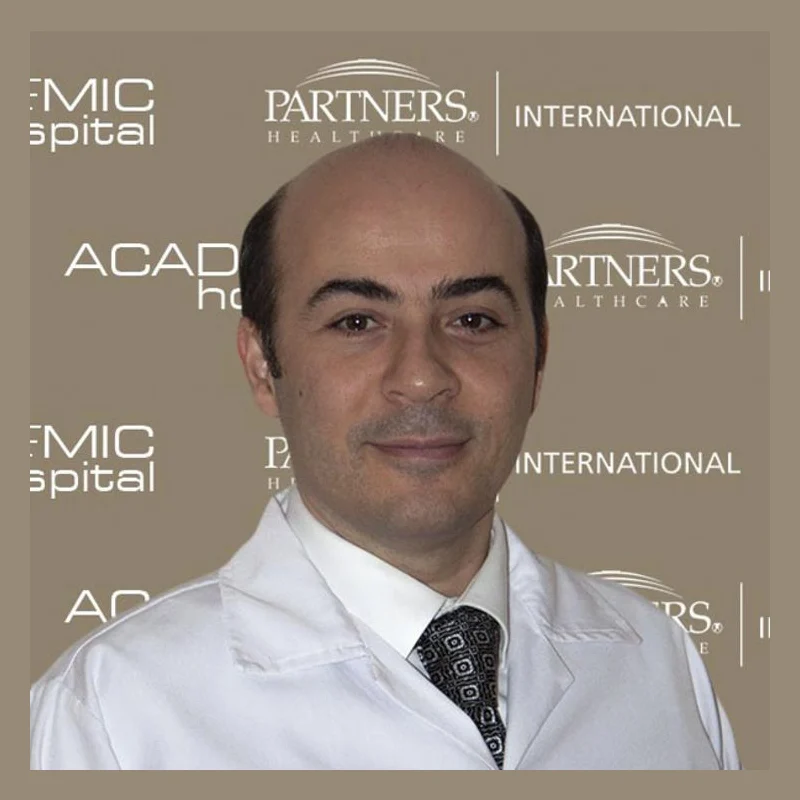
Op. Dr. Fikret Düşünceli
General SurgeryVerified
- 36+years exp.
English · Turkish
FromPrice on request
Free quote
60 seconds · no obligationView Profile
What an adrenalectomy is, how laparoscopic, retroperitoneoscopic, and open techniques work, indications including Conn's syndrome and pheochromocytoma, approximate costs in Turkey compared with the UK, US, and Germany, recovery milestones, surgical risks, and how to choose an experienced endocrine surgical team.
A written plan with the surgeon's name and the full price — usually within 24 hours.

1 doctor Compare doctors, ratings and prices — ask any of them for a free quote.
General SurgeryVerified
English · Turkish
60 seconds · no obligationView Profile
An adrenalectomy is the surgical removal of one or both adrenal glands. Situated above each kidney, these small glands produce hormones regulating metabolism, blood pressure, fluid balance, and stress responses, including cortisol, aldosterone, adrenaline, and noradrenaline. When a tumour develops—such as an aldosteronoma, cortisol-secreting tumour, pheochromocytoma, or indeterminate mass—surgery is required to control hormonal excess or exclude malignancy.
Hospitals in Turkey provide specialised endocrine and general surgery units where minimally invasive procedures are performed by experienced surgical teams. International patients seeking an adrenalectomy Turkey option travel to access modern surgical facilities, multidisciplinary endocrine care, and timely treatment. For an overview of surgical options, explore our guide to general surgery treatments in Turkey.
An adrenalectomy is carried out under general anaesthesia in a fully equipped hospital operating theatre. Because the adrenal glands sit deep in the retroperitoneum beside major blood vessels, including the inferior vena cava and renal vein, the operation requires meticulous anatomical dissection. Surgery takes between 90 minutes and three hours depending on the chosen technique, tumour dimensions, and patient anatomy.
In laparoscopic surgery, the surgeon makes three or four small incisions (5 to 12 mm) in the abdomen or flank. A miniature camera projects magnified high-definition video, while carbon dioxide gas creates working space. Specialised surgical instruments mobilise adjacent organs, secure and divide the main adrenal vein with vascular clips, and separate arterial branches. The adrenal gland is placed in an extraction retrieval bag and removed intact through an incision. The operative field is checked for haemostasis, gas is evacuated, and incisions are closed with absorbable sutures.
Surgical excision of a functioning adrenal tumour offers a definitive cure for hormone overproduction in most patients. Removing an aldosterone-producing adenoma normalises potassium and significantly improves hypertension. In Cushing's syndrome caused by a benign unilateral adenoma, excision eliminates cortisol overproduction, allowing metabolic health and physical symptoms to recover gradually over several months.
For pheochromocytoma, surgery eliminates volatile catecholamine surges, resolving severe episodic headaches and blood pressure spikes. Clinical success requires thorough pre-operative medical preparation. Similar to endocrine operations such as a thyroidectomy, careful pre-operative hormone stabilisation is mandatory before entering the operating theatre. Patients with pheochromocytoma undergo alpha- and beta-adrenergic blockade for several weeks before surgery to avoid intraoperative hypertensive crises. Ongoing biochemical follow-up remains necessary to verify lasting hormonal balance.
The cost of an adrenalectomy depends on whether the operation is laparoscopic or open, the required hormone monitoring, the length of hospital stay, and individual medical complexity. The figures below represent approximate cost ranges for international patient care rather than clinic-specific quotes.
| Country | Approximate cost range |
|---|---|
| Turkey | €3,500 – €7,500 |
| United Kingdom | €9,000 – €18,000 |
| United States | €14,000 – €32,000 |
| Germany | €8,000 – €16,000 |
Price differences reflect lower facility costs, indemnity insurance, and hospital administration fees rather than clinical standards. In Turkey, surgical packages typically include pre-operative consultations, basic blood and hormone tests, imaging review, surgeon fees, two to three hospital nights, medications, and airport transfers. When evaluating an adrenalectomy price, patients should confirm whether pathology analysis and intensive care monitoring are included. In the UK and US, hospital stay, imaging, and specialist consultations are frequently billed separately.
Endocrine surgeons select an operative technique based on tumour size, endocrine function, patient body habitus, and previous abdominal surgeries.
| Surgical technique | Best suited to | Typical limits |
|---|---|---|
| Transabdominal laparoscopic adrenalectomy | Small to medium benign tumours (under 6 cm), standard anatomy | Prior abdominal surgery may cause adhesions; requires bowel or liver mobilisation |
| Posterior retroperitoneoscopic adrenalectomy | Tumours under 5–6 cm; patients with prior abdominal surgery | Confined working space; not suitable for large or invasive lesions |
| Open adrenalectomy | Large tumours (over 6–8 cm), proven adrenal cancer, invasion | Larger incision, increased postoperative pain, longer recovery period |
Transabdominal laparoscopy provides a wide visual field and remains standard practice worldwide. Posterior retroperitoneoscopic adrenalectomy accesses the gland directly through the back without entering the peritoneal cavity, avoiding intra-abdominal adhesions and bowel manipulation. In select familial syndromes, surgeons may preserve unaffected tissue similar to the approach in a subtotal thyroidectomy, though complete unilateral gland excision remains standard. Open adrenalectomy is reserved for suspected malignancy where complete en bloc tumour clearance is essential for oncological safety.
Determining whether surgery is appropriate requires joint evaluation by an endocrinologist and an endocrine surgeon. Suitable candidates generally include:
Conversely, adrenalectomy is not recommended or is deferred for:
Unlike cosmetic procedures evaluated through photographs, the success of an adrenalectomy is measured by biochemical testing, symptom relief, and tissue pathology.
Before surgery, patients frequently struggle with debilitating symptoms: resistant hypertension, persistent muscle weakness, hypokalaemia, central weight gain, severe fatigue, or palpitations. Following surgery, hormone levels normalise. In Conn's syndrome, blood pressure improves within weeks and potassium supplements stop. In Cushing's syndrome, physical features and metabolic health recover steadily over several months, though temporary steroid tablets may be needed while the remaining gland resumes normal function.
Minimally invasive incisions leave three or four small scars measuring 5 to 12 mm that fade within six to twelve months. Final histopathology provides definitive diagnostic confirmation and clear surgical margins.
A medical trip to Turkey for an adrenalectomy generally requires a total stay of 7 to 10 days to complete pre-operative tests, surgery, hospitalisation, and follow-up checks.
Adrenalectomy is a major surgical procedure carrying recognised risks. Professional guidance from the British Association of Endocrine and Thyroid Surgeons (BAETS) and the National Health Service (NHS) notes key risks:
Surgical outcomes in adrenal surgery correlate strongly with specialist experience and hospital infrastructure. When selecting a clinic in Turkey, ensure the surgeon is a board-certified general surgeon with subspecialist expertise in endocrine or laparoscopic surgery. The hospital should be a fully accredited facility with 24-hour intensive care, advanced imaging, and on-site biochemistry laboratories. Red flags include centres that do not require prior CT or MRI scans, clinics without on-site endocrinologists, and coordinators who cannot provide surgical volume data.
Key questions to ask during your consultation:
You can review how it works to understand how medical travel, diagnostic transfers, and clinical scheduling are coordinated. To begin reviewing your case with a surgical team, submit your clinical scans and hormonal panels for a free quote.
An adrenalectomy is the surgical removal of one or both adrenal glands. These glands sit above the kidneys and produce essential hormones regulating blood pressure, metabolism, and stress. The operation is usually performed using minimally invasive laparoscopy to treat functioning tumours, large non-functioning adenomas, or suspected adrenal malignancies.
Yes, removing a hormone-secreting tumour provides a definitive cure in most cases. Patients with Conn's syndrome typically see blood pressure and potassium normalise. In Cushing's syndrome, cortisol levels drop immediately, reversing symptoms over several months. For pheochromocytoma, surgery eliminates unpredictable surges of adrenaline and severe hypertension.
An adrenalectomy in Turkey typically costs between €3,500 and €7,500, compared with €9,000 to €18,000 in the UK and up to €32,000 in the US. The price varies depending on tumour complexity, surgical technique, and hospital stay. International packages generally include surgeon fees, hospitalisation, medications, and transfers.
Before surgery, patients often endure high blood pressure, muscle weakness, or anxiety attacks caused by hormone excess. After surgery, abnormal hormone production stops. Symptoms improve over weeks to months, and incisions heal into faint marks. A short course of steroid tablets may be needed while the remaining gland adapts.
Most patients spend two to three nights in hospital and 7 to 10 days in Turkey before flying home. Desk workers can return to their jobs after two to three weeks. Full physical recovery and resumption of strenuous exercise or heavy lifting usually take four to six weeks.
The procedure is carried out under general anaesthesia, so you feel nothing during surgery. Afterward, laparoscopic patients usually experience mild to moderate discomfort around the incisions and temporary shoulder aching from insufflation gas. This is well controlled with prescribed pain medication and eases within several days.
Yes, the surgical removal of the diseased adrenal gland is permanent. Benign adenomas and pheochromocytomas do not recur once completely excised. However, ongoing endocrine monitoring is recommended to ensure your remaining adrenal gland produces adequate hormone levels and to verify long-term hormonal stability.
When performed by an experienced endocrine or laparoscopic surgeon in an accredited hospital, adrenalectomy has a high safety record and low complication rates. Potential risks include bleeding, adjacent organ injury, and temporary hormone deficiency. Thorough pre-operative hormonal stabilisation significantly reduces intraoperative risks.
Laparoscopic adrenalectomy is the standard approach for benign tumours under 6 cm because it causes less pain, smaller scars, and faster recovery. Open surgery is reserved for tumours larger than 6 to 8 cm or when adrenal cancer is suspected, as open surgery ensures complete en bloc tumour removal.
You should plan to stay in Turkey for 7 to 10 days. This schedule allows for pre-operative consultations, blood and imaging checks, the surgical procedure, two to three nights of inpatient hospital care, and an outpatient check-up to confirm healing and issue fit-to-fly clearance.
Your request is in!
Your coordinator will contact you — usually within 2 hours, 24/7.
Want a faster, more accurate assessment?
Add photos & medical detailsLeave your number — a coordinator calls you in your language, usually within 15 minutes during office hours.
Thank you!
A coordinator will contact you at the time you chose.

