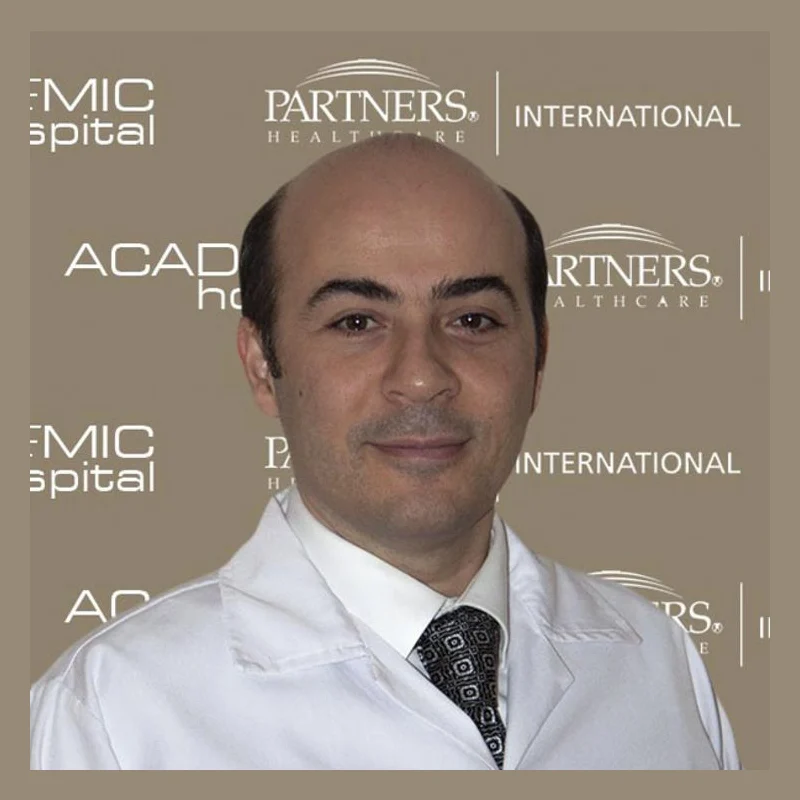
Op. Dr. Fikret Düşünceli
General SurgeryVerified
- 36+years exp.
English · Turkish
FromPrice on request
Free quote
60 seconds · no obligationView Profile
An objective clinical guide to subtotal thyroidectomy in Turkey, explaining how partial gland resection treats multinodular goitre and hyperthyroidism while sparing thyroid remnants. Covers surgical steps, vocal cord and parathyroid risks, realistic incision healing, recovery timelines, and comparative hospital costs across Turkey, the UK, the United States, and Germany.
A written plan with the surgeon's name and the full price — usually within 24 hours.

1 doctor Compare doctors, ratings and prices — ask any of them for a free quote.
General SurgeryVerified
English · Turkish
60 seconds · no obligationView Profile
Subtotal thyroidectomy is an endocrine surgical operation that removes the majority of the thyroid gland while preserving a small remnant of healthy tissue on one or both sides. Situated low at the front of the neck, the butterfly-shaped thyroid gland produces hormones regulating metabolism, cardiac rhythm, and body temperature. When non-cancerous conditions such as bilateral multinodular goitre, toxic nodules, or Graves' disease enlarge the gland, surgery is often necessary to relieve airway compression, swallowing difficulties, or prominent neck swelling. During a subtotal thyroidectomy, the surgeon preserves approximately two to four grams of thyroid tissue along the posterior capsule, deliberately protecting the parathyroid glands and the recurrent laryngeal nerves that control vocal cord movement.
Patients researching subtotal thyroidectomy in Turkey seek experienced endocrine surgical teams in accredited hospital centres. Leaving a glandular remnant was historically intended to maintain hormone production without lifelong medication. In modern practice, surgeons evaluate this against goitre recurrence risks and full resection alternatives. This guide outlines what is subtotal thyroidectomy, how it is performed, approximate hospital costs, recovery, and safety considerations. For related surgical care, see our guide to general surgery treatments in Turkey.
A subtotal thyroidectomy procedure takes ninety minutes to two hours under general anaesthesia in an accredited surgical theatre, following structured clinical steps:
Clinical evidence demonstrates that subtotal thyroidectomy reliably relieves compressive physical symptoms. Patients with breathing obstruction, choking sensations when lying flat, or chronic swallowing difficulties experience immediate anatomical relief once the compressive mass is excised.
However, endocrine research highlights two important caveats. Although leaving a thyroid remnant aims to avoid lifelong medication, studies show that 40% to 70% of subtotal thyroidectomy patients eventually develop post-operative hypothyroidism, requiring daily levothyroxine replacement. Furthermore, leaving tissue carries an estimated 10% to 30% risk of nodule recurrence over ten to twenty years. Because re-operating on a scarred neck increases nerve injury risks, guidelines from the British Association of Endocrine and Thyroid Surgeons (BAETS) and the American Thyroid Association (ATA) frequently prefer total thyroidectomy for widespread bilateral disease.
The subtotal thyroidectomy cost depends on gland size, substernal extension, surgeon expertise, and inpatient duration. Below are broad approximate price ranges across international healthcare destinations, representing general comparisons rather than fixed clinic quotes.
| Country | Approximate cost range |
|---|---|
| Turkey | €3,200 – €6,500 |
| United Kingdom | €7,500 – €14,000 |
| United States | €12,000 – €28,000 |
| Germany | €6,000 – €13,500 |
What influences a subtotal thyroidectomy price: packages in Turkey typically include pre-operative ultrasound, blood panels, operating theatre fees with nerve monitoring, anaesthesia, one to two nights in a private hospital room, post-operative calcium testing, pathology review, and local ground transfers. To receive an itemised proposal for your diagnosis, request a free quote.
When evaluating subtotal thyroidectomy vs total thyroidectomy or unilateral hemithyroidectomy, surgeons consider nodule distribution, biopsy findings, and recurrence risks.
| Technique | Best suited to | Typical limits |
|---|---|---|
| Subtotal thyroidectomy | Bilateral benign multinodular goitre where protecting parathyroid tissue is prioritised | Risk of nodule recurrence; high likelihood of eventual hormone replacement |
| Total thyroidectomy | Suspected or confirmed malignancy, diffuse Graves' disease, or extensive bilateral goitres | Requires permanent daily levothyroxine; slightly higher parathyroid risk |
| Hemithyroidectomy (lobectomy) | Solitary benign nodules or toxic adenomas isolated to a single lobe | Leaves opposite lobe untreated; revision surgery needed if pathology reveals cancer |
When disease affects both lobes extensively, modern surgical practice often favours complete excision to eliminate future recurrence. For clinical details on total gland removal, read our guide to thyroidectomy. If nodules are strictly unilateral, a hemithyroidectomy preserves the unaffected lobe, maintaining normal hormone production in roughly 80% of cases.
Good candidates are adults with symptomatic, non-cancerous bilateral multinodular goitre causing neck fullness, difficulty swallowing, or airway narrowing, where fine-needle biopsy has confirmed benign pathology. It is also considered in medically refractory Graves' disease or toxic goitres when antithyroid medications fail and radioactive iodine is not appropriate.
Subtotal surgery is contraindicated if there is suspected or confirmed thyroid carcinoma, where total excision is essential for radioactive iodine therapy and thyroglobulin tracking. It is also avoided in recurrent goitres with severe scarring, in patients with unmanaged cardiopulmonary disorders who cannot undergo general anaesthesia, or when ongoing thyroid blood monitoring is unavailable. For broader context, see our thyroidectomy overview.
Expected outcomes centre on physical symptom relief and discreet cosmetic healing. Patients experience prompt alleviation of obstructive symptoms; tracheal compression and swallowing tightness ease once initial swelling settles. The visible neck swelling caused by the enlarged goitre is resolved, restoring a normal anterior neck profile.
Regarding scar appearance, the incision initially presents as a pink line across the lower neck. During the first eight to twelve weeks, normal collagen remodelling may make the line feel slightly firm. Over six to twelve months, the scar gradually softens and fades into a subtle, pale crease that blends into natural skin lines. Using high-factor sunscreen and silicone gel aids healing. While photographs show discreet results, patients should anticipate a visible incision during early recovery.
Planning subtotal thyroidectomy recovery abroad involves a six- to seven-night stay in Turkey to accommodate pre-operative testing, surgical care, and follow-up reviews. The recovery schedule progresses through defined stages:
Thyroid surgery takes place near delicate nerves and glands. When reviewing subtotal thyroidectomy risks, data from the National Health Service (NHS) and the British Association of Endocrine and Thyroid Surgeons (BAETS) provide evidence-based benchmarks:
Choosing an experienced surgical team is critical for clinical safety. International guidelines recommend selecting an endocrine surgeon who performs at least fifty thyroid procedures annually, as high surgical volume correlates with lower rates of nerve damage and permanent hypoparathyroidism. Ensure surgery occurs in an accredited multidisciplinary hospital with intensive care facilities rather than an outpatient day clinic. Exploring certified general surgery treatments in Turkey helps you identify accredited hospital centres.
Red flags include clinics offering quotes without reviewing your diagnostic ultrasound or biopsy reports, surgical teams that do not use intraoperative nerve monitoring, and coordinators who promise an invisible scar or state you will never require hormone medication. To understand the medical travel process, read how it works before booking.
Preparing specific clinical questions ensures transparency during your consultation. Consider asking the following questions before confirming treatment:
A reputable surgical team will review your ultrasound and biopsy findings thoroughly and provide clear written answers before you travel. To begin your medical assessment with partner hospitals, request a personalised free quote.
Subtotal thyroidectomy is an endocrine surgical operation that removes the majority of the thyroid gland while preserving a small remnant of healthy tissue on one or both sides. Leaving this tissue protects the delicate parathyroid glands and the recurrent laryngeal nerves while debulking enlarged thyroid tissue that causes difficulty breathing or swallowing.
Yes, it reliably relieves mechanical compression, swallowing difficulties, and airway obstruction caused by an enlarged benign goitre. However, because glandular tissue remains, there is an estimated 10% to 30% chance that nodules can regrow over ten to twenty years, which is why total thyroidectomy is increasingly preferred for extensive bilateral disease.
In Turkey, subtotal thyroidectomy typically costs between €3,200 and €6,500, compared with €7,500 to €14,000 in the UK and up to €28,000 in the US. Hospital packages usually cover pre-operative ultrasound, nerve monitoring, surgeon and anaesthetist fees, hospital accommodation, pathology testing, and local transfers.
The surgeon makes a five to seven centimetre collar incision in a natural neck crease. Initially, the scar appears pink and slightly raised, but over six to twelve months it softens and fades into a pale, subtle line. Sunscreen and silicone scar gel help achieve a discreet cosmetic outcome.
Most patients spend one to two nights in the hospital for calcium monitoring and drain care, followed by several days resting at a hotel. Light desk work can usually resume after ten to fourteen days, while strenuous lifting and exercise are restricted for approximately four weeks.
During the operation, general anaesthesia ensures you feel nothing. Afterwards, patients generally experience mild to moderate throat soreness and neck stiffness, similar to a heavy sore throat. This discomfort peaks during the first forty-eight hours and is well managed with standard prescribed painkillers.
Although the remnant tissue is left to maintain natural hormone production, between 40% and 70% of patients eventually develop hypothyroidism and require daily levothyroxine tablets. Your surgical team will test your TSH and free T4 levels six to eight weeks after surgery to determine if medication is necessary.
When performed by an experienced endocrine surgeon using continuous nerve monitoring, it is a safe and standardised procedure. Potential complications include temporary voice hoarseness (2% to 5%), temporary low calcium levels (10% to 20%), wound haematoma (1% to 2%), and permanent nerve injury in fewer than 1% to 2% of cases.
Subtotal thyroidectomy leaves a small remnant of thyroid tissue to protect parathyroid glands and potentially maintain some hormone production, but carries a risk of goitre recurrence. Total thyroidectomy removes the entire gland, preventing any recurrence and cancer risk, but requires lifelong daily thyroid hormone replacement for all patients.
A stay of six to seven nights is standard. This schedule allows for pre-operative consultations, blood work, and ultrasound, followed by surgery, one to two nights of inpatient observation for calcium monitoring, and a post-operative review to remove dressings before you fly home safely.
Your request is in!
Your coordinator will contact you — usually within 2 hours, 24/7.
Want a faster, more accurate assessment?
Add photos & medical detailsLeave your number — a coordinator calls you in your language, usually within 15 minutes during office hours.
Thank you!
A coordinator will contact you at the time you chose.

