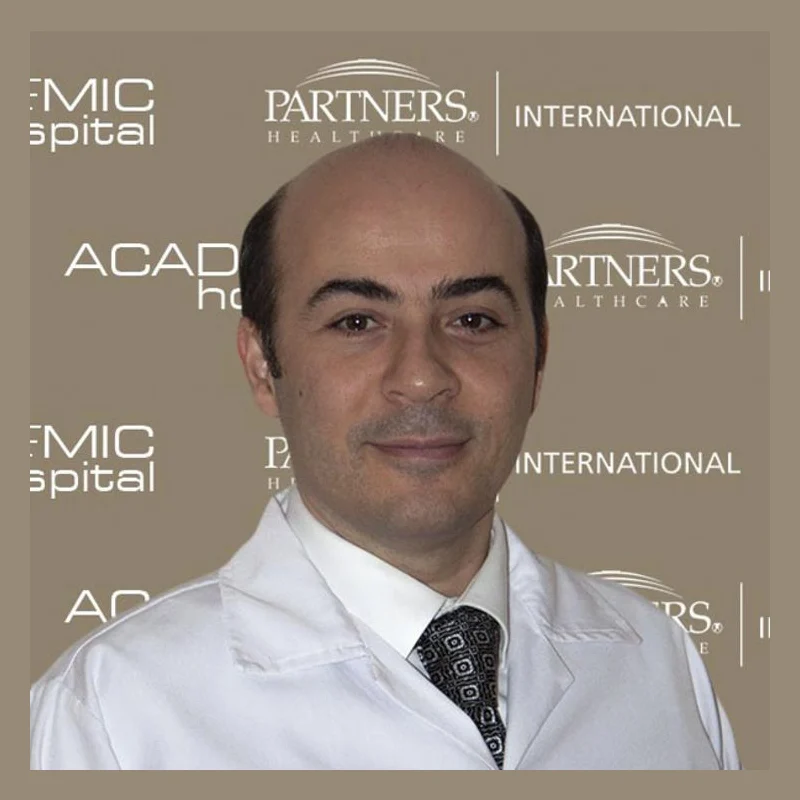
Op. Dr. Fikret Düşünceli
General SurgeryVerified
- 36+years exp.
English · Turkish
FromPrice on request
Free quote
60 seconds · no obligationView Profile
Diagnostic laparoscopy is a minimally invasive surgical procedure used to inspect abdominal and pelvic organs when non-invasive imaging cannot establish a definitive diagnosis. This comprehensive guide details how the procedure works, diagnostic accuracy, approximate costs in Turkey compared with the UK, US, and Germany, the recovery timeline, potential risks, and how to select an accredited surgical hospital.
A written plan with the surgeon's name and the full price — usually within 24 hours.

1 doctor Compare doctors, ratings and prices — ask any of them for a free quote.
General SurgeryVerified
English · Turkish
60 seconds · no obligationView Profile
Diagnostic laparoscopy is a minimally invasive surgical procedure that allows a specialist surgeon to directly visualise the abdominal and pelvic cavities using a lighted optical instrument called a laparoscope. Rather than performing a large open incision, the surgeon creates two or three tiny punctures for a high-definition camera and micro-surgical instruments. This technique provides clear views of the liver, gallbladder, appendix, stomach, intestines, and pelvic reproductive organs. It is primarily recommended when non-invasive tools, including ultrasound, computed tomography (CT), and magnetic resonance imaging (MRI), fail to explain persistent abdominal symptoms or chronic pelvic pain. Hospitals throughout Turkey routinely provide exploratory laparoscopy within accredited departments as part of comprehensive general surgery treatments in Turkey.
Unlike radiological scans, diagnostic laparoscopy enables direct inspection of peritoneal linings and subtle tissue changes that remain invisible on cross-sectional imaging. Surgeons can evaluate organ mobility, assess tissue firmness with atraumatic probes, and collect targeted biopsies for formal histopathology. If a treatable condition such as endometriosis or fibrous adhesions is identified, the surgical team can convert the diagnostic evaluation into an operative procedure during the same session, provided prior consent has been agreed.
The diagnostic laparoscopy procedure follows a rigorous sequence to ensure safety and diagnostic clarity under general anaesthesia. Once you are asleep, the surgeon makes a 5 to 10 mm incision at the umbilicus. A blunt cannula or needle introduces medical-grade carbon dioxide gas to gently inflate the peritoneal cavity. This creates a working space by lifting the abdominal wall away from organs, ensuring a clear visual field and lowering the risk of accidental injury.
The laparoscope is inserted through the umbilical port to transmit magnified video onto high-definition monitors. The surgeon then creates one or two secondary 5 mm punctures in the lower abdomen for delicate instruments. The entire cavity is inspected systematically across all four quadrants. Peritoneal fluid can be sampled for analysis, and suspicious tissue patches are biopsied. Once completed, the gas is evacuated, instruments are withdrawn, and the port incisions are closed with dissolvable sutures or adhesive strips. The procedure typically takes 30 to 60 minutes.
Clinical evidence confirms diagnostic laparoscopy offers high diagnostic accuracy, frequently establishing a cause when radiological imaging has proved inconclusive. Studies show laparoscopy identifies underlying pathology in up to 80 to 90 percent of patients investigated for chronic unexplained pelvic pain. It remains the gold standard for diagnosing peritoneal endometriosis, chronic pelvic inflammation, and intra-abdominal adhesions, which rarely show on ultrasound or CT scans.
However, the procedure has defined limits. Laparoscopy examines outer serosal surfaces and peritoneal spaces; it cannot inspect the inner lining of the stomach or bowel, which requires endoscopy. Furthermore, structures deep behind the abdominal lining, such as the kidneys or retroperitoneal nerves, cannot be viewed without extensive surgical dissection. A consultation clarifies what the camera can confirm, what requires laboratory biopsy validation, and when non-surgical monitoring is appropriate.
The cost of a diagnostic laparoscopy in Turkey is considerably lower than in Western Europe and North America, reflecting lower operational overheads rather than any compromise in medical technology or staffing. The figures below represent broad, approximate price ranges across private hospitals. Exact quotations are confirmed following individual case review.
| Country | Approximate cost range |
|---|---|
| Turkey | €1,800 – €4,200 |
| United Kingdom | €4,500 – €9,500 |
| United States | €6,000 – €16,000 |
| Germany | €3,800 – €8,200 |
Several factors influence the final diagnostic laparoscopy price. A straightforward visual inspection sits at the lower end, whereas cases requiring multiple biopsies, frozen section analysis, or simultaneous therapeutic intervention require additional theatre time and laboratory work. Packages in Turkey typically include pre-operative screening, theatre fees, general anaesthesia, one hospital night if needed, medications, and airport transfers. You can request a tailored assessment through our free quote portal.
Selecting the appropriate diagnostic pathway depends on whether symptoms arise from within an organ lumen, solid organ tissue, or the peritoneal cavity. Comparing laparoscopy with non-invasive scanning and endoscopy explains why your consultant might advise surgery.
| Diagnostic modality | Best suited to | Typical limits |
|---|---|---|
| Diagnostic laparoscopy | Direct visual inspection of peritoneal surfaces, targeted biopsies, staging, and detecting pelvic adhesions | Invasive surgical procedure requiring general anaesthesia; cannot evaluate mucosal lining inside organs |
| High-resolution MRI / CT | Non-invasive evaluation of parenchymal organs, retroperitoneum, deep tissue masses, and vascular structures | Frequently misses superficial peritoneal deposits, microscopic tumours, and filmy fibrous adhesions |
| Luminal endoscopy | Direct evaluation and biopsy of the interior mucosal lining of the oesophagus, stomach, and colon | Cannot inspect the exterior organ surfaces, peritoneal cavity, or surrounding pelvic structures |
Non-invasive ultrasound, CT, or MRI are always preferred as first-line investigations. When those scans return normal findings despite ongoing symptoms, or reveal an indeterminate finding requiring histology, exploratory laparoscopy provides the definitive answer.
A good candidate for diagnostic laparoscopy is an adult experiencing chronic, unexplained abdominal or pelvic pain lasting over three to six months where non-invasive scans are inconclusive. The procedure also suits patients investigated for unexplained infertility, suspected pelvic tuberculosis, cancer staging, or post-surgical pain from scar tissue. Patients must be medically fit for general anaesthesia and peritoneal insufflation. These criteria are evaluated within general surgery treatments in Turkey before booking.
Conversely, diagnostic laparoscopy is unsuitable for patients with severe blood-clotting disorders, septic shock, or uncompensated cardiopulmonary disease where carbon dioxide insufflation poses serious circulatory risks. A history of multiple open surgeries can cause dense abdominal wall adhesions, raising the risk of bowel injury during trocar insertion. In such circumstances, open surgery or alternative imaging is recommended.
Patients often ask about diagnostic laparoscopy before and after expectations. The primary outcome is diagnostic certainty rather than physical transformation, providing a clear report on whether organs appear healthy or display disease.
Common findings include superficial endometriosis, pelvic congestion, inflammatory scarring, peritoneal adhesions, ovarian cysts, or small abdominal wall hernias. When atypical tissue is seen, the surgeon takes biopsy specimens. Visual findings are explained immediately after surgery, while histopathology reports take three to seven working days to confirm cell pathology. Photographic documentation is provided for your domestic medical records.
International patients travelling to Turkey for diagnostic laparoscopy should plan a stay of four to five nights. This covers pre-operative workups, the procedure, observation, and a post-operative review before flying. Because incisions are small, diagnostic laparoscopy recovery is significantly faster than recovery from open surgery.
On the day of surgery, you walk gently within hours of waking to aid bowel motility and gas clearance. Most patients stay one night in hospital or leave as a day case. During the first two to three days, mild abdominal tenderness and referred shoulder tip pain from residual carbon dioxide are common. By day four, after a wound check and receiving a fit-to-fly certificate, you can travel home. Desk work resumes after five to seven days, while vigorous exercise and heavy lifting should wait two to three weeks.
Diagnostic laparoscopy is an established, low-morbidity procedure, yet all surgical interventions involve risks. Clinical organisations including the National Health Service (NHS) and the Royal College of Obstetricians and Gynaecologists (RCOG) classify major complications as rare, occurring in approximately two out of every one thousand procedures.
Minor side effects include temporary port site bruising, umbilical tenderness, anaesthetic nausea, and harmless shoulder pain. Rare surgical complications include wound infection, port site bleeding, or injury to internal vessels or bowel during trocar insertion. In rare cases where severe adhesions prevent safe viewing, conversion to an open laparotomy may be necessary. Accredited hospitals mitigate these risks using strict sterility, high-definition visualization, and open Hasson entry techniques.
When considering diagnostic laparoscopy in Turkey, select hospitals accredited by international bodies such as Joint Commission International (JCI) or ISO, alongside Turkish Ministry of Health international health tourism licensing. These accreditations guarantee that operating theatres, anaesthetic monitoring, and nursing care comply with rigorous international standards.
Confirm that your surgeon is board-certified in general surgery or gynaecology with dedicated laparoscopic training. Red flags include clinics offering quotes without reviewing medical history, facilities lacking on-site intensive care backup, or providers promising pain-free surgery. Review how it works before departure. Trustworthy hospitals provide transparent breakdowns, and you can submit files for a preliminary free quote without obligation.
Before confirming surgery, arrange a consultation with your surgeon to discuss your procedural plan and aftercare:
Clarifying these details ensures confidence throughout your journey; to learn more about coordination, read how it works.
Diagnostic laparoscopy is a minimally invasive surgical procedure that allows a surgeon to directly inspect abdominal and pelvic organs using a small camera called a laparoscope. It is typically performed under general anaesthesia through two or three tiny incisions when non-invasive imaging, such as scans or ultrasound, cannot confirm a diagnosis.
Yes. Clinical studies confirm diagnostic laparoscopy is highly effective for identifying conditions that standard scans frequently miss, including early-stage endometriosis, peritoneal adhesions, and subtle pelvic inflammation. Direct visual inspection enables the surgical team to examine tissue surfaces in real time and obtain targeted biopsies for accurate pathological analysis.
In Turkey, a diagnostic laparoscopy typically costs between €1,800 and €4,200, compared with €4,500 to €9,500 in the United Kingdom. The exact price depends on whether surgical biopsies are required, whether therapeutic treatment is performed in the same session, hospital admission length, and individual anaesthetic requirements.
Before the procedure, patients frequently experience persistent, unexplained symptoms without a clear cause on imaging scans. Afterwards, the primary outcome is diagnostic clarity through visual inspection and histological biopsy findings. Visually, patients have two or three small abdominal puncture marks that heal into faint, discreet scars within several months.
Initial recovery takes between five and seven days for light daily activities and desk-based work. Most patients resume gentle walking the day after surgery, while strenuous physical exercise, heavy lifting, and intense sports should be avoided for two to three weeks to allow internal puncture sites to heal completely.
You will not feel pain during surgery because it is conducted under general anaesthesia. Following the operation, mild to moderate abdominal soreness and bloating are normal for a few days. Many patients also experience temporary shoulder tip pain caused by residual carbon dioxide gas, which settles as the gas absorbs.
A pure exploratory laparoscopy generally takes between 30 and 60 minutes. If unexpected pathology is discovered that requires immediate surgical intervention, such as dividing fibrous adhesions or excising endometriosis deposits under prior patient consent, the operative time may extend to between 90 minutes and two hours.
Diagnostic laparoscopy is considered a safe and established surgical technique with low complication rates. According to guidelines from the Royal College of Obstetricians and Gynaecologists and the NHS, major complications such as organ perforation or severe vascular injury occur in less than two per thousand procedures in experienced surgical hands.
Laparoscopy inspects the exterior surfaces of organs within the peritoneal cavity through tiny incisions in the abdominal wall. In contrast, endoscopy involves passing a flexible tube through natural orifices, such as the mouth or rectum, to view the internal mucosal lining of the gastrointestinal tract.
Most international patients stay in Turkey for four to five nights. This timeline allows for pre-operative consultations and routine blood tests, the surgical procedure itself with an optional overnight hospital stay, and an in-person follow-up assessment by the surgeon before taking a flight back home.
Your request is in!
Your coordinator will contact you — usually within 2 hours, 24/7.
Want a faster, more accurate assessment?
Add photos & medical detailsLeave your number — a coordinator calls you in your language, usually within 15 minutes during office hours.
Thank you!
A coordinator will contact you at the time you chose.

