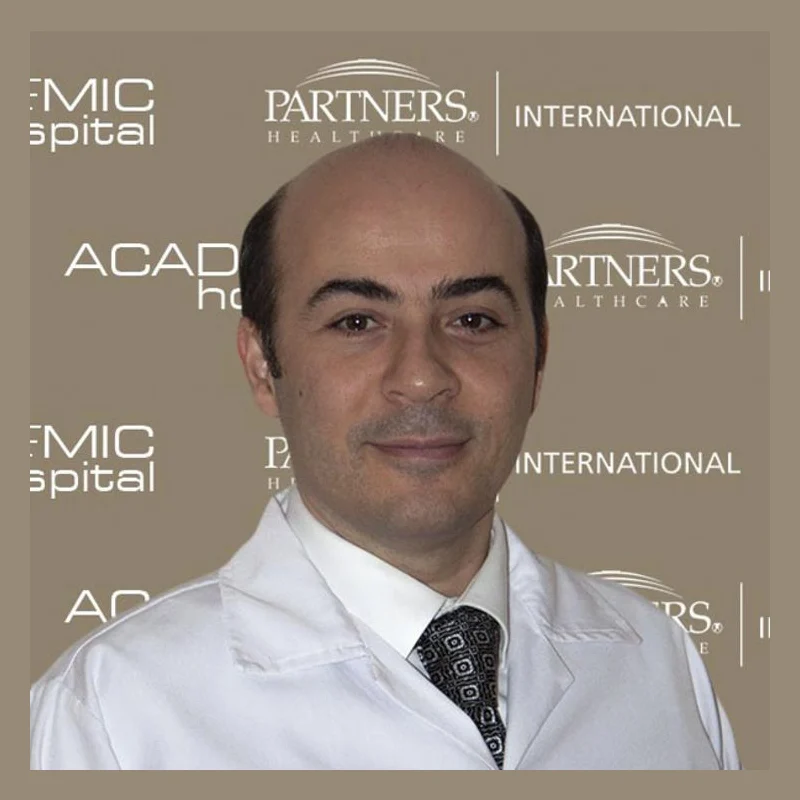
Op. Dr. Fikret Düşünceli
General SurgeryVerified
- 36+years exp.
English · Turkish
FromPrice on request
Free quote
60 seconds · no obligationView Profile
What an appendectomy involves, how laparoscopic removal compares with open surgery, what clinical evidence says about surgical intervention versus antibiotic therapy for acute appendicitis, approximate costs in Turkey compared with the UK, US and Germany, hospital stay duration, return-to-activity timelines, potential surgical complications, and how to verify hospital emergency and surgical accreditation.
A written plan with the surgeon's name and the full price — usually within 24 hours.

1 doctor Compare doctors, ratings and prices — ask any of them for a free quote.
General SurgeryVerified
English · Turkish
60 seconds · no obligationView Profile
An appendectomy is the surgical removal of the vermiform appendix, a narrow pouch connected to the caecum in the lower right abdomen. When its opening becomes blocked by swollen lymphoid tissue, a hardened stool particle (faecolith), or a foreign body, bacteria multiply rapidly. This triggers acute inflammation, swelling, and severe pain known as appendicitis. Without prompt surgery, an inflamed appendix can perforate, releasing bacteria into the abdominal cavity and causing peritonitis or an abscess.
Most appendectomies are emergency operations performed shortly after acute symptoms appear. However, some international patients travel for scheduled surgery, such as an interval appendectomy after an appendix mass has settled with antibiotics, or removal for recurrent chronic right lower abdominal pain. General surgical hospitals in Turkey provide both emergency care and planned procedures. To explore related abdominal treatments, see our guide to general surgery treatments in Turkey.
An appendectomy is performed under general anaesthesia and typically takes 30 to 60 minutes. Surgeons use either a minimally invasive (laparoscopic) technique or an open incision.
In a laparoscopic appendectomy, the surgeon makes three small incisions (5 mm to 12 mm) in the abdominal wall. Carbon dioxide gas gently inflates the abdomen to provide a clear view. A camera (laparoscope) transmits magnified live images to surgical monitors, while thin instruments are passed through two working ports. The surgeon mobilises the appendix, seals its blood vessels with electrocautery or clips, ties the base securely with surgical loops or a stapler, and divides it. The appendix is placed inside a sterile specimen bag and removed through a port site to protect the skin edges from infection. The gas is released and the incisions are closed with dissolvable stitches.
In an open appendectomy, the surgeon makes a single incision of 5 cm to 8 cm in the lower right abdomen. The muscles are separated, the appendix is brought into view, its blood supply is tied off, and the organ is excised. Open surgery remains necessary when there is widespread infection, dense scarring, or when laparoscopy cannot proceed safely.
Appendectomy is the definitive, permanent treatment for acute appendicitis. Large randomized clinical trials, including the APPAC and CODA studies, evaluated whether antibiotics alone could treat uncomplicated acute appendicitis without surgery.
The evidence shows that antibiotic therapy can resolve an initial uncomplicated episode in about 70% of selected patients. However, approximately 25% to 30% of these patients experience a recurrence within one year, and up to 39% require surgery within five years. Patients with an appendicolith (a calcified stone in the appendix) face high failure rates and higher complication risks with antibiotics alone. Because an excised appendix cannot become inflamed again, surgery provides permanent resolution. Guidelines from the Royal College of Surgeons (RCS) and the European Association for Endoscopic Surgery (EAES) recommend laparoscopic appendectomy as the primary standard of care.
Both surgical methods remove the appendix completely, but they differ in recovery time, post-operative comfort, and incision size. The choice depends on anatomy, previous surgery, and infection severity.
| Surgical approach | Best suited to | Typical limits |
|---|---|---|
| Laparoscopic appendectomy | Uncomplicated appendicitis, suspected appendiceal pathology, diagnostic exploration | Requires general anaesthesia; difficult with dense adhesions or severe perforation |
| Open appendectomy | Extensive peritonitis, severe scarring from previous surgery, or when laparoscopy is unsafe | Larger abdominal incision, slightly longer wound healing, higher superficial infection rate |
| Conservative antibiotic treatment | Selected cases of uncomplicated acute appendicitis under close hospital observation | Recurrence rate within one to five years; not suitable if perforation or appendicolith is present |
Laparoscopy is the preferred approach for most patients because it causes less wound pain, fewer wound infections, and faster discharge. When right lower quadrant pain is unclear, surgeons often perform a diagnostic laparoscopy to inspect the abdominal organs directly before deciding on excision.
Emergency appendectomy is required for acute appendicitis. For scheduled surgery, suitable candidates include patients with recurrent right lower quadrant pain (chronic appendicitis), patients having an interval appendectomy after an appendix mass has resolved, and patients with benign appendiceal lesions found on scans.
Surgery may be unsuitable or require special precautions for patients with uncorrected bleeding disorders, severe heart or lung disease that makes general anaesthesia unsafe, or extensive abdominal adhesions from past surgeries. In complex cases where chronic right pelvic pain lacks a clear cause, an exploratory diagnostic laparoscopy allows surgeons to examine the bowel and pelvic organs before removing the appendix.
The cost of an appendectomy depends on whether it is an emergency admission or a scheduled procedure, the surgical approach (laparoscopic or open), hospital stay length, and whether perforation requires extended antibiotics. The figures below are broad approximate private healthcare ranges rather than fixed quotes.
| Country | Approximate cost range |
|---|---|
| Turkey | €1,800 – €4,200 |
| United Kingdom | €4,500 – €9,500 |
| United States | €9,000 – €28,000 |
| Germany | €3,800 – €8,000 |
In Turkey, private hospital packages typically bundle pre-operative blood tests, ultrasound or CT imaging, operating theatre fees, surgeon and anaesthetist fees, one to two nights in a private room, medications, and follow-up checks. Complex cases involving peritonitis or extra drainage may increase costs. Each hospital confirms pricing in a written quote.
An appendectomy is a therapeutic procedure rather than a cosmetic one. Knowing what to expect during healing helps patients understand both internal recovery and scar maturation.
Before surgery, patients experience sharp right lower abdominal pain, tenderness, nausea, and abdominal guarding. After surgery, that acute inflammatory pain resolves and is replaced by mild incision soreness and temporary bloating from the carbon dioxide gas used during laparoscopy. Laparoscopic surgery leaves three tiny marks (5 mm to 12 mm) that look pink for several weeks before fading into pale, subtle lines over 6 to 12 months. An open appendectomy leaves a single scar of 5 cm to 8 cm in the lower right abdomen. Internal tissues heal over four to six weeks, allowing normal digestive function to resume.
Recovery is relatively quick after uncomplicated laparoscopic surgery, whereas open surgery or perforated appendicitis requires a longer convalescence.
International patients having scheduled surgery in Turkey typically stay 4 to 6 nights to complete hospital monitoring and attend a follow-up review before flying home. Walking the cabin aisle and drinking water helps comfort during the flight.
Appendectomy is a routine and safe procedure, but every operation carries some surgical and anaesthetic risk. Guidance from the National Health Service (NHS) and the American College of Surgeons (ACS) outlines the recognized complications:
Choosing an accredited hospital ensures experienced surgical care and round-the-clock emergency support. When considering hospitals in Turkey, verify registration with the Turkish Ministry of Health and international bodies such as Joint Commission International (JCI). The facility should have a 24-hour intensive care unit (ICU), modern laparoscopic equipment, and on-site CT and ultrasound imaging.
Before arranging travel, read how it works to understand the steps from online review to recovery. To learn more about surgical departments, see our guide to general surgery treatments in Turkey. Red flags include unverified surgeon credentials, lack of on-site critical care backup, and quotes that omit diagnostics or hospital stay costs.
You can request a preliminary assessment and itemised estimate through our free quote service.
An appendectomy is the surgical removal of the vermiform appendix, a small finger-shaped pouch connected to the large intestine. It is primarily performed to treat acute appendicitis, an inflammatory condition that can lead to appendix rupture and life-threatening abdominal infection if not promptly treated with surgery.
Yes. Because the appendix is surgically excised and removed from the body, it cannot become inflamed again. While antibiotics can resolve symptoms in some uncomplicated cases, roughly 25% to 30% of patients experience a recurrence within one year. Surgical removal provides permanent, definitive relief.
An appendectomy in Turkey typically ranges from €1,800 to €4,200 in private hospitals, compared with €4,500 to €9,500 in the UK and up to €28,000 in the US. The price depends on whether the operation is laparoscopic or open, the hospital stay duration, and whether complications are present.
Before surgery, acute appendicitis causes sharp right lower abdominal pain, nausea, and fever. After surgery, the infection is removed, leaving mild incision soreness and temporary bloating from laparoscopic gas. Over four to six weeks, internal tissues heal fully, incisions fade into small pale marks, and normal energy returns.
Most patients stay in hospital for one to two nights following laparoscopic surgery. Desk work and light daily activities can usually resume within 7 to 10 days. Strenuous exercise, heavy lifting, and sports should be avoided for four to six weeks until abdominal muscle layers have fully healed.
The operation itself is performed under general anaesthesia, so you will feel no pain during surgery. Afterward, patients experience mild to moderate soreness around the incisions and temporary shoulder or abdominal discomfort from the carbon dioxide gas. This is well controlled with prescribed pain medication and eases within a few days.
An uncomplicated laparoscopic appendectomy usually takes between 30 and 60 minutes. Complicated cases involving severe inflammation, extensive adhesions, or an appendix abscess may take 75 to 90 minutes. The results are permanent because the organ is entirely excised.
Yes. An appendectomy is one of the most widely performed abdominal operations in the world and carries a high safety record. Serious complications are rare in accredited hospitals with board-certified general surgeons. Common temporary side effects include mild bruising, incision soreness, and minor digestive sluggishness.
Laparoscopic surgery uses three tiny incisions, resulting in less post-operative pain, lower wound infection rates, and faster discharge than open surgery. However, open appendectomy remains necessary when there is extensive peritonitis, dense abdominal scarring, or when anatomical structures cannot be clearly visualised through the laparoscope.
For scheduled or planned appendectomy, patients typically stay in Turkey for 4 to 6 nights. This allows for one or two nights of hospital observation, post-operative wound checks, and confirmation from the surgeon that you are clinically fit to travel safely before taking your return flight home.
Your request is in!
Your coordinator will contact you — usually within 2 hours, 24/7.
Want a faster, more accurate assessment?
Add photos & medical detailsLeave your number — a coordinator calls you in your language, usually within 15 minutes during office hours.
Thank you!
A coordinator will contact you at the time you chose.

