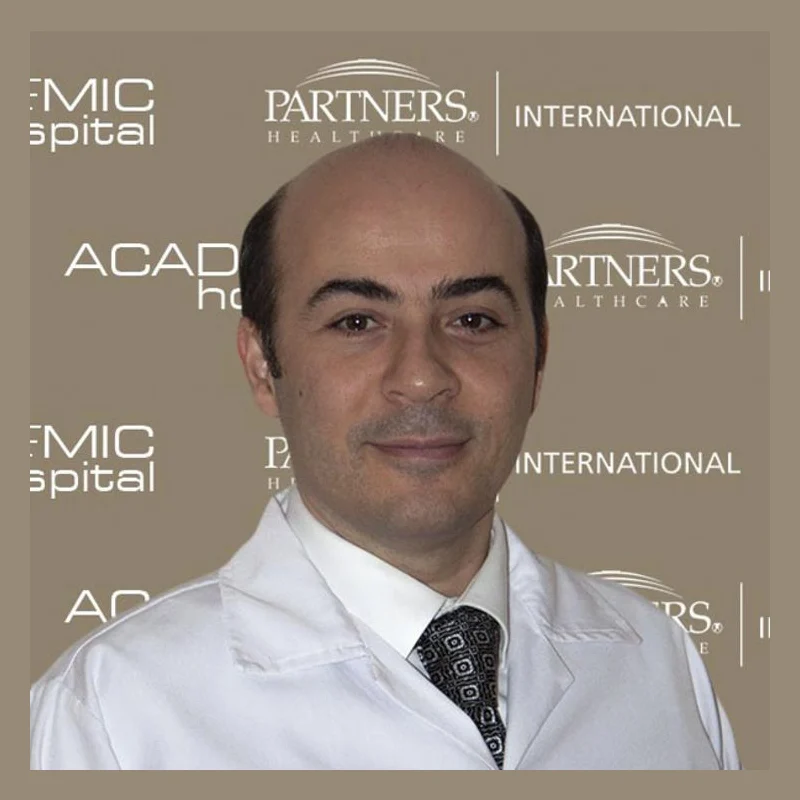
Op. Dr. Fikret Düşünceli
General SurgeryVerified
- 36+years exp.
English · Turkish
FromPrice on request
Free quote
60 seconds · no obligationView Profile
What lipoma removal involves, including surgical excision and minimal-incision techniques for benign fatty lumps under the skin. We examine what clinical evidence shows regarding recurrence rates, comparative costs across Turkey, the UK, US, and Germany, the step-by-step hospital experience, realistic before-and-after expectations, wound healing timelines, known surgical risks, and how to verify medical facilities.
A written plan with the surgeon's name and the full price — usually within 24 hours.

1 doctor Compare doctors, ratings and prices — ask any of them for a free quote.
General SurgeryVerified
English · Turkish
60 seconds · no obligationView Profile
Lipoma removal is a minor surgical procedure designed to excise a lipoma—a benign, slow-growing subcutaneous tumour composed of mature fat cells enclosed within a thin, fibrous capsule. Lipomas are the most common non-cancerous soft-tissue growths in adults, frequently presenting as soft, doughy, non-tender lumps that slide easily beneath the skin when pressed. Although lipomas are non-malignant and do not metastasise, patients frequently seek removal because the growth becomes unsightly, enlarges over time, or causes local tenderness by pressing against adjacent nerves, blood vessels, or muscular tissue.
The primary mechanism of lipoma removal in Turkey involves surgically enucleating both the fatty mass and its surrounding fibrous capsule through an overlying incision. Eradicating the capsule is the decisive step: leaving capsular remnants behind substantially increases the likelihood that adipose cells will re-proliferate in the exact same pocket. Depending on the size, depth, and anatomical site of the lump, surgical intervention is conducted under local anaesthesia, intravenous sedation, or general anaesthesia. If you are exploring elective surgical care, learn more about our accredited hospital options across general surgery treatments in Turkey.
Clinical studies and surgical consensus confirm that surgical excision provides a definitive, permanent cure for the targeted lesion, provided that the fibrous capsule is dissected free and removed in its entirety. When complete capsule excision is achieved, published recurrence rates across international surgical audits remain exceptionally low, generally cited at under two to three percent. In contrast, interventions that aspirate fat cells without extracting the capsule—such as blind needle aspiration or decompressing the mass without capsular clearance—demonstrate recurrence rates exceeding forty to fifty percent within several years.
It is equally important to understand what surgery cannot accomplish. Undergoing lipoma excision does not prevent new, independent lipomas from developing elsewhere on the body, particularly in individuals with genetic conditions such as familial multiple lipomatosis, Gardner syndrome, or Dercum disease. Furthermore, standard clinical practice dictates that every excised specimen must be submitted for routine histopathological evaluation. While over ninety-nine percent of soft, mobile fatty tumours prove benign, microscopic analysis is necessary to formally exclude rare malignancies such as liposarcoma or atypical lipomatous tumours, ensuring complete clinical peace of mind.
The financial investment required for lipoma excision varies according to the size and quantity of lumps, their anatomical depth, and the required anaesthesia. Private surgical centres in the United Kingdom, United States, and Northern Europe frequently charge substantial facility, surgeon, and pathology fees for benign lesion excisions that national health services often categorise as non-essential or cosmetic. Turkish hospitals offer regulated, hospital-grade surgical care at accessible rates.
The table below outlines approximate comparative price ranges in euros across key medical destinations. These ranges represent typical broad expenditures rather than fixed hospital quotes:
| Country | Approximate cost range |
|---|---|
| Turkey | €400 – €1,800 |
| United Kingdom | €1,200 – €3,500 |
| United States | €1,500 – €4,500 |
| Germany | €1,000 – €3,200 |
Several tangible surgical factors influence the final lipoma removal price. Removing a solitary, superficial 2-centimetre lipoma under local anaesthesia sits at the lower end of the spectrum, whereas excising multiple lesions or a deep intramuscular growth requiring general anaesthesia and an operating theatre increases overall resource use. Comprehensive international packages in Turkey typically include preoperative laboratory work, surgical and anaesthesia fees, disposable theatre supplies, obligatory histopathology biopsy analysis, postoperative medications, follow-up wound redressing, and airport transfers. Patients receive a clear, itemised price quote following an initial review of photos and diagnostic scans.
Surgeons deploy different techniques based on the lesion's size, depth, and anatomical visibility. Choosing the appropriate technique balances complete capsular eradication against the cosmetic appearance of the surgical scar.
| Technique | Best suited to | Typical limits |
|---|---|---|
| Standard surgical excision | Solitary lipomas of any size, deep intramuscular masses, and lesions requiring intact histological review | Creates a linear incision proportional to lump diameter, resulting in a visible scar |
| Minimal-incision extraction | Small to medium superficial lipomas (under 4 cm) on visually prominent areas such as the arms or neck | Capsule may rupture during extraction, demanding meticulous curettage to prevent recurrence |
| Liposuction-assisted removal | Very large lipomas (>5 cm) or multiple lesions where minimising extensive scarring is the primary goal | Capsule is fragmented rather than excised intact, carrying a higher long-term recurrence rate |
During standard excision, the surgeon cuts an elliptical or linear incision directly over the skin tension lines, dissects the subcutaneous fat layers down to the capsule, and lifts the intact mass away from neighbouring connective tissue. Minimal-incision extraction involves making a small cut roughly one-third of the lesion's diameter, manually expressing the fatty tissue through the opening, and subsequently grasping and pulling the emptied capsule out with forceps. Liposuction uses negative pressure through a small cannula to emulsify and extract the fat; while it leaves tiny puncture scars, it renders histological analysis more difficult and leaves capsular fragments behind.
Lipomas can emerge across virtually any anatomical region containing adipose tissue. The most common locations include the upper back, shoulders, neck, torso, forearms, and thighs. In the vast majority of cases, these masses reside strictly within the superficial subcutaneous layer, making outpatient excision straightforward and safe.
However, specific anatomical locations necessitate thorough differential diagnosis and specialised preoperative workups. When a patient presents with a soft swelling in the anterior neck or lower cervical boundary, careful clinical assessment and high-resolution ultrasound are essential to differentiate a benign subcutaneous lipoma from deep cervical masses or thyroid pathologies that would instead require endocrinological evaluation or a thyroidectomy. Similarly, fatty deposits discovered deep within the abdominal cavity or retroperitoneal space represent complex visceral conditions that may call for internal abdominal evaluation via diagnostic laparoscopy rather than surface dermatological excision. Clear anatomical imaging prior to surgery prevents diagnostic errors.
Appropriate candidates for lipoma removal are adult men and women in sound general physical health who possess one or more confirmed, stable lipomas. The primary indications for intervention include:
Conversely, surgical excision should be deferred or approached with extreme caution in patients with active skin infections, cellulitis, or open wounds overlying the planned incision site. Patients with unmanaged coagulopathies, those taking unmonitored anticoagulation medication, or individuals suffering from decompensated systemic diseases require medical optimisation prior to any elective intervention. Realistic expectations regarding post-surgical scarring are also mandatory; every surgical incision replaces a soft subcutaneous mass with a permanent, albeit fading, skin scar.
The clinical process for lipoma removal Turkey follows a disciplined, sterile surgical protocol designed to ensure patient comfort, aseptic safety, and structural tissue closure:
Because most excisions are minor outpatient procedures, the overall lipoma removal recovery is rapid and uncomplicated. Patients treated under local anaesthesia are discharged from the hospital after a short one- to two-hour observation period, walking comfortably back to their hotel accommodation.
A realistic post-operative timeline guides travel arrangements and daily activities:
Understanding what surgical photographs depict helps set grounded expectations for lipoma removal before and after outcomes. Prior to surgery, clinical photos display visible, raised subcutaneous contours stretching the overlying skin. Immediately following excision, the bulge is eliminated, but the treated area often displays mild swelling, minor indentation where the mass once rested, and localized pinkness.
The permanent trade-off of surgical excision is the formation of a cutaneous scar. While skilled surgeons align incisions with natural skin folds to minimise noticeability, an incision line will always remain. Initially, the scar appears pink or slightly raised; over six to twelve months, it softens, flattens, and fades to a thin, pale silver line. In cases involving very large lipomas, the overlying skin may take several months to contract back to flat contours, particularly in older patients with reduced dermal elasticity. Legitimate before-and-after portfolios show realistic healing scars across diverse skin types rather than filtered or retouched imagery.
When carried out by qualified surgeons in accredited facilities, lipoma excision is an exceptionally safe minor procedure. Nonetheless, no surgical intervention is entirely without risk. Major healthcare authorities, including the National Health Service (NHS) and international surgical colleges, identify several recognised potential complications:
Undergoing medical treatment abroad requires rigorous vetting to ensure quality, clinical governance, and ethical standards. Patients should verify that their chosen facility is fully licensed by the Turkish Ministry of Health and that surgical specialists hold board certification in general surgery or plastic and reconstructive surgery. Transparent pricing, strict sterilization standards, and compulsory histopathology are essential hallmarks of quality care.
Be alert to common red flags: avoid any clinic that promises scarless removal, offers flat fees without reviewing lump dimensions or location, refuses to submit the surgical specimen for laboratory biopsy, or rushes you to book without a formal medical evaluation. Review how our process works to understand how accredited hospital partnerships coordinate patient safety, and submit your details through our free quote portal to receive an individualised, honest clinical assessment from experienced surgical teams.
Key questions to ask your prospective surgical clinic include:
Lipoma removal is a minor surgical procedure performed to excise a benign subcutaneous tumour of adipose cells along with its protective fibrous capsule. Conducted primarily through standard surgical excision or minimal-incision extraction, the procedure eliminates the lump, prevents local tissue compression, and permits formal histological testing to verify that the tissue is entirely benign.
Yes, surgical removal permanently resolves the specific lipoma treated, provided that the surgeon dissects out and extracts the surrounding fibrous capsule completely. Documented recurrence rates after complete surgical excision remain below two to three percent. However, having surgery does not prevent brand-new, unrelated lipomas from developing elsewhere on the body in genetically predisposed individuals.
In Turkey, lipoma removal typically ranges between €400 and €1,800, compared with €1,200 to €3,500 in the UK or private European clinics. The exact cost depends on the number of lipomas, their anatomical size and depth, the required anaesthesia, and whether the package includes pathology biopsy fees and hotel accommodation.
Before surgery, photos display a rounded, visible subcutaneous lump stretching the skin. After complete excision and initial swelling subsides, the skin contour returns to a flat, normal profile, replaced by a neat, flat surgical scar. Over six to twelve months, this incision line matures and fades into a faint, pale line.
Most patients return to desk work within two to three days following outpatient lipoma removal. Postoperative bruising and swelling peak in the first few days and steadily diminish over two weeks. Non-dissolvable sutures are typically removed between seven and fourteen days, while vigorous gym training can resume after three to four weeks.
The procedure itself causes minimal discomfort because local infiltration anaesthesia thoroughly numbs the surgical site before any incision is made. After the anaesthetic wears off, patients typically report mild tenderness, tightness, or bruising around the incision. This mild post-procedure discomfort is easily managed with standard over-the-counter painkillers such as paracetamol or ibuprofen.
The results are permanent for each completely excised lipoma because the adipose cells and the capsule housing them are physically removed. Recurrence in the same location is exceptionally rare when capsular clearance is thorough. General weight fluctuations will not cause an excised lipoma to re-grow in that specific operated pocket.
Lipoma removal is a highly routine, safe minor procedure when performed under strict aseptic hospital conditions. Recognised surgical risks include postoperative haematoma or seroma accumulation, minor wound infection, localized numbness or sensory nerve alteration, hypertrophic scarring, and rare recurrence. Submitting every specimen for histopathological examination ensures diagnostic certainty.
Standard surgical excision is generally preferred because it enables intact extraction of the fibrous capsule, keeping recurrence rates minimal and allowing complete histological biopsy examination. Liposuction leaves smaller puncture scars and suits very large lipomas, but it fragments the tissue and carries a higher recurrence risk due to retained capsular remnants.
For a single, uncomplicated superficial lipoma, international patients generally stay in Turkey for three to four nights. This duration allows for the initial in-person surgical consultation, the procedure, and a dedicated follow-up evaluation forty-eight to seventy-two hours later to inspect the healing wound before you fly home safely.
Your request is in!
Your coordinator will contact you — usually within 2 hours, 24/7.
Want a faster, more accurate assessment?
Add photos & medical detailsLeave your number — a coordinator calls you in your language, usually within 15 minutes during office hours.
Thank you!
A coordinator will contact you at the time you chose.

