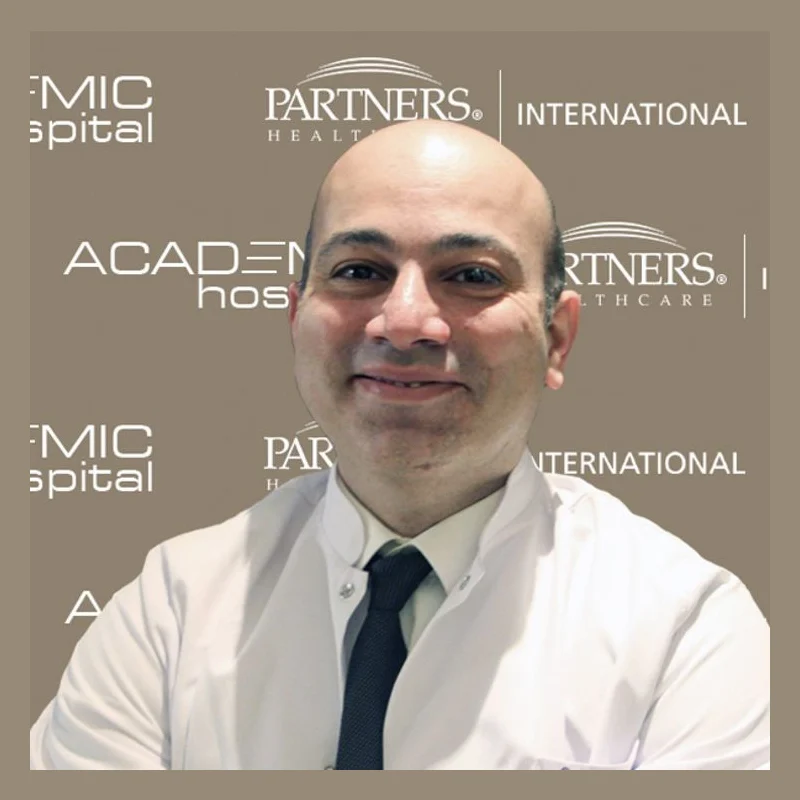
Dr. Öğr. Üyesi Görkem Kıyak
OrthopedicsVerified
- 21+years exp.
English · Turkish
FromPrice on request
Free quote
60 seconds · no obligationView Profile
What arthroscopic meniscectomy is, how a torn knee meniscus is trimmed through keyhole cuts, what the evidence says about when it helps and when physiotherapy does as well, how it differs from meniscus repair, approximate costs in Turkey against the UK, US and Germany, recovery, risks and how to choose a surgeon.
A written plan with the surgeon's name and the full price — usually within 24 hours.

1 doctor Compare doctors, ratings and prices — ask any of them for a free quote.
OrthopedicsVerified
English · Turkish
60 seconds · no obligationView Profile
Arthroscopic meniscectomy is keyhole knee surgery that removes the torn part of a meniscus, the C-shaped piece of cartilage that cushions the knee between the thigh bone and shin bone. Through two or three cuts of about 5 mm, the surgeon passes a camera and small instruments into the joint, finds the torn flap and trims it back to a stable edge. Usually only the damaged part is removed (a partial meniscectomy); taking out the whole meniscus is rarely done today because the knee then loses its shock absorber. Orthopaedic and sports-medicine departments in Turkey do the operation as a day case.
This guide explains when trimming helps and when it does not, how it differs from repair, what it costs against the UK, US and Germany, the recovery and the risks. For other joint procedures see our orthopedics treatments in Turkey.
A meniscus tear brings pain on the inner or outer side of the knee, swelling after activity, catching, a feeling that the knee gives way and sometimes locking, where the knee cannot fully straighten. Tears fall into two broad groups. Traumatic tears in younger patients, often from twisting in sport, can be sharp and sometimes repairable. Degenerative tears in people over about 40 come from wear and are often found on MRI in knees that give no symptoms at all. Trimming is mainly for tears that cannot heal, such as frayed flaps and complex or degenerative tears in poorly supplied parts of the meniscus, and for torn fragments that lock the knee.
It usually takes 20 to 45 minutes, and most patients go home the same day or after one night.
It works well for one clear problem: a torn fragment that catches or locks the knee. Removing it usually ends the locking quickly. For degenerative tears with ordinary pain and no locking the evidence is different. Several randomised trials and reviews, which are summarised by the NHS and professional bodies, found that supervised physiotherapy gave similar pain relief and function to meniscectomy after one to two years. For that reason many guidelines now suggest trying exercise therapy first in degenerative tears and keeping surgery for people with mechanical symptoms or those whose symptoms do not respond. Removing meniscus tissue also raises the chance of knee arthritis in later years, which is why surgeons try to remove as little as possible.
The figures below are approximate ranges for one knee, not hospital quotes. The hospital confirms its own price in writing after reading your MRI report.
| Country | Approximate cost range |
|---|---|
| Turkey | €1,800 – €4,500 |
| United Kingdom | €3,500 – €8,000 |
| United States | €5,000 – €15,000 |
| Germany | €3,000 – €7,000 |
The price depends on whether other work is done in the same session (smoothing worn cartilage, removing loose bodies), the anaesthesia, day case or overnight stay and the room category. A package typically covers the pre-operative tests, surgery, the anaesthetist, one night if needed, crutches or a brace and airport transfers. Physiotherapy back home is usually extra, so confirm what is included in writing.
Where a tear is in the well-supplied outer third of the meniscus, or is a clean fresh tear in a younger person, the surgeon may stitch it rather than trim it: see our guide to arthroscopic meniscus repair. Repair preserves more tissue and protects the joint better over time, but recovery is slower and the repair can fail. Trimming is faster to recover from and suits tears that cannot be repaired.
| Option | Best suited to | Typical limits |
|---|---|---|
| Partial meniscectomy | Frayed, degenerative or unrepairable tears; locking fragments | Less meniscus left; higher arthritis risk over many years |
| Meniscus repair | Fresh tears in the outer, blood-supplied zone, younger patients | Slower recovery; repair can fail and need trimming later |
| Physiotherapy and injections | Degenerative tears without locking | May not help if a fragment catches the joint |
Good candidates have an MRI-confirmed tear that matches their symptoms, mechanical problems such as locking or catching, and pain that has not improved with physiotherapy. You may be advised against surgery, or to wait, if the pain mainly comes from widespread knee arthritis (a meniscectomy will not cure it), if the tear is degenerative and you have not yet tried a structured exercise programme, if you have a skin infection near the knee, or if you are unfit for anaesthesia.
You walk the same day, often with crutches for a few days and full weight as comfort allows. Typical milestones are listed below; your surgeon sets the plan.
After a trimming most patients need only 3 to 5 days in Turkey, with the first check before flying. Keep the leg moving and ask about clot prevention on the flight. A video follow-up lets the team see your swelling and range of movement.
Locking and catching normally stop quickly, and pain from the tear usually eases over a few weeks. Swelling can take two to three months to settle, and the knee often feels better each week. What the operation cannot do is reverse arthritis or return the removed meniscus. Photographs show only tiny scars, so the honest measures are walking comfort, stairs, squatting and sport. If your pain was mostly arthritic, improvement may be smaller than expected, which is why a surgeon should discuss your X-ray and MRI honestly before agreeing to operate.
Keyhole knee surgery is low risk, but not risk-free. Possible problems are stiffness and swelling, infection, bleeding into the joint, nerve or vein injury, blood clots (deep vein thrombosis) and ongoing pain. In the longer term, removing meniscus tissue increases the load on cartilage and can speed up arthritis. The NHS and the American Academy of Orthopaedic Surgeons (AAOS) describe these risks and recommend discussing non-surgical options first for degenerative tears. Ask the hospital what happens if you have a wound or swelling problem after you fly home.
Choose an orthopaedic surgeon who performs knee arthroscopy regularly, in an accredited hospital with an anaesthetist, and expect an opinion that is based on your MRI, not on a photo or a phone call. Red flags include being told surgery is needed without reviewing your scans, no mention of physiotherapy or repair as alternatives and no aftercare plan. See how our process works and send your MRI through our free quote page. Questions to ask:
It is keyhole surgery that trims away the torn part of the knee meniscus through small cuts, using a camera and fine instruments. Usually only the damaged portion is removed, and it is done as a day case.
It works well when a torn fragment locks or catches the knee. For degenerative tears without locking, trials show physiotherapy can give similar results, so surgery is usually kept for mechanical symptoms.
Approximate ranges are €1,800 to €4,500 in Turkey, against about €3,500 to €8,000 in the UK. The price depends on extra work in the knee, the anaesthesia and the stay; the hospital confirms it in a written quote.
Neither is better for everyone. Repair preserves more meniscus but heals more slowly and can fail, while trimming is quicker to recover from and suits tears that cannot be stitched. A surgeon decides from the tear type and location.
Most people walk the same day and return to desk work within a week. Light sport usually restarts after about six to eight weeks, and swelling can take two to three months to settle fully.
You are anaesthetised during the operation. Afterwards the knee is sore and swollen for several days, which is generally controlled with prescribed painkillers, ice and elevation.
Removing meniscus tissue raises the load on the cartilage and increases the chance of knee arthritis over many years, which is why surgeons remove as little as possible. Exercise and a healthy weight help protect the joint.
For degenerative tears without locking, guidelines often advise a supervised exercise programme first. Surgery is considered if symptoms continue or a fragment mechanically blocks the knee.
Risks include stiffness, swelling, infection, bleeding into the joint, blood clots and nerve irritation. They are uncommon, and the bigger long-term question is the effect on knee cartilage.
Usually three to five days, including the operation, one night if needed and a check before the flight. Physiotherapy continues at home.
Your request is in!
Your coordinator will contact you — usually within 2 hours, 24/7.
Want a faster, more accurate assessment?
Add photos & medical detailsLeave your number — a coordinator calls you in your language, usually within 15 minutes during office hours.
Thank you!
A coordinator will contact you at the time you chose.

