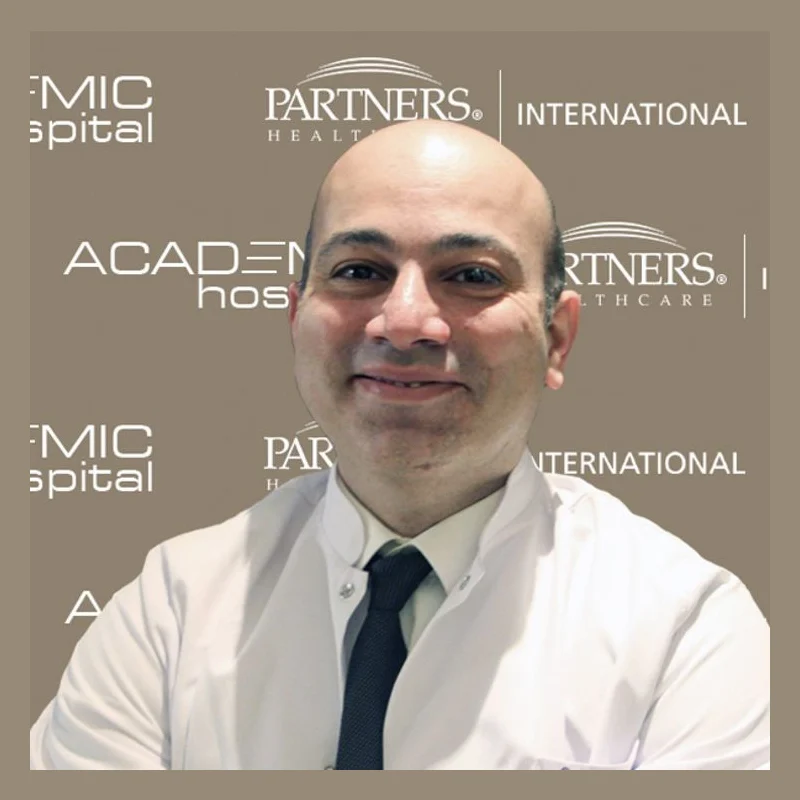
Dr. Öğr. Üyesi Görkem Kıyak
OrthopedicsVerified
- 21+years exp.
English · Turkish
FromPrice on request
Free quote
60 seconds · no obligationView Profile
When ACL reconstruction is needed, how the torn ligament is replaced with a graft through keyhole surgery, how graft choices compare, approximate costs in Turkey, the UK, US and Germany, the rehabilitation timeline and return-to-sport expectations, the main risks and how to check a clinic.
A written plan with the surgeon's name and the full price — usually within 24 hours.

1 doctor Compare doctors, ratings and prices — ask any of them for a free quote.
OrthopedicsVerified
English · Turkish
60 seconds · no obligationView Profile
ACL reconstruction is keyhole (arthroscopic) surgery that replaces a torn anterior cruciate ligament in the knee with a graft. The ACL runs from the thigh bone to the shin bone through the middle of the joint and stops the shin sliding forward and rotating on the thigh. When it ruptures, usually in a pivoting or landing injury in football, skiing or basketball, the knee can give way. A torn ACL does not heal by itself, so the surgeon drills tunnels in the bones, passes a graft through them and fixes it so that it can take over the ligament's job while the body gradually incorporates it.
This guide explains when surgery is advised and when it is not, how the grafts compare, what the operation involves, what it costs in Turkey against the UK, US and Germany, how long rehabilitation takes and what the risks are. For other joint operations done by keyhole see our guides to hip arthroscopy and ankle arthroscopy.
Not every torn ACL needs an operation. Studies comparing early reconstruction with structured physiotherapy, with surgery only if the knee keeps giving way, show that some people do well without an operation, especially if they are less active, older or do not play sports that involve pivoting. Surgery is more often advised for young and active people, for those whose knee gives way in daily life, for people whose job or sport involves cutting and twisting, and for a torn ACL combined with other damage such as a meniscus tear or multi-ligament injury.
The decision is made after examination and an MRI scan. A surgeon should explain the options honestly, including supervised rehabilitation first, rather than recommending surgery by default. Waiting with an unstable knee can allow further damage to cartilage and menisci, so repeated giving way is a reason to review the plan.
The graft is the main technical choice. The three common autografts (your own tissue) and the alternative are compared below.
| Graft | Best suited to | Typical limits |
|---|---|---|
| Hamstring tendon | Most adults; smaller knee wounds and less front-of-knee pain | Some loss of hamstring strength; graft can stretch slightly |
| Patellar tendon (bone-tendon-bone) | Contact and pivoting athletes; strong bone-to-bone healing | More kneeling and front-of-knee pain; patellar problems |
| Quadriceps tendon | Larger or revision grafts; growing popularity | Thigh pain and weakness early on; fewer long-term comparisons |
| Donor (allograft) | Older patients or multiple ligament injuries | Higher failure rate in young athletes; availability varies |
Research and national registries suggest that graft choice should be based on age, sport, previous surgery and the surgeon's experience rather than on a single best option. Ask which graft is planned, why, and what happens if it proves too small during surgery.
For people who have a torn ACL and an unstable knee, reconstruction restores stability in most cases, and many athletes return to sport. Evidence from large registries and trials supports good outcomes for stability and function, but not every patient returns to their previous level, and a minority tear the graft or the other knee. Early reconstruction does not prevent knee arthritis in later life, which is more common after an ACL injury even with surgery, so results depend as much on rehabilitation, weight control and the accompanying cartilage and meniscus damage as on the operation itself.
Return to sport is a matter of months, not weeks, and should be guided by strength and movement tests rather than only by the calendar. A trustworthy surgeon will not promise a return to a particular level.
The figures below are approximate ranges for primary single-ligament reconstruction, not hospital quotes. The ACL reconstruction cost changes with the graft, whether a meniscus repair is added, the hospital and the length of stay.
| Country | Approximate cost range |
|---|---|
| Turkey | €3,500 – €8,000 |
| United Kingdom | €6,500 – €13,000 |
| United States | €10,000 – €30,000 |
| Germany | €5,500 – €12,000 |
The ACL reconstruction price in a package normally includes pre-operative tests and the MRI review, the surgeon, the anaesthetist, the implants and fixation devices, one to two nights in hospital, crutches and a brace, medication and early physiotherapy. Ask whether the brace, the first physiotherapy sessions and any meniscus repair are included, and what a revision would cost.
The strongest candidates are active people with a confirmed complete tear and symptoms of instability, those with combined injuries and those whose work or sport requires a stable knee. Before surgery it helps if the knee has settled: swelling reduced, full movement regained and good thigh strength, which is often built through a short period of "prehabilitation".
Surgery may be less suitable if you are older with low activity and a stable knee, have significant arthritis, an active infection, uncontrolled medical problems or smoke heavily, or if you cannot commit to months of rehabilitation. Open growth plates in children and teenagers need a surgeon experienced in paediatric techniques.
The operation takes about one to one and a half hours under spinal or general anaesthesia, often with a nerve block for pain relief. The surgeon takes the graft, then inserts a camera through small cuts at the front of the knee and treats any meniscus or cartilage damage. The torn ligament stump is cleared, tunnels are drilled in the thigh bone and shin bone, the graft is passed through and fixed with screws, buttons or similar devices, and the knee is checked for stability. You wake with a dressing and often a brace. Most people go home the same day or after one or two nights.
ACL reconstruction recovery is mostly about rehabilitation. The first weeks focus on swelling control, straightening the knee and walking, and later phases rebuild strength, balance and sport-specific movement. The timeline below is typical; your surgeon and physiotherapist set the exact pace.
| Time after surgery | What to expect |
|---|---|
| Week 0–2 | Crutches, brace, ice and elevation; aim to straighten the knee fully; gentle movement |
| Week 2–6 | Walking without crutches as swelling allows; physiotherapy for range of movement and quadriceps activation; desk work from about two weeks |
| Month 2–4 | Strengthening, cycling and swimming; stationary exercise; driving usually allowed when control returns |
| Month 4–6 | Jogging after strength and hop tests are passed; gradual running programme |
| Month 9–12 | Return to cutting and contact sport if tests and the surgeon agree |
Because physiotherapy is central, most international patients stay in Turkey for about three to seven days for the operation, first dressing change and instruction, and then continue rehabilitation with a physiotherapist at home. Ask the clinic for a written protocol you can give your physio, and fly only when the surgeon agrees; keep the leg moving and consider compression stockings on the journey.
ACL reconstruction is a well-established operation, but every operation carries risk. Possible complications include stiffness or loss of full movement, pain at the graft site, knee pain at the front, infection, blood clots in the leg or lung, numbness near the scars and bleeding into the joint. The graft can stretch or tear again, especially in young athletes, and a minority need revision surgery. Anaesthetic complications are uncommon.
The NHS, the British Association for Surgery of the Knee and the American Academy of Orthopaedic Surgeons all emphasise that good rehabilitation lowers the risk of stiffness and re-injury. Ask the clinic what happens if a complication occurs and who will treat you after you leave Turkey.
Check that the surgeon is an orthopaedic specialist with a sports-knee practice, that the operation takes place in a licensed hospital with an anaesthetist, and that you receive a written plan and price before you pay a deposit. Red flags include no named surgeon, no MRI review before agreeing to operate, guarantees of a return to sport by a fixed date, and no rehabilitation plan. Read how our process works and send your MRI report through the free quote page; see also our orthopedics treatments in Turkey.
ACL reconstruction is keyhole surgery that replaces a torn anterior cruciate ligament with a graft, usually from your own hamstring, patellar or quadriceps tendon. It aims to stabilise a knee that gives way during pivoting or daily activity.
Not always. Some people do well with structured physiotherapy, especially if they are less active. Surgery is more often advised for young, active people, repeated giving way or combined injuries, after an MRI and examination.
As a rough guide, about €3,500 to €8,000 in Turkey, against roughly €6,500 to €13,000 in the UK. The price depends on the graft, any meniscus repair, the hospital and what the package includes.
Walking without crutches is usually possible within a few weeks and desk work from about two weeks. Running often starts around four to six months, and return to cutting or contact sport takes nine months to a year.
You have anaesthesia and usually a nerve block, so surgery itself is not felt. The knee is sore and swollen for the first weeks, which is managed with painkillers, ice, elevation and early movement.
No single graft suits everyone. Hamstring is common and less painful at the front of the knee, patellar tendon suits many athletes, and quadriceps tendon is increasingly used. Your age, sport and surgeon's experience guide the choice.
Many people do, usually after nine months to a year and after passing strength and hop tests. Not everyone reaches their previous level, and re-injury is possible, so rehabilitation and clearance matter.
It is a well-established operation, but risks include stiffness, infection, blood clots, pain at the graft site and graft failure. A qualified orthopaedic surgeon, a licensed hospital and good rehabilitation reduce the risks.
Knee arthritis is more common after an ACL injury, whether or not it is reconstructed, especially if cartilage or the meniscus was also damaged. Surgery restores stability but does not remove that risk.
Usually three to seven days, covering the operation, a dressing check and rehabilitation instruction. You then continue physiotherapy at home with the written protocol from the hospital.
Your request is in!
Your coordinator will contact you — usually within 2 hours, 24/7.
Want a faster, more accurate assessment?
Add photos & medical detailsLeave your number — a coordinator calls you in your language, usually within 15 minutes during office hours.
Thank you!
A coordinator will contact you at the time you chose.

