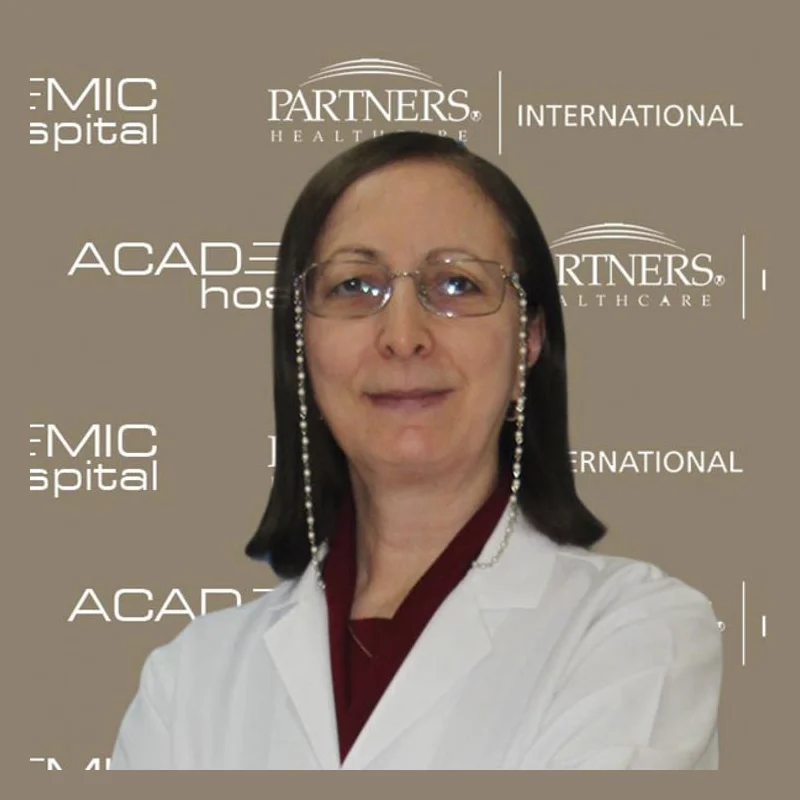
Dr. Aysun Ertaş
Check-ups & DiagnosticsVerified
- 23+years exp.
English · Turkish
FromPrice on request
Free quote
60 seconds · no obligationView Profile
A guide to the basic health check up in Turkey: the blood tests, examinations and imaging a basic panel normally includes, how it differs from a full body check up, approximate hospital prices compared with the UK, the US and Germany, how to prepare, what the half-day visit looks like, how results are delivered and what to do with an abnormal finding when you are back home.
A written plan with the surgeon's name and the full price — usually within 24 hours.

2 doctors Compare doctors, ratings and prices — ask any of them for a free quote.
Check-ups & DiagnosticsVerified
English · Turkish
60 seconds · no obligationView Profile
Check-ups & DiagnosticsVerified
English · Turkish
60 seconds · no obligationView Profile
A basic check-up is the entry-level health check up in Turkey's private hospitals: a half-day programme of blood and urine tests, a physical examination by an internal medicine physician and a small number of imaging tests, put together to give a healthy adult a general picture of their health. It is the panel most hospitals list under health check-ups and the one travellers, expats and people visiting family in Turkey most often book, because it fits into a single morning and costs a fraction of the same tests bought separately in the UK, Ireland or the US.
It is designed for adults without symptoms who want to know their cholesterol, blood sugar, liver, kidney and thyroid values, blood count and blood pressure, and have a doctor read the results with them. It is not a cancer screening programme and it does not replace the specialist checks that come with age: a full body check up, a check-up for women or a check-up for men covers more ground.
The exact list differs between hospitals, so always ask for the written test list before you book. A typical basic panel at a Turkish private hospital contains:
Some hospitals also include vitamin D, vitamin B12, iron and ferritin or a hepatitis B and C screen; others sell these as add-ons. Tests that are not part of a basic panel include tumour markers, mammography, smear test, PSA, colonoscopy, echocardiography, exercise ECG and any CT or MRI scan.
There is no live hospital price for the basic programme on this page yet, so the Turkish figures below are approximate market ranges for private hospitals in Istanbul, Ankara, Izmir and Antalya, confirmed in a written quote. Prices in the other countries are typical self-pay prices for a comparable assessment and vary between providers.
| Country | Basic health assessment (approximate) | Comments |
|---|---|---|
| Turkey | about €150–€400 (approximate, confirmed in a written quote) | Blood and urine panel, internist consultation, ECG, chest X-ray; abdominal ultrasound often included; report in English the same or next day |
| United Kingdom | about £250–£600 | Private "essential" or "core" health assessments; imaging usually extra |
| United States | about $300–$1,000 | Self-pay annual physical with basic labs; imaging and ECG billed separately |
| Germany | about €250–€600 | Self-pay individual health services (IGeL) beyond the statutory check-up |
The fuller programmes on our site do have live prices: the full body check up page shows the hospitals' current prices in your currency. What moves the price of a basic panel is mainly the number of blood parameters, whether ultrasound is included, the hospital's accreditation and the city; Istanbul's university-affiliated and JCI-accredited hospitals sit at the upper end of the range, hospitals in Antalya and Izmir usually lower.
What a check-up package in Istanbul normally includes: all tests on the agreed list, the consultations, an English-speaking coordinator, a light breakfast after the fasting blood test, the written report in English and, at many hospitals, a transfer from your hotel. Flights and accommodation are not included. Payment is made directly to the hospital on the day, by card or cash; a quote through our site is free and does not commit you to anything.
The question most people ask is whether the extra tests of a full body check up in Turkey are worth the difference in price. A fair way to decide:
| Basic check-up | Full body check-up | |
|---|---|---|
| Typical age | Adults of any age with no symptoms | Usually from 40, or earlier with family history or risk factors |
| Time | Half a day | One full day, sometimes two |
| Blood tests | Around 15–25 parameters | Around 30–60 parameters including vitamins, hormones and selected tumour markers |
| Heart | Resting ECG | ECG plus echocardiography, often an exercise ECG or cardiac check-up elements |
| Imaging | Chest X-ray, often abdominal ultrasound | Abdominal, thyroid and carotid ultrasound; mammography or prostate ultrasound by sex |
| Specialists | Internal medicine | Internal medicine plus cardiology, gynaecology or urology, ENT or ophthalmology |
A basic panel is a sensible choice if you are under 40, feel well, have no chronic disease and mainly want your metabolic values. From 40 onwards, with a family history of heart disease, diabetes or cancer, or after years without any checks, the fuller programme or an age-specific one such as the check-up for women over 40 gives a better return on the trip. The hospital doctor can also upgrade a basic panel on the day.
How long does a check-up take? For a basic panel, plan about three to four hours at the hospital; most results are discussed with you before you leave.
The panel fits into a holiday or business trip, and several family members can usually be scheduled on the same morning.
The report lists each value next to the laboratory's reference range and marks anything outside it. A single value slightly out of range is common and often means nothing; dehydration, a late meal or a recent cold can shift a result, so the doctor's comments matter more than the flags. The report is in English and most hospitals also give you the raw laboratory printout for your GP at home.
If a result needs following up, the internist explains the options: a repeat test the next day, an additional test or scan while you are still in Turkey (an MRI scan, a CT scan or a thyroid work-up), or a referral letter for your doctor at home. You are never obliged to have additional tests at the same hospital. Turkish hospital laboratories use the same international units and methods as European ones and the large ones are accredited (ISO 15189 or similar), so blood tests in Turkey can be compared with earlier results from home.
Send your details through this page and the hospital will tell you honestly whether the basic check-up in Turkey covers what you need or which programme fits your age and history better.
Typically a consultation and physical examination by an internal medicine physician, a full blood count, fasting glucose (often HbA1c), cholesterol and triglycerides, kidney, liver and thyroid (TSH) values, a urine test, a resting ECG, a chest X-ray and often an abdominal ultrasound. The exact list varies, so ask for it in writing.
A basic panel at a private hospital costs roughly €150–€400 (approximate, confirmed in a written quote). Fuller programmes cost more; the full body check up page on our site shows live hospital prices. Comparable private assessments cost about £250–£600 in the UK and $300–$1,000 in the US.
About three to four hours at the hospital. Blood and urine samples are taken first while you are fasting, then ECG, X-ray and ultrasound, and the doctor discusses the available results with you before you leave. The written report follows the same day or the next.
Yes: do not eat for 10–12 hours before the blood test; water is allowed. Avoid alcohol for 24 hours and heavy exercise the day before. Take your regular medicines unless the hospital tells you otherwise, and bring a list of them.
The hospitals on our site provide the report in English, with each value next to the laboratory's reference range and the doctor's comments. Most also give you the raw laboratory printout for your doctor at home.
A basic panel suits healthy adults under about 40 who want their metabolic values checked. From 40, with a family history of heart disease, diabetes or cancer, or after years without any checks, a full body check up or a sex- and age-specific programme covers more. The hospital can advise and can upgrade on the day.
Yes. A basic panel takes one morning and needs no recovery, so it fits into a holiday or business trip. Book a morning slot, arrive fasting and plan nothing strenuous for that morning.
The internist explains whether it needs a repeat test, an additional test or scan while you are in Turkey, or a letter for your doctor at home. Many isolated out-of-range values are harmless. You are not obliged to have follow-up tests at the same hospital.
Yes. Turkish hospital laboratories use the same international methods and units as European laboratories and the larger ones are accredited (ISO 15189 or similar), so your GP can compare the values with earlier results.
No. Tumour markers, mammography, smear test, PSA, colonoscopy and CT or MRI scans are not part of a basic panel. They belong to the full body, women's, men's and oncological check-up programmes, where they are appropriate for your age and risk.
Your request is in!
Your coordinator will contact you — usually within 2 hours, 24/7.
Want a faster, more accurate assessment?
Add photos & medical detailsLeave your number — a coordinator calls you in your language, usually within 15 minutes during office hours.
Thank you!
A coordinator will contact you at the time you chose.