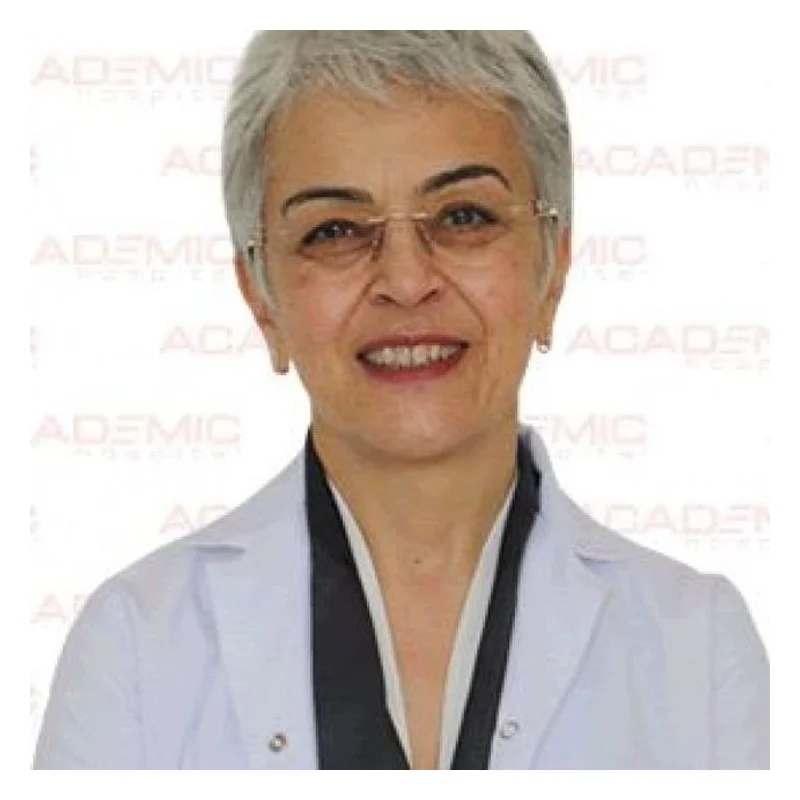
Prof. Dr. Emel Akoğlu
UrologyVerified
- 57+years exp.
English · Turkish
FromPrice on request
Free quote
60 seconds · no obligationView Profile
What penile paraffinoma is, why injected oils and paraffin leave hard, inflamed lumps, how surgery removes the affected tissue and rebuilds the skin, how the main techniques differ, approximate costs in Turkey against the UK, US and Germany, recovery, realistic results, risks and how to check a urology or plastic surgery team.
A written plan with the surgeon's name and the full price — usually within 24 hours.

2 doctors Compare doctors, ratings and prices — ask any of them for a free quote.
UrologyVerified
English · Turkish
60 seconds · no obligationView Profile
UrologyVerified
English · Turkish
60 seconds · no obligationView Profile
Penile paraffinoma surgery removes the hard, inflamed tissue that forms when paraffin, mineral oil, liquid silicone or a similar non-medical substance has been injected into the penis, usually to make it look thicker. The body cannot absorb these materials. It surrounds them with scar tissue and chronic inflammation, producing lumps, thickened and discoloured skin, curvature, pain and sometimes ulceration. The condition is also called sclerosing lipogranuloma. Surgery cuts out the affected skin and tissue and, where needed, rebuilds the covering of the penis so that it looks and works as normally as possible.
This guide explains how the problem develops, when surgery is the right step, how the techniques differ, what the operation costs in Turkey compared with the UK, US and Germany, what recovery looks like and what to ask a clinic. Many men with this problem have been embarrassed to seek help; a urologist or plastic surgeon who treats it will have seen it before. For the wider field, see our urology treatments in Turkey.
Injected paraffin and oils stay in the tissue as droplets. The immune system treats them as foreign material, sending in inflammatory cells that form a firm nodular reaction around each droplet. Over months or years the droplets can spread along the shaft, merge and harden. Typical signs are irregular lumps under the skin, a thick, woody or reddened shaft, swelling of the foreskin, painful erections, a bent erection and, in advanced cases, skin breakdown and infection. The same problem can follow silicone or other fillers that are not approved for use in the penis.
The reaction can appear within weeks or only after many years, and it does not go away by itself. Antibiotics or anti-inflammatory tablets may calm a flare, but they do not remove the foreign material. That is why surgery is the established treatment once the lumps are persistent, painful or deforming.
Small, painless, stable nodules can sometimes be watched. Surgery is usually advised when there is pain, repeated infection, ulceration, a bent or painful erection, difficulty with intercourse or an appearance the patient finds distressing. Urological guidance on penile injection complications generally favours removing the affected tissue, because the substance keeps provoking inflammation. The timing matters: operating during an active infection raises the risk of a poor result, so the surgeon may treat the infection first and operate once the tissue has settled.
An examination and often an ultrasound or MRI scan show how deep and how widespread the material is. A biopsy may be taken to confirm the diagnosis and to rule out other conditions. Be cautious about any clinic that offers a non-surgical "dissolving" injection for paraffinoma: there is no established injection that removes this material.
The operation is normally done under general or spinal anaesthesia and takes from one to four hours, depending on how much tissue is involved. The surgeon marks the affected area, then excises the lumps together with the thickened skin, taking care to protect the urethra, the erectile bodies and the nerves and blood vessels that run along the shaft. Tissue is sent for laboratory examination. A urinary catheter is often placed for a few days.
Once the diseased tissue is out, the surgeon closes the wound. If enough healthy skin remains it is simply stitched together. If a large area has been removed, the surgeon reconstructs the shaft with a skin graft taken from the thigh or groin, or with a flap of nearby skin. A circumcision is frequently part of the operation, because the foreskin is often the most affected part. Dressings and gentle compression protect the new skin while it takes.
The choice depends on how much skin must be removed and how healthy the remaining skin is. A surgeon should explain the plan and the likely appearance before you agree.
| Approach | Best suited to | Typical limits |
|---|---|---|
| Limited excision with direct closure | A few localised nodules, healthy surrounding skin | Not enough for widespread disease; risk of leaving material behind |
| Wide excision with circumcision | Disease concentrated in the foreskin and distal shaft | Cannot be reversed; scar line around the shaft |
| Excision with skin graft or flap | Extensive shaft involvement or skin loss | Longer operation and recovery; grafted skin may look different in colour and texture |
Surgeons sometimes stage the work, removing the worst areas first and returning later for refinement. Ask whether staged surgery is likely in your case, because that affects trip length and total cost.
These are approximate ranges, not hospital quotes. The price rises with the extent of the disease, the need for a graft or flap, the length of the hospital stay and whether imaging and laboratory examination are included. Each hospital confirms its price in writing after reviewing your photographs and scans.
| Country | Approximate cost range |
|---|---|
| Turkey | €1,800 – €6,500 |
| United Kingdom | €4,500 – €13,000 |
| United States | €7,000 – €22,000 |
| Germany | €4,500 – €12,000 |
A typical package covers the pre-operative tests, surgeon, anaesthetist, operating room, hospital stay, dressings and medication, and often airport transfers. Check whether histology, a second operation for revision and the video follow-up are included.
Good candidates have confirmed paraffinoma or a similar injected-substance reaction, symptoms or deformity that bother them, and realistic expectations. You may need to wait if there is an active infection or open ulcer, if you smoke heavily and cannot stop in the weeks around surgery, or if you have uncontrolled diabetes or a bleeding disorder. Men who injected the substance recently and have no lumps yet are not usually operated on; the surgeon will advise regular review.
If your goal is simply a thicker penis, surgery for paraffinoma is not that. It aims to remove diseased tissue and restore a healthy shaft. Other approaches to girth are discussed in our guides to penis filler and penis enlargement, and a surgeon will tell you honestly whether any of them is suitable after paraffin injection.
Most patients stay in hospital for one to three nights, then remain in Turkey for about seven to fourteen days so that the dressings, catheter and wound can be checked. If a skin graft is used, the first dressing change is usually after several days and the graft is protected from friction and stretching. Expect swelling and bruising of the penis and scrotum, which peaks in the first week and fades over several weeks.
| Period | What to expect |
|---|---|
| Days 1–3 | Hospital stay, catheter, dressings, pain relief |
| Week 1–2 | Wound checks, stitches or graft reviewed, swelling at its worst |
| Weeks 3–6 | Swelling settles; desk work usually fine; no sex or heavy exercise |
| Weeks 6–12 | Surgeon clears sexual activity once healing is complete |
The main aim is a healthy, comfortable shaft free of the inflamed lumps. Photographs after surgery typically show a smoother outline with a visible scar line, most often around the circumcision site or along the graft edges. They do not show a larger penis; removing diseased tissue and skin can slightly reduce girth or length, and the surgeon should warn you of that. Erections may feel different for some weeks, and sensation can be reduced for a time. Final appearance is judged after three to six months, once swelling has gone and the scars have matured. A second small procedure to refine the contour is sometimes needed.
Possible complications include bleeding, infection, wound opening, partial loss of a skin graft, scarring that causes curvature or tightness, reduced or altered sensation, erectile difficulty, and the return of lumps if material was left behind. As with any operation under anaesthesia there are general risks such as blood clots and reactions to medicines. Urological societies such as the European Association of Urology and the American Urological Association describe the injection of non-medical substances into the penis as dangerous and advise avoiding it. Ask the surgeon to explain each risk for your case, how often they treat this condition and what happens if a complication needs care after you return home.
Look for a urologist or plastic and reconstructive surgeon who regularly treats complications of penile injections, a licensed hospital with anaesthesia and intensive care, and a written plan and price before any deposit. Red flags include promises of a larger penis, a guaranteed cure, quotes without a breakdown, and no plan for aftercare. Read how our process works and send your photographs through our free quote page for a written plan from the hospital. Questions to ask:
It is a chronic inflammatory reaction to paraffin, oil or silicone injected into the penis. The body walls off the material with scar tissue, causing hard lumps, thick skin, pain or curvature. It does not resolve without treatment.
Surgery removes the affected tissue and is the established treatment for persistent or painful cases. Results depend on how much tissue is involved and how much healthy skin remains, so ask the surgeon for realistic expectations.
Approximate ranges are €1,800 to €6,500 in Turkey, against about €4,500 to €13,000 in the UK. The price rises if a skin graft or flap is needed. The hospital confirms its price in a written quote.
Expect a smoother, healthier shaft with a visible scar line, often at the circumcision site or graft edges. It is not an enlargement, and some loss of girth or length can occur.
Most patients stay in hospital one to three nights and in Turkey for seven to fourteen days. Swelling settles over several weeks, and sexual activity is usually cleared after six to twelve weeks.
You are under anaesthesia during the operation. Afterwards there is soreness, swelling and bruising, which are controlled with painkillers and usually ease over the first one to two weeks.
Lumps can return if some injected material was left behind, especially in widespread disease. A careful excision lowers this risk, and the surgeon may suggest staged surgery or follow-up checks.
Antibiotics or anti-inflammatory medicines may calm a flare, but they do not remove the foreign material. No injection is established for dissolving it, so persistent lumps are normally treated surgically.
Only if a large area of skin has to be removed. When enough healthy skin remains, the wound is stitched directly. The surgeon decides after examining the extent of disease.
Plan for about seven to fourteen days so the catheter, dressings and any graft can be checked. Staged or complex cases may need longer.
Your request is in!
Your coordinator will contact you — usually within 2 hours, 24/7.
Want a faster, more accurate assessment?
Add photos & medical detailsLeave your number — a coordinator calls you in your language, usually within 15 minutes during office hours.
Thank you!
A coordinator will contact you at the time you chose.