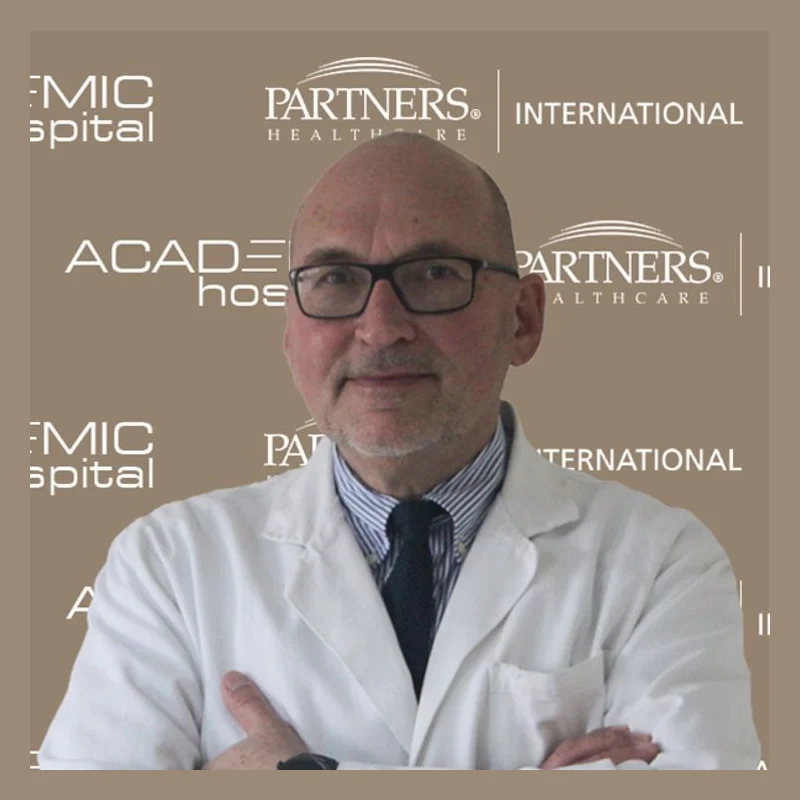
Prof. Dr. Turgay Çelikel
OncologyVerified
- 47+years exp.
English · Turkish
FromPrice on request
Free quote
60 seconds · no obligationView Profile
What screening for cancer involves, how diagnostic imaging and laboratory biomarker tests work, what clinical evidence shows about early tumour detection, approximate package costs in Turkey compared with the UK, US and Germany, who benefits most, typical timelines, risks of false positives, and how to choose an accredited hospital centre.
A written plan with the surgeon's name and the full price — usually within 24 hours.

1 doctor Compare doctors, ratings and prices — ask any of them for a free quote.
OncologyVerified
English · Turkish
60 seconds · no obligationView Profile
Screening for cancer is a structured medical process designed to identify pre-cancerous cell changes or tumours in people who show no symptoms of disease. The primary objective is early detection: discovering cellular abnormalities while they remain localised, long before physical symptoms such as unexplained weight loss, fatigue or pain appear. Modern clinical screening combines multi-organ blood biomarker panels, non-invasive cross-sectional imaging, endoscopic examinations and specialist consultations. Hospitals offering screening for cancer in Turkey provide these diagnostics as comprehensive outpatient check-ups or targeted organ packages.
Early diagnosis fundamentally alters clinical options. When malignant changes are identified early, interventions are less invasive and associated with higher curative rates. This comprehensive guide explains what clinical screening involves, what international evidence says about test reliability, approximate costs in Turkey compared with the United Kingdom, the United States and Germany, what findings to expect and how to choose an accredited hospital. For patients requiring comprehensive medical oncology evaluations or treatment coordination, see our guide to oncology treatments in Turkey.
Clinical evidence demonstrates that routine cancer screening saves lives, but its efficacy depends on the specific cancer type and the screening tool used. Large-scale international trials evaluated by health authorities such as the UK National Health Service (NHS) and the World Health Organization (WHO) confirm that population screening is highly beneficial for four major malignancies: breast cancer (mammography), cervical cancer (HPV testing and liquid-based cytology), colorectal cancer (colonoscopy and faecal immunochemical testing) and lung cancer (low-dose computed tomography for heavy smokers).
However, an honest appraisal requires understanding diagnostic limitations. No screening programme detects every tumour. Furthermore, comprehensive scans can produce "incidentalomas"—benign nodules, cysts or scar tissue that appear suspicious on scans but pose no clinical danger. This can lead to anxiety, repeated scans, or unnecessary invasive biopsies. Blood tumour markers are valuable for monitoring known diseases but have variable accuracy when used as standalone screening tests in healthy individuals, because benign inflammation can also elevate them. A responsible medical team will explain what a test can achieve and what falls outside its diagnostic scope.
The total screening for cancer price depends heavily on whether you choose a focused single-organ evaluation or an extensive multi-day executive panel. The figures below reflect approximate market ranges for comprehensive diagnostic check-up packages, not specific hospital quotes. Each hospital provides an itemised breakdown based on your age, gender, medical history and required diagnostics.
| Country | Approximate cost range |
|---|---|
| Turkey | €450 – €2,500 |
| United Kingdom | €1,200 – €5,500 |
| United States | €1,800 – €7,500 |
| Germany | €1,100 – €4,800 |
Several clinical factors influence the screening for cancer cost. Basic packages typically comprise routine laboratory bloods, abdominal ultrasound, chest X-rays and tumour marker panels. Advanced packages incorporate high-resolution imaging such as low-dose chest CT, mammography, full-body MRI, thyroid ultrasound and colonoscopy or gastroscopy under sedation. International packages in Turkey generally include pre-examination consultations, laboratory analyses, imaging fees, sedation, pathology reporting, multilingual coordination and airport transfers. Request a full written inclusions list before travelling.
Screening programmes are tailored according to biological sex, age thresholds and individual risk profiles. Rather than relying on a single test, diagnostic centres combine complementary modalities to evaluate different organ systems.
| Screening approach | Best suited to | Typical limits |
|---|---|---|
| Targeted organ screening (e.g. mammography, colonoscopy, low-dose CT) | Specific high-risk organs based on age, gender or smoking history | Evaluates only the targeted organ; colonoscopy requires bowel preparation and sedation |
| Comprehensive executive check-up panels | General baseline assessment combining blood markers, ultrasound, chest imaging and specialist reviews | Standard blood tests can miss microscopic tumours; cannot replace invasive diagnostics when indicated |
| Advanced imaging screening (whole-body MRI or PET-CT) | Detailed anatomical review for high-risk genetic profiles or suspected recurrence | Higher cost; may detect benign incidentalomas requiring unnecessary follow-up investigations |
For breast health, digital mammography and breast ultrasound remain standard. For gastrointestinal health, colonoscopy allows direct visual inspection and the immediate removal of pre-cancerous adenomatous polyps. For respiratory assessment, low-dose helical CT is standard for adults with substantial smoking histories. Check-up clinics coordinate these examinations within a streamlined schedule so that appointments occur consecutively over one or two mornings.
Screening programmes suit asymptomatic adults who wish to establish a reliable baseline of their health or who carry elevated risk factors. You are a suitable candidate if you fall into recommended screening age brackets (such as adults aged 45 and older for bowel screening, or women aged 40 and older for breast screening), have a strong family history of cancer, or possess lifestyle risks such as long-term tobacco use.
Screening is not intended for acute diagnostic investigations. If you currently experience active warning signs—such as unexplained palpable lumps, persistent blood in stool or urine, sudden severe weight loss, unresolving cough or chronic dysphagia—you do not need a routine screening package. Instead, you require urgent, targeted diagnostic oncology consultations and rapid staging. Furthermore, patients who cannot tolerate intravenous sedation or bowel preparation may need alternative diagnostic pathways.
Undergoing cancer screening Turkey facilities provide follows an organised clinical pathway designed to minimise stress and waiting times:
Most outpatient tests conclude within four to six hours. Laboratory results and radiologist reports are completed within 24 to 48 hours, while tissue biopsies or polyp histopathology require three to five business days for definitive analysis.
Physical screening for cancer recovery is virtually immediate for standard outpatient diagnostic tests. Non-invasive scans and laboratory blood draws produce no residual fatigue or physical limitations, meaning you can resume normal daily activities, sightseeing or work immediately after your clinic visit.
When your package incorporates endoscopic procedures such as colonoscopy, recovery requires modest care. Preparation begins the day prior with a clear liquid diet and oral bowel-cleansing solutions. The procedure itself is performed under light intravenous sedation; after waking in a recovery suite, you rest for 60 to 90 minutes until the sedative wears off. Mild abdominal bloating from air insufflation is common and dissipates within a few hours. Patients should avoid driving, operating machinery or making legal decisions for 24 hours post-sedation.
For international visitors travelling for screening for cancer in Turkey, a stay of two to three nights is ideal. Arriving on day one allows you to rest before morning tests. Day two involves examinations and initial imaging reviews. Day three provides the final doctor consultation and written English-language reports, allowing a comfortable return flight.
Patients often feel apprehension while awaiting screening results. Understanding how medical teams categorise outcomes helps set realistic expectations. Findings generally fall into three categories: normal, indeterminate, or suspicious.
A normal result provides reassuring baseline data, although it does not guarantee permanent immunity from disease; routine interval screening remains necessary in future years. An indeterminate result is common in cross-sectional imaging: it denotes findings such as a small lung nodule, a thyroid cyst, or dense breast tissue. Most indeterminate findings turn out to be entirely benign, but international clinical guidelines mandate follow-up scans in three, six, or twelve months to confirm stability.
When an abnormal lesion is confirmed as malignant, early detection allows clinicians to discuss localised interventions such as surgical resection or radiofrequency ablation, as well as systemic therapies including chemotherapy, long before metastases develop. Early diagnosis gives medical teams the widest range of curative therapeutic strategies.
While cancer screening provides substantial life-saving potential, international bodies such as the NHS and the American Cancer Society emphasize that screening involves known trade-offs and potential clinical harms that patients must understand.
Selecting a reputable hospital is crucial for diagnostic precision. Look for tertiary hospitals accredited by international bodies such as Joint Commission International (JCI) or ISO-certified clinical laboratories. Ensure that your scans are interpreted by certified subspecialist radiologists rather than general practitioners, and verify that the facility maintains an active Multidisciplinary Tumour Board where pathologists, radiologists, surgeons and oncologists collaborate on complex findings.
Be watchful for clear red flags: clinics advertising unconditional promises of detecting all cancers, facilities promoting full-body CT scans to young, healthy individuals without clinical justification, or providers refusing to furnish complete digital imaging records (DICOM files) and formal English pathology reports. Learn more about how it works when arranging diagnostic packages, or request an initial assessment through our free quote page to receive structured proposals from accredited centres.
Before confirming your diagnostic check-up, ask the clinic coordinators and medical team the following essential questions:
Screening for cancer involves testing healthy individuals who have no symptoms to detect pre-cancerous cellular changes or early-stage tumours. It uses specialised imaging such as mammograms, low-dose CT scans and ultrasound, along with laboratory blood panels, stool tests and endoscopic examinations to identify abnormalities before they cause noticeable health problems.
Yes, routine screening significantly improves treatment outcomes for cancers with validated protocols, such as breast, cervical, colorectal and lung cancer. Detecting tumours at stage I or II allows less invasive interventions and higher cure rates compared to identifying disease after symptoms appear, though screening cannot prevent all cancers from developing.
Comprehensive screening for cancer cost in Turkey ranges approximately from €450 for targeted organ check-ups to €2,500 for advanced whole-body protocols. By comparison, equivalent private screening packages in the UK or Western Europe typically cost between €1,200 and €5,500, depending on the imaging modalities and specialist consultations included.
Before screening, you review your medical and family history with a doctor and follow preparation guidelines such as fasting. After testing, your diagnostic reports provide an anatomical baseline. Most scans return normal results, while any identified nodules or biomarker elevations receive structured recommendations for interval monitoring, further imaging or biopsy.
Most patients require two to three days in Turkey. The physical examinations, blood draws and imaging scans are completed on the first morning. Specialist consultations and comprehensive pathology reports typically conclude on the second or third day, after which you can comfortably fly home.
Non-invasive tests such as blood panels, ultrasound and MRI have zero downtime, allowing immediate normal activity. If your screening package includes an endoscopic procedure such as a colonoscopy under mild sedation, you will rest for one to two hours afterwards and should avoid driving for twenty-four hours.
Most screening tests are completely non-invasive and cause minimal discomfort. Blood draws involve a brief needle pinch, mammography involves brief breast compression, and low-dose CT scans are silent and painless. Colonoscopy is performed under light intravenous sedation so you remain asleep and comfortable throughout the examination.
No single check-up or test detects every type of malignancy. Screening is most effective for specific cancers with established early-detection methods, including colorectal, breast, cervical, prostate and lung cancer. Some internal tumours may not produce early blood markers or visible radiographic signals until they reach a larger size.
An abnormal finding or elevated marker is not an immediate cancer diagnosis. Many identified nodules, cysts and polyps are benign. Your physician will recommend structured follow-up, which may include repeating an imaging scan in three to six months, conducting an MRI, or taking a tissue biopsy for histological confirmation.
Screening frequency depends on your age, biological sex, personal medical background and family risk factors. High-risk individuals or older adults may require annual mammograms, regular low-dose chest CTs or colonoscopies every five to ten years, whereas basic annual health check-ups monitor general blood and organ health.
Your request is in!
Your coordinator will contact you — usually within 2 hours, 24/7.
Want a faster, more accurate assessment?
Add photos & medical detailsLeave your number — a coordinator calls you in your language, usually within 15 minutes during office hours.
Thank you!
A coordinator will contact you at the time you chose.

