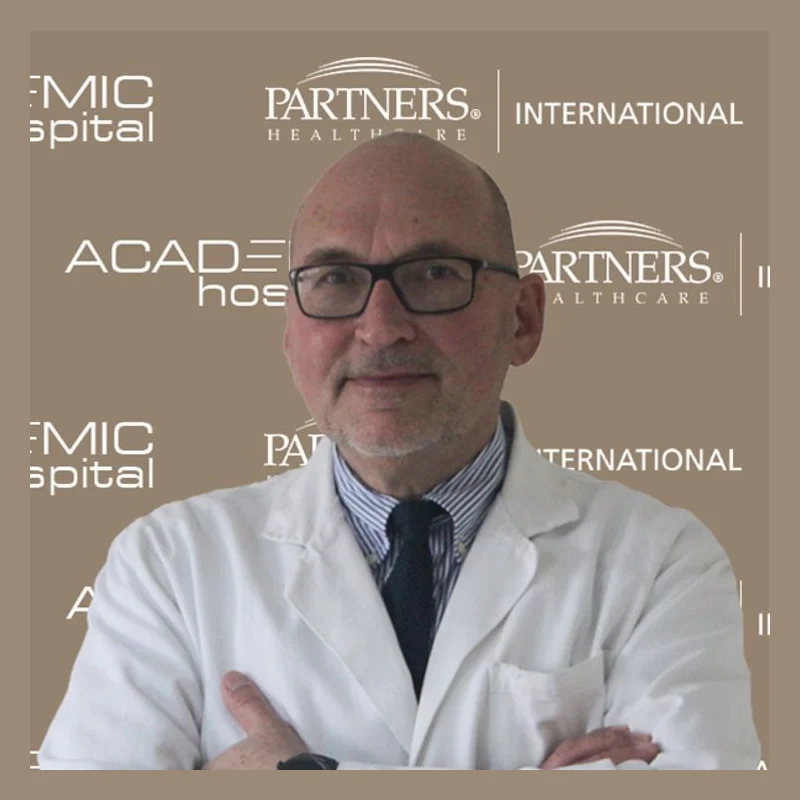
Prof. Dr. Turgay Çelikel
OncologyVerified
- 47+years exp.
English · Turkish
FromPrice on request
Free quote
60 seconds · no obligationView Profile
What proton beam therapy is, how the Bragg peak spares healthy tissue, what clinical evidence says about precision radiotherapy, how it compares with gamma knife and tomotherapy, approximate costs in Turkey against the UK, US and Germany, what daily treatment and recovery involve, potential side effects and how to choose an accredited cancer centre.
A written plan with the surgeon's name and the full price — usually within 24 hours.

1 doctor Compare doctors, ratings and prices — ask any of them for a free quote.
OncologyVerified
English · Turkish
60 seconds · no obligationView Profile
Proton beam therapy is an advanced form of external beam radiotherapy using positively charged subatomic particles (protons) rather than traditional X-ray photons to treat solid tumours. Generated in an accelerator—either a cyclotron or synchrotron—protons travel at high speed through vacuum beamlines into an adjustable gantry. The core distinction of proton radiation is a physical phenomenon known as the Bragg peak. Standard X-ray beams deposit energy continuously along their path, passing through the body and leaving an exit dose in healthy tissue behind the tumour. In contrast, protons travel to an exact calculated depth, deposit almost all their radiation inside the tumour, and stop. Hospitals offering proton beam therapy in Turkey use this physical property to deliver concentrated doses to tumours while protecting adjacent normal tissue.
Because protons deposit no radiation beyond their stopping point, the method is especially valuable near critical organs such as the brainstem, optic nerves, spinal cord, or heart. It is also widely used in paediatric oncology, where sparing healthy growing tissue lowers the risk of developmental deficits and secondary cancers. For an overview of available cancer therapies, see our guide to oncology treatments in Turkey.
Clinical evidence demonstrates that proton beam therapy is highly effective for specific cancer types where photon radiotherapy carries high risk to healthy organs. International guidelines from the American Society for Radiation Oncology (ASTRO) and European consortia recognise proton radiation as an established standard for paediatric central nervous system tumours, base-of-skull chordomas, chondrosarcomas, and ocular melanomas. In these conditions, clinical registries confirm durable local tumour control alongside reduced damage to nearby critical organs.
For common adult cancers, such as early prostate, breast, or lung cancer, the clinical picture is more nuanced. While proton delivery reduces the volume of normal tissue receiving radiation, clinical trials comparing protons to modern photon techniques—such as volumetric modulated arc therapy (VMAT)—show similar rates of disease control. Proton therapy does not necessarily cure more patients in these groups, but it can reduce specific side effects, such as radiation pneumonitis or cardiac exposure in left-sided breast cancer. Trustworthy clinical teams evaluate each case on anatomical geometry rather than claiming universal superiority over modern photon methods.
Proton therapy is selected when its physical dose distribution offers a demonstrable advantage over photon radiotherapy. Common indications include:
Particle accelerators and multi-room gantries represent major hospital investments, which is reflected in treatment fees worldwide. The table below outlines approximate cost ranges for a complete curative course of proton therapy across four countries. These figures provide broad guidelines rather than exact quotes, as total expense depends on treatment complexity and fraction numbers.
| Country | Approximate cost range |
|---|---|
| Turkey | €18,000 – €40,000 |
| United Kingdom | €35,000 – €70,000 |
| United States | €45,000 – €130,000 |
| Germany | €30,000 – €65,000 |
Several factors determine the final proton beam therapy price. The most significant is the fractionation schedule: standard curative protocols require 25 to 35 daily fractions, whereas hypofractionated plans use fewer visits. Preparatory steps also affect cost, including 4D-CT simulation scans, MRI fusion, custom immobilisation masks, and computerised dosimetry planning. In addition, concurrent chemotherapy or immunotherapy incurs separate fees. Medical packages in Turkey typically include simulation imaging, custom mask fabrication, physicist planning, all radiation fractions, routine oncologist consultations, and hospital transfers.
Patients researching precision radiation encounter various specialised techniques. While all aim to destroy tumour cells and protect healthy tissue, they use different radiation sources, delivery systems, and clinical indications. These include stereotactic radiosurgery with gamma knife and rotational photon delivery using tomotherapy.
| Radiation modality | Best suited to | Typical limits |
|---|---|---|
| Proton beam therapy | Tumours near critical organs (skull base, spine, optic structures) and paediatric cancers | Requires heavy cyclotron/gantry facilities; higher capital cost; multiple outpatient fractions |
| Gamma knife | Small, well-defined intracranial lesions, brain metastases, acoustic neuromas, AVMs | Restricted to cranial and upper cervical spine lesions; generally single or few high-dose sessions |
| Tomotherapy | Complex, elongated or multiple targets (e.g. craniospinal axis, widespread nodal chains) | Uses photon beams with exit dose; healthy tissue behind target absorbs radiation |
The choice between these modalities depends on tumour location, volume, and surrounding organs. For instance, a small solitary brain metastasis is often treated in one session with gamma knife, whereas a large skull-base chordoma wrapping around the brainstem generally warrants fractionated proton delivery to avoid neurological damage.
Suitability for proton radiation depends on tumour pathology, anatomical stage, and patient health. Good candidates generally include:
Proton therapy is not suitable for widely metastatic cancer where systemic therapies such as chemotherapy, immunotherapy, or targeted drugs must take priority. It cannot treat systemic blood cancers like acute leukaemia. In addition, patients must be able to lie still on the treatment couch for 20 to 30 minutes; young children who cannot remain motionless require daily general anaesthesia, managed by dedicated paediatric anaesthesia teams.
Undergoing proton treatment follows a precise, multi-stage clinical sequence designed to achieve millimetre accuracy:
Proton therapy is given on an outpatient basis once a day, five days a week (Monday to Friday), with weekends free for healthy tissue recovery. Depending on the cancer type, a curative course lasts between four and seven weeks. Because proton beam therapy recovery involves no surgical incisions or general anaesthesia for adults, patients remain mobile throughout treatment and rest in nearby accommodation between sessions.
Physical sensations and recovery progress through distinct stages:
Although proton beams deposit no exit dose behind the tumour, healthy tissue in front of the target absorbs radiation along the entry path. Side effects depend directly on the anatomical area treated. Well-documented acute effects recognised by bodies such as the UK National Health Service (NHS) and the European Society for Radiotherapy and Oncology (ESTRO) include localized skin erythema, temporary hair thinning within the beam path, fatigue, and mucosal inflammation in head and neck treatments.
Late complications can develop months or years after any high-dose radiotherapy. These may include localized tissue scarring, subtle hormonal changes if the pituitary gland is irradiated, or radiation necrosis in adjacent tissues. However, because proton therapy delivers a lower total integral radiation dose to the whole body than photon radiation, published clinical data confirms a reduced lifetime risk of secondary radiation-induced cancers, an essential safety factor for younger patients.
Proton beam delivery demands experienced clinical staff, dedicated medical physics support, and rigorous quality assurance. When researching centres for proton beam therapy Turkey, look for these quality indicators:
Watch for red flags such as promises of a 100% cure, clinics that offer treatment without reviewing original pathology and DICOM imaging scans, or pressure to pay deposits before a multidisciplinary plan is agreed. Review how it works to see how clinical documentation is assessed, and submit your records through our free quote page for an initial clinical appraisal.
Proton beam therapy is an advanced type of radiation treatment that uses positively charged protons rather than traditional X-rays. Thanks to the Bragg peak, protons stop precisely at the tumour depth, delivering radiation directly to malignant cells without passing beyond them, which protects surrounding healthy organs.
Yes, clinical trials and national registries confirm proton therapy is highly effective for paediatric tumours, skull-base chordomas, and ocular cancers. For common adult tumours like prostate or lung cancer, disease control rates are comparable to modern photon radiotherapy, with the primary advantage being reduced radiation exposure to neighbouring healthy organs.
Approximate costs in Turkey typically range from €18,000 to €40,000, compared with €35,000 to €70,000 in the UK and up to €130,000 in the United States. Exact prices depend on the number of daily fractions, simulation imaging, custom immobilisation devices, and medical physics planning required.
You feel nothing while the proton beam is on during your daily session, which takes two to five minutes. Any discomfort comes later from cumulative tissue reactions, such as mild skin redness, dry mouth in head and neck treatments, or generalised fatigue that eases after treatment ends.
Conventional radiotherapy uses photon (X-ray) beams that deposit energy all along their path, creating an entrance dose and an exit dose beyond the tumour. Proton beams deposit minimal entrance dose, release their maximum energy within the tumour at the Bragg peak, and stop completely with zero exit dose behind it.
A standard curative course requires daily outpatient sessions Monday through Friday for four to seven weeks, totalling between 20 and 35 treatment fractions. Each daily appointment takes 20 to 30 minutes, with the majority of time spent on precision positioning and image verification rather than beam delivery.
Acute side effects depend on the treated area but commonly include fatigue, skin redness resembling sunburn along the beam entrance, and temporary hair thinning in the beam path. Late effects are rare but can include local tissue fibrosis. Overall whole-body radiation exposure is substantially lower than with photon therapy.
Proton therapy destroys cancer cells over time rather than removing tumours instantly. Swelling and cellular debris gradually clear over weeks and months. Follow-up imaging scans, typically performed three months after treatment, evaluate tumour shrinkage or stabilization. Functional organ preservation is significantly higher than with standard broad radiation fields.
Because curative proton therapy spans 20 to 35 fractions over four to seven weeks, international patients generally stay in Turkey for five to eight weeks. This allows time for pre-treatment simulation scans, physicist treatment planning, the full radiation schedule, and an end-of-treatment clinical review before flying home.
Yes, proton therapy is frequently considered for re-irradiation in patients whose cancer has recurred in an area previously treated with radiotherapy. Because protons deposit zero exit dose, radiation oncologists can safely target the recurrent tumour without exceeding lifetime radiation tolerance limits in adjacent critical organs.
Your request is in!
Your coordinator will contact you — usually within 2 hours, 24/7.
Want a faster, more accurate assessment?
Add photos & medical detailsLeave your number — a coordinator calls you in your language, usually within 15 minutes during office hours.
Thank you!
A coordinator will contact you at the time you chose.

