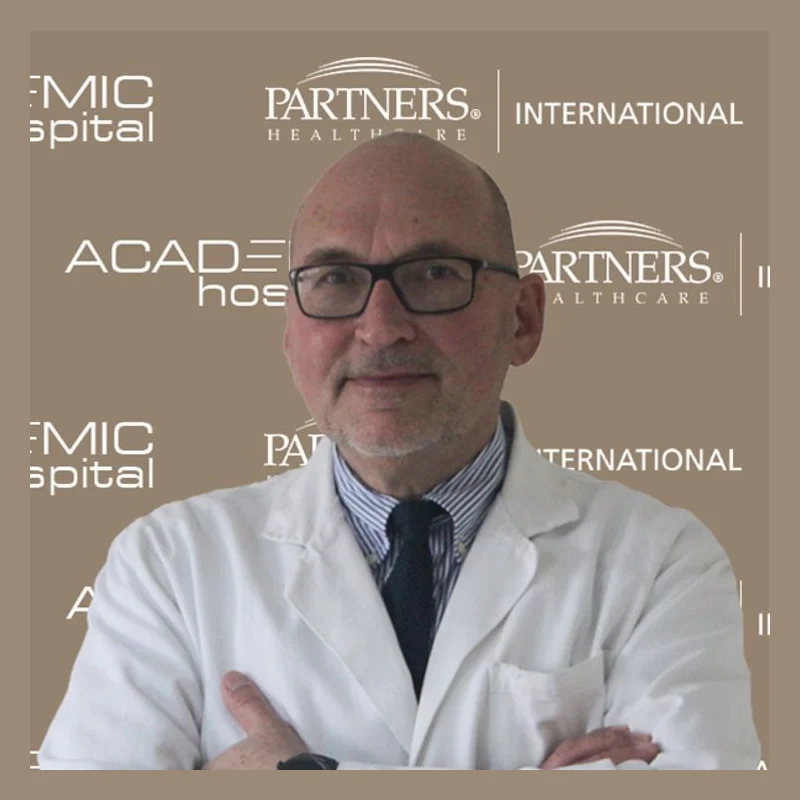
Prof. Dr. Turgay Çelikel
OncologyVerified
- 47+years exp.
English · Turkish
FromPrice on request
Free quote
60 seconds · no obligationView Profile
An honest guide to chemotherapy for stomach cancer: how systemic cytotoxic medications target gastric tumour cells, standard regimens including FLOT and FOLFOX, neoadjuvant versus adjuvant treatment, what clinical evidence shows about survival and disease control, approximate costs across Turkey, the UK, the US, and Germany, cycle-by-cycle recovery and managing side effects, potential risks, and questions to ask your multidisciplinary oncology team.
A written plan with the surgeon's name and the full price — usually within 24 hours.

1 doctor Compare doctors, ratings and prices — ask any of them for a free quote.
OncologyVerified
English · Turkish
60 seconds · no obligationView Profile
Chemotherapy for stomach cancer is a systemic medical treatment that uses cytotoxic drugs to destroy or halt the division of malignant gastric cancer cells. Unlike surgery or radiotherapy that target a localised area, chemotherapy travels through the bloodstream. This allows it to treat the primary tumour in the stomach wall as well as microscopic cancer cells that may have spread to nearby lymph nodes or distant organs.
Medical oncologists usually combine two or three pharmaceutical agents that attack cancer cells at different stages of replication. Treatment may be given before surgery to shrink a tumour, after surgery to lower the risk of recurrence, or as a primary therapy to control advanced disease and relieve symptoms. For an overview of international cancer services, see our guide to oncology treatments in Turkey.
The choice of chemotherapy depends on the tumour stage, your overall health, and whether surgical removal is planned. Multi-drug combinations are standard because combining agents with different mechanisms of action achieves higher tumour response rates than single drugs alone.
For operable stomach cancer, FLOT chemotherapy for stomach cancer is the standard perioperative protocol across European and accredited Turkish centres. FLOT combines four medications: fluorouracil (5-FU), leucovorin, oxaliplatin, and docetaxel. Patients typically receive four cycles before gastrectomy and four cycles after surgery, administered every two weeks. For patients who cannot tolerate docetaxel due to age or underlying conditions, two-drug platinum regimens such as FOLFOX (fluorouracil, leucovorin, oxaliplatin) or CAPOX (capecitabine with oxaliplatin) serve as effective alternatives. Our guide to chemotherapy covers how these cytotoxic drug classes operate across different cancers.
Patients frequently ask: does chemotherapy for stomach cancer work? Clinical oncology evidence shows significant benefits, though outcomes depend heavily on the stage of disease at diagnosis.
In locally advanced, operable gastric cancer, large clinical trials (notably the FLOT4 study) demonstrated that perioperative chemotherapy substantially improves survival rates compared to surgery alone. Giving chemotherapy prior to surgery downstages the primary tumour, clears microscopic disease, and increases the rate of complete surgical removal. In some patients, post-operative pathology reveals a complete pathological response, meaning no living cancer cells remain in the resected tissue. In metastatic (stage IV) disease, chemotherapy is not curative, but clinical studies confirm that it prolongs survival, slows disease progression, and relieves distressing symptoms like pain and difficulty swallowing. Chemoresistance can occur, and an honest oncology team will explain realistic goals before starting.
The total chemotherapy for stomach cancer cost depends on the prescribed drug regimen, the number of cycles, supportive medications, and whether inpatient monitoring is needed. The table below outlines approximate price ranges for a standard course of four to six cycles, including oncologist consultations, routine blood tests, and infusion suite fees.
| Country | Approximate cost range |
|---|---|
| Turkey | €3,500 – €12,000 |
| United Kingdom | €11,000 – €28,000 |
| United States | €24,000 – €70,000 |
| Germany | €10,000 – €26,000 |
What changes the chemotherapy for stomach cancer price includes the cost of supportive drugs such as G-CSF white blood cell boosters, anti-emetic infusions, port-a-cath insertion, and restaging CT or PET scans. In Turkey, hospital packages for international patients typically bundle the medical oncologist fees, chemotherapy preparation, infusion administration, routine nursing care, and airport transfers into one written quote.
Systemic stomach cancer treatment is guided by the molecular biology of the tumour. While cytotoxic chemotherapy remains the foundational treatment for most patients, oncologists frequently combine it with targeted therapies or immunotherapy based on biomarker testing.
| Modality | Best suited to | Typical limits |
|---|---|---|
| Systemic Chemotherapy | Broad gastric adenocarcinoma stages; tumour downsizing, adjuvant risk reduction, symptom control | Affects rapidly dividing normal cells; causes temporary fatigue, low blood counts, and neuropathy |
| Targeted Therapy | Tumours expressing specific molecular targets, such as HER2 overexpression | Requires positive biomarker test; ineffective on its own and must be paired with chemotherapy |
| Immunotherapy | Advanced gastric cancer with high PD-L1 expression, MSI-H, or dMMR status | Limited benefit in biomarker-negative tumours; carries risk of immune-mediated inflammation |
If tumour testing reveals HER2 overexpression, doctors add trastuzumab to standard chemotherapy; read our guide to targeted therapy. For tumours with high PD-L1 expression or microsatellite instability, immune checkpoint inhibitors may be added, as detailed in our guide to immunotherapy.
Determining whether a patient is fit for systemic chemotherapy requires a comprehensive clinical evaluation by a medical oncologist. Suitability depends on overall physical resilience and organ function rather than age alone.
Good candidates generally meet several clinical benchmarks:
Patients with severe liver failure, unmanaged infections, or poor performance status (ECOG 3–4) are generally unsuitable for intensive multi-agent regimens, and may receive gentle single-agent palliative chemotherapy or supportive palliative care instead.
Receiving chemotherapy for stomach cancer follows a clear clinical sequence designed to deliver medication safely while protecting your veins and comfort.
Before regular infusions start, a surgeon or interventional radiologist places an implantable venous access port (port-a-cath) under local anaesthesia and light sedation. Positioned beneath the skin on the upper chest, the port provides reliable access for blood tests and infusions without damaging smaller arm veins.
Each treatment cycle begins with a blood draw to verify that your neutrophil and platelet counts have recovered. Once the oncologist approves the results, you receive intravenous premedications, including anti-sickness drugs (such as ondansetron or aprepitant) and protective fluids. Chemotherapy drugs like docetaxel and oxaliplatin are infused over one to two hours in a specialised infusion suite. For continuous fluorouracil (5-FU), an ambulatory infusion pump is connected to your port, delivering the medicine slowly over 24 to 48 hours while you rest in your hotel or hospital room before being safely disconnected.
Evaluating the progress of stomach cancer treatment requires medical imaging rather than visual inspection. Before starting treatment, baseline contrast-enhanced CT scans of the chest, abdomen, and pelvis, often paired with a PET-CT scan, document the primary tumour's size, stomach wall thickness, and any lymph node or distant spread.
Restaging scans are usually repeated after every two to four cycles (every 6 to 8 weeks). Radiologists use standard RECIST criteria to measure response. A positive response shows measurable thinning of the stomach wall, shrinkage of affected lymph nodes, and reduced metabolic activity on PET imaging. However, imaging scans cannot detect microscopic single cancer cells. Even when a scan shows no visible tumour remaining, completing the recommended cycles and planned surgery remains vital to eliminate micro-metastatic cells and prevent recurrence.
Arranging chemotherapy for stomach cancer in Turkey requires planning around treatment days and natural recovery cycles. Most regimens follow a two-week (FLOT, FOLFOX) or three-week (CAPOX) timetable.
For your first cycle, plan to stay in Turkey for 5 to 7 days. This allows time for consultation, pathology review, port placement, the infusion, and 48 hours of observation. Subsequent cycles usually require stays of 3 to 4 days, or patients may stay in Istanbul for the full neoadjuvant phase. Understanding chemotherapy for stomach cancer recovery helps you prepare for the cycle timeline:
Once the oncologist confirms your blood counts have stabilised, you are safe to travel home.
Chemotherapy affects healthy cells that divide rapidly, including hair follicles, mouth lining, and bone marrow. Guidelines from the NHS and European Society for Medical Oncology (ESMO) emphasise that modern supportive medications control most side effects effectively.
Recognised chemotherapy for stomach cancer side effects include:
Severe complications such as deep vein thrombosis or infusion reactions are rare and managed within accredited hospital emergency units.
Choosing a hospital for chemotherapy for stomach cancer Turkey requires verifying hospital standards. Cancer treatment requires comprehensive facilities, not standalone clinics.
Look for internationally accredited hospitals (such as JCI accreditation) with an on-site multi-disciplinary tumour board (MDT), dedicated oncology intensive care units, and 24-hour emergency support. Red flags include clinics that offer quotes without reviewing pathology slides, unverified claims of complete cures, or facilities that administer chemotherapy without checking blood counts on the day.
Key questions to ask your clinical team:
Learn more about coordination on our how it works page, and request a personalised medical review through our free quote portal.
Chemotherapy for stomach cancer uses systemic cytotoxic drugs to destroy gastric cancer cells throughout the body. Administered intravenously via an implantable port, it targets primary tumours in the stomach and destroys microscopic cells that have travelled to lymph nodes or distant organs, either before surgery, after surgery, or for palliative control.
Clinical trials show that perioperative chemotherapy (such as FLOT) significantly improves survival in operable gastric cancer by shrinking tumours before surgery and reducing recurrence risks afterwards. In advanced stage IV stomach cancer, chemotherapy cannot cure the disease, but it slows tumour progression, relieves symptoms, and prolongs life compared to supportive care alone.
A standard four to six cycle course of chemotherapy for stomach cancer in Turkey typically ranges from €3,500 to €12,000, depending on the drug regimen, port placement, supportive medications, and inpatient monitoring. This compares with €11,000 to €28,000 in the UK and higher in the US. Each hospital provides a written quotation.
Restaging CT and PET scans performed every two to four cycles show whether the gastric wall is thinning, lymph nodes are shrinking, and metabolic activity is declining. While scans confirm tumour regression, microscopic cells may remain, which is why completing all scheduled cycles and planned surgical resection is critical.
Recovery follows a two- or three-week cycle. The first few days often involve mild fatigue and nausea, followed by a white blood cell dip around days 8 to 12. Most patients experience renewed energy and recovering blood counts during the final days before their next scheduled infusion.
Infusions are administered through an implantable port and are not painful. After treatment, patients do not typically feel physical pain from the drugs, though oxaliplatin causes cold sensitivity and nerve tingling. Other common effects like nausea, fatigue, and diarrhoea are managed with modern supportive medications.
For operable stomach cancer, the standard FLOT protocol consists of eight cycles in total: four given before surgery and four given after gastrectomy, spaced two weeks apart. In metastatic disease, treatment duration depends on how the tumour responds and how well the patient tolerates therapy.
Safety depends on overall physical fitness and organ reserve rather than age alone. Fit older adults often tolerate standard regimens well, while those with underlying kidney, heart, or stamina limitations may receive adjusted doses or gentler two-drug combinations like FOLFOX or capecitabine to minimise toxicities.
Chemotherapy uses cytotoxic agents to destroy rapidly dividing cells broad-spectrum. Targeted therapy and immunotherapy are precision treatments: targeted drugs block specific mutations like HER2, while immunotherapy helps the immune system recognise cancer cells. Oncologists frequently combine these precision therapies with chemotherapy for eligible biomarker-positive tumours.
For your initial cycle, a stay of 5 to 7 days is recommended to accommodate baseline testing, port-a-cath placement, the infusion, and post-treatment observation. Later cycles require 3 to 4 days, though some international patients choose to stay in Turkey throughout their multi-week neoadjuvant phase.
Your request is in!
Your coordinator will contact you — usually within 2 hours, 24/7.
Want a faster, more accurate assessment?
Add photos & medical detailsLeave your number — a coordinator calls you in your language, usually within 15 minutes during office hours.
Thank you!
A coordinator will contact you at the time you chose.

